Kilimanjaro National Park is above all a trekking destination, not a traditional game-viewing safari park, and visitors researching what wildlife to expect on Mount Kilimanjaro should set expectations accordingly. Nearly all animal life on the mountain is concentrated in the lower montane rainforest zone, roughly between 1,800 and 2,800 metres, where warm, moist conditions support blue monkeys, black-and-white colobus monkeys, forest birds, and occasional passages of elephant, buffalo, leopard, and duiker. Above this forest belt, as routes climb into the heath and moorland zone and then the stark alpine desert and arctic summit zones, oxygen, vegetation, and temperature all fall sharply, and resident wildlife thins dramatically until it is essentially absent near Kibo's glaciers. Climbers should think of Kilimanjaro wildlife sightings as a first-day-or-two bonus on the lower forested slopes of routes like Machame, Lemosho, and Marangu, not a guaranteed safari experience, and pair their trek with a Big Five safari in the Serengeti or Ngorongoro Crater for classic game viewing.
Concentrated in the lower rainforest and thinning fast above it — here is what actually lives on the mountain, zone by zone.
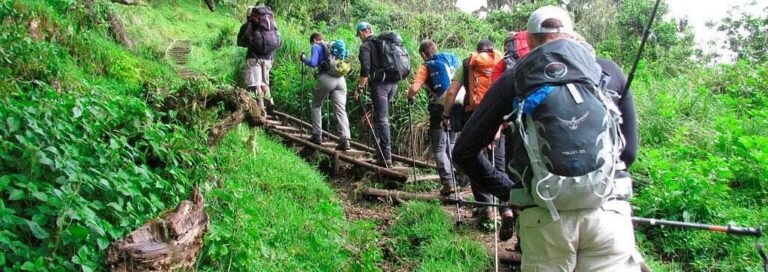
The montane rainforest between roughly 1,800m and 2,800m is home to Kilimanjaro's most reliable wildlife sightings: troops of blue monkeys foraging in the mid-canopy and striking black-and-white colobus monkeys leaping through the treetops. Both species are most active in early morning on the lower stretches of the Machame, Lemosho, Rongai, and Marangu routes, particularly around Mti Mkubwa, Machame Camp, and the Marangu forest gate, where the dense, moss-draped canopy still shelters them.
Elephant and Cape buffalo do move through Kilimanjaro's lower forest and adjacent game-controlled areas, but sightings are occasional rather than guaranteed, since these animals range widely between the park and the surrounding Kilimanjaro Forest Reserve. Fresh dung, browsed vegetation, and trampled undergrowth near the forest fringe are the most common evidence climbers encounter, far more often than the animals themselves. Guides and rangers monitor recent activity and point out signs along the first day's trail.
Small, shy forest antelope are among the more frequently glimpsed forest mammals on Kilimanjaro. Blue duiker and Abbott's duiker move quietly through the undergrowth, while bushbuck browse at forest edges near lower campsites. Both are naturally cautious, slipping away at the first sound of approaching trekkers, so sightings favor quiet, early-morning hikers over large, noisy groups departing forest camps.
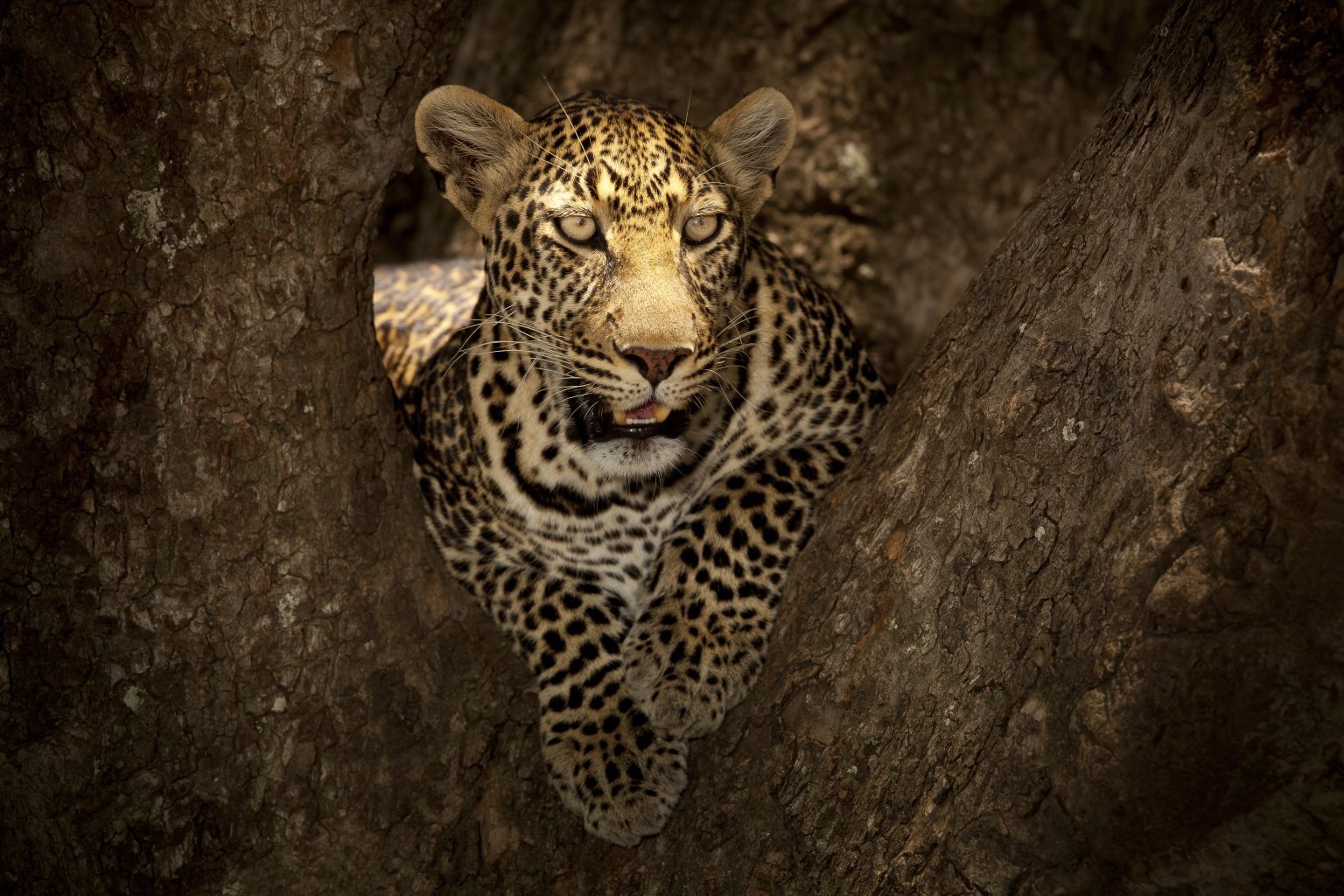
Leopards do inhabit Kilimanjaro's forest zone, using it as a corridor between surrounding habitats, but they are elusive, largely nocturnal, and very rarely seen by climbers. Camera-trap studies confirm a resident population moves through the rainforest and lower heath, yet an actual sighting on a standard trekking itinerary is exceptional. Treat Kilimanjaro as a mountain where leopards are present but effectively invisible, not a park where a sighting can be planned.
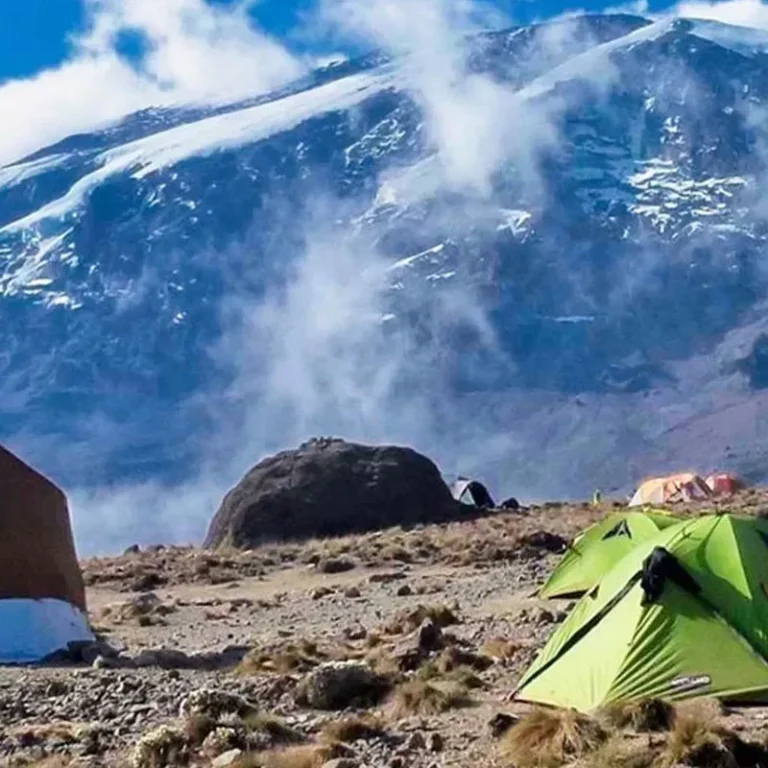
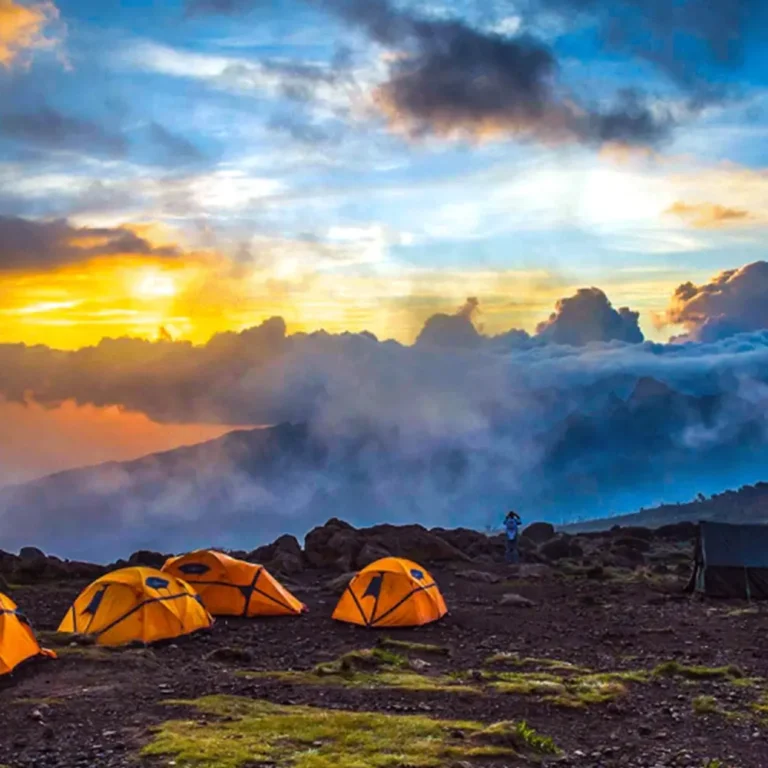
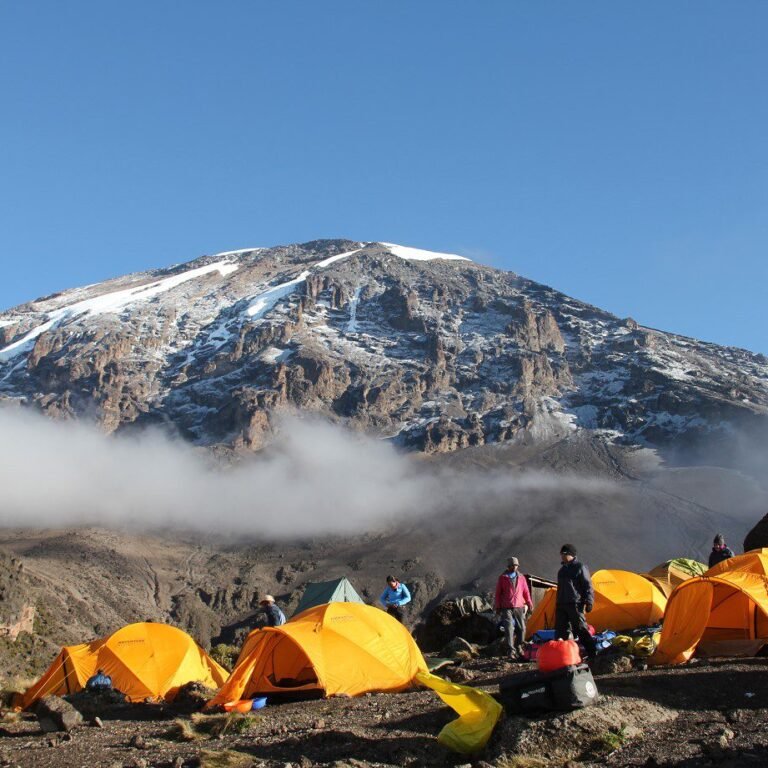
Above the rainforest, Kilimanjaro's heath and moorland zone (roughly 2,800–4,000m) supports far fewer animals, and the alpine desert and arctic summit zones above 4,000m are almost entirely lifeless in terms of resident wildlife. Falling oxygen levels, near-freezing night temperatures, intense UV exposure, and sparse vegetation make sustained mammal habitation impossible. A few hardy birds and insects persist higher up, but the layered wildlife found lower on the mountain cannot survive closer to the summit.
Kilimanjaro is divided into five distinct ecological zones stacked by altitude: cultivated bushland (800–1,800m), montane rainforest (1,800–2,800m), heath and moorland (2,800–4,000m), alpine desert (4,000–5,000m), and the arctic summit zone above 5,000m. Wildlife is richest in the rainforest zone and drops off zone by zone, which is why most animal encounters on a Kilimanjaro climb happen in the first day or two of any route, well before camp altitudes reach the heath and moorland belt.
Hand-picked northern Tanzania itineraries that pair well with Kilimanjaro, tailored privately by Foot Slopes Tours and Safaris.

An eight-day tour across Tanzania's top northern circuit parks.
View Package →
A nine-day fully private safari through Tanzania's northern circuit highlights.
View Package →
A ten-day journey across Tanzania's most celebrated northern parks.
View Package →
Ten days combining the very best of the northern safari circuit.
View Package →
A six-day mid-range tour hitting Tanzania's essential safari highlights.
View Package →
A concise five-day introduction to Tanzania's most iconic parks.
View Package →
A comfortable five-day safari balancing good lodges with a modest price.
View Package →
A six-day Serengeti and Ngorongoro combination built for multi-generation travelers.
View Package →On a Kilimanjaro climb, wildlife sightings are concentrated in the lower montane rainforest zone, roughly 1,800 to 2,800 metres, where blue monkeys and black-and-white colobus monkeys are commonly seen, along with forest birds such as turacos and sunbirds. Elephant, buffalo, leopard, and forest duiker occasionally pass through this belt but are far less predictable. Above the rainforest, as routes climb into heath, moorland, alpine desert, and the arctic summit zone, resident wildlife drops away almost entirely due to altitude, cold, and thin oxygen, so most animal encounters happen during the first one to two days of any route.
No. Kilimanjaro National Park is a trekking destination, not a Big Five safari park, and its dense forest canopy, steep terrain, and cold upper zones make game viewing from a vehicle impossible. Lion, rhino, and large plains herds are not found on the mountain, since Kilimanjaro protects rainforest, heath, moorland, alpine desert, and arctic habitats rather than open savanna. The animals present, mainly monkeys, forest birds, and occasional elephant, buffalo, leopard, or duiker, live in the lower forest belt and are seen incidentally while hiking, not through dedicated game drives. Climbers wanting Big Five sightings should pair their trek with a Serengeti or Ngorongoro Crater safari.
Wildlife on Kilimanjaro is overwhelmingly concentrated in the montane rainforest zone, roughly 1,800 to 2,800 metres above sea level, which every standard route crosses on its first one or two days. On the Machame, Lemosho, and Umbwe routes this means the forested approach to the first camp; on Marangu and Rongai it is the forest section near the park gate. Blue monkeys, colobus monkeys, forest birds, and occasional larger mammals are most active here in early morning and late afternoon. Once trekkers climb above roughly 2,800 metres into heath and moorland, wildlife density falls sharply and sightings become far rarer.
Blue monkeys are one of the most reliable wildlife sightings on Kilimanjaro, living in troops throughout the montane rainforest zone between roughly 1,800 and 2,800 metres. They are commonly spotted moving through the mid-canopy near Mti Mkubwa Camp on the Machame and Lemosho routes, and around the Marangu forest gate, especially in the calmer, quieter hours of early morning. Blue monkeys are diurnal, relatively habituated to hikers, and often heard rustling in the branches before they are seen. While not guaranteed on every single climb, most trekkers who pass through the rainforest zone on a clear morning catch at least a brief glimpse.
Black-and-white colobus monkeys, easily identified by their long white tail plumes and striking fur, live in the same montane rainforest belt as Kilimanjaro's blue monkeys, roughly 1,800 to 2,800 metres. They tend to stay higher in the canopy and are more often heard than seen, giving away their presence with loud, guttural roaring calls that carry through the forest at dawn and dusk. Sightings cluster along the lower stretches of the Machame, Lemosho, Rongai, and Marangu routes. Because colobus monkeys are shier and more arboreal than blue monkeys, a slow pace and quiet approach through the forest markedly improves the odds of a clear view.
Yes, elephants do use Kilimanjaro's lower forest zone and the adjoining Kilimanjaro Forest Reserve, but they range widely across a large territory and are not resident in any fixed, predictable location. Most evidence of elephants on a climb comes in the form of fresh dung, broken branches, and trampled undergrowth along the first day's trail rather than a direct sighting. Encounters are occasional, more common on the wetter, less-trafficked western approaches like Lemosho and Shira than on busier routes. Park rangers and guides track recent activity and will alert groups if elephants have been active near the trail.
Cape buffalo are present in Kilimanjaro's lower montane forest, moving between the park and surrounding community and forest-reserve land in loose, unpredictable patterns. Like elephants, buffalo are encountered only occasionally on a standard climb, most often as signs, tracks, dung, and flattened vegetation, rather than a close sighting. Because buffalo can be aggressive if surprised at close range, guides keep groups on the marked trail through forested sections and stay alert for fresh activity. Sightings are more likely early in the morning or late afternoon on quieter, less-crowded routes, but no Kilimanjaro itinerary can guarantee a buffalo encounter.
Very unlikely. Leopards are confirmed to inhabit Kilimanjaro's forest zone through camera-trap surveys, using it as a wildlife corridor between surrounding habitats, but they are solitary, mostly nocturnal, and highly elusive by nature. Almost no climbers on a standard multi-day itinerary see a leopard, even though the species is genuinely present on the mountain. Their tracks or scat are occasionally noticed by guides along the forest trail, but a direct sighting would be an exceptional stroke of luck rather than something to plan or hope for. Travelers wanting a realistic chance of seeing a leopard should add a Serengeti or Tarangire safari.
Kilimanjaro's rainforest zone shelters several small, shy forest antelope, most notably blue duiker, Abbott's duiker, and bushbuck, all of which favor dense undergrowth and forest edges rather than open ground. These animals are naturally cautious and tend to freeze or slip away silently at the first sound of an approaching group, which is why sightings usually reward a quiet hiker moving at the front or back of the line rather than the middle of a noisy party. Early morning departures from forest camps on routes like Machame and Rongai offer the best chance of a brief, fleeting glimpse.
Kilimanjaro's forest zone supports a rich variety of birdlife, including Hartlaub's turaco, silvery-cheeked hornbill, various sunbirds, white-eyes, and several forest robin-chats, most active in the early morning canopy between roughly 1,800 and 2,800 metres. As the route climbs into heath and moorland, species change to hardier birds such as the malachite sunbird and the streaky seedeater, adapted to colder, more open conditions. Near the summit, sightings are rare, though the occasional white-necked raven is famously seen scavenging even at very high camps. Birdwatchers should focus their attention and patience on day one and two of any route.
Wildlife thins dramatically above Kilimanjaro's rainforest because the heath and moorland zone, roughly 2,800 to 4,000 metres, and the alpine desert and arctic zones above it, offer progressively less oxygen, colder nights, intense daytime UV exposure, and increasingly sparse vegetation. These conditions cannot sustain the food sources or shelter that monkeys, antelope, and larger mammals depend on, so resident populations are essentially confined to the forest belt below. A few hardy, cold-adapted birds and insects persist higher up, but by the time climbers reach camps above 4,000 metres, encountering any animal life at all becomes genuinely rare on the mountain.
The Lemosho and Machame routes are generally considered the best for wildlife viewing because their approach through the western and southern rainforest is longer and less disturbed than some other paths, increasing the chances of spotting blue monkeys, colobus monkeys, and forest birds on day one. The Rongai route, approaching from the drier northern side, also passes through good forest habitat with fewer crowds. Marangu's forest section is shorter but still reliable for monkey sightings near the park gate. No route offers guaranteed wildlife, but a longer first day through dense, undisturbed forest generally improves the odds.
Yes, most travelers who want to see Africa's classic wildlife pair their Kilimanjaro climb with a safari in the Serengeti, Ngorongoro Crater, or Tarangire National Park, since the mountain itself offers only limited, forest-zone sightings rather than Big Five game viewing. A typical combination itinerary finishes the climb, allows a rest day in Moshi or Arusha, and then transfers to northern Tanzania's safari circuit for three to seven days of game drives. This pairing is logistically simple because Kilimanjaro Airport serves both the mountain and the safari circuit, and Foot Slopes Tours and Safaris regularly arranges these combined climb-and-safari packages for clients.
Foot Slopes Tours and Safaris designs Kilimanjaro climbs with realistic acclimatization schedules, experienced local guides, and transparent route comparisons so climbers understand exactly what terrain, weather, and wildlife to expect at each stage of their trek. Rather than overselling wildlife or downplaying the mountain's physical demands, the team gives honest guidance on route choice, gear, and timing, and coordinates park permits, porters, and campsite logistics in full compliance with Kilimanjaro National Park regulations. For travelers who also want classic game viewing, Foot Slopes Tours and Safaris can build a seamless combined climb-and-safari itinerary around the trek.
Foot Slopes Tours and Safaris works with Kilimanjaro-certified mountain guides who have completed extensive route experience across Machame, Lemosho, Rongai, Marangu, and the Northern Circuit, along with wilderness first aid and altitude-illness recognition training. Guides monitor each climber's condition throughout the trek, adjust pace for acclimatization, and are familiar with where wildlife such as blue monkeys and colobus monkeys are most likely to be active in the forest zone on any given route. This depth of route and terrain knowledge helps maximize both summit success rates and the chance of a genuine forest wildlife encounter early in the climb.
Yes, Foot Slopes Tours and Safaris regularly arranges safari extensions immediately following a Kilimanjaro climb, connecting travelers to the Serengeti, Ngorongoro Crater, Tarangire, and Lake Manyara for classic Big Five game viewing that complements the forest-zone wildlife seen on the mountain itself. Because both the climb and the safari circuit are reached through Kilimanjaro Airport, transfers between the two experiences are straightforward and can be scheduled with a short rest day in between for recovery. These combined itineraries are among the most requested packages, giving climbers the mountain achievement and a full East African wildlife safari in one trip.
Foot Slopes Tours and Safaris operates with transparent, all-inclusive pricing, licensed guides, and direct compliance with Kilimanjaro National Park's permit, porter-welfare, and safety regulations, so climbers know exactly what is included before booking. The company publishes clear route comparisons and realistic wildlife and weather expectations rather than exaggerated marketing claims, reflecting the honest approach used throughout this Kilimanjaro guide. Positive traveler reviews consistently cite well-organized logistics, attentive guides, and fair treatment of porter crews as reasons for repeat bookings and referrals. This combination of transparency, safety compliance, and consistent traveler satisfaction is why many climbers choose Foot Slopes Tours and Safaris for their trek.
Tell us your dates, style, and preferred parks, and we will build the perfect itinerary around you.
Book Now Online →Real 5-star reviews from guests who traveled with us
Our Private African luxury Safari experience with Foot Slopes Tours and Safaris was nothing short of exceptional. From the very beginning, owner Gabriel was incredibly responsive, making the entire booking process smooth and stress-free. Gabriel went above and
We had an incredible private safari experience with Foot Slopes Tours and Safaris. Their office staff was very helpful and informative, and they communicated very well. Our pick-ups to and from the airport were on time and hassle-free, an unforgettable Safari
Foot Slopes Tours and Safaris is truly one of the best local tour companies in Tanzania. From start to finish, their service was professional, reliable, and personalized. The team went above and beyond to make sure every detail of our trip was perfect. Our saf
Our family chose Foot Slopes Tours and Safaris for a custom 11-day safari itinerary, and we couldn’t be happier with our choice! Everything from our initial inquiry to building our custom itinerary to pre-departure and on-trip support was top quality. Communic