
When, where and how to see the Serengeti Wildebeest Migration
Serengeti Wildebeest Migration Guide
The Serengeti Wildebeest Migration is one of Africa’s most extraordinary wildlife spectacles, involving more than 1.5 million wildebeest alongside hundreds of thousands of zebras and gazelles. This complete Great Migration safari guide explains when to go, where to see the herds, how long to stay, where to sleep, safari costs, what to pack, how to reach Tanzania, safety, photography and booking tips. The migration follows seasonal rainfall and fresh grazing across the Serengeti-Mara ecosystem, creating different wildlife experiences throughout the year. From wildebeest calving in Southern Serengeti to dramatic Mara River crossings in Northern Serengeti, Tanzania offers exceptional opportunities for an unforgettable wildlife safari.
What Is the Serengeti Wildebeest Migration?
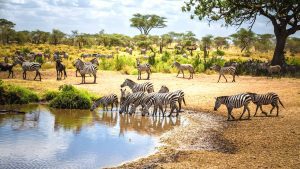
The Serengeti Wildebeest Migration is the annual movement of more than 1.5 million wildebeest, accompanied by large numbers of zebras, gazelles and other herbivores, across the Serengeti-Mara ecosystem. The animals continuously search for fresh grass and water, following seasonal rainfall in a roughly circular journey. This natural cycle creates spectacular opportunities for Great Migration safaris, including huge herds on open plains, predator encounters, wildebeest calving and dramatic river crossings. The migration is not a single event occurring on one date; its location changes throughout the year. Tanzania’s Serengeti National Park forms the heart of this extraordinary ecosystem and provides exceptional wildlife viewing even when the main herds have moved elsewhere.
When Is the Best Time for a Serengeti Migration Safari?
The best time for a Serengeti Migration Safari depends on the experience you want. January and February are excellent for wildebeest calving around Southern Serengeti and Ndutu, when predators are also highly active. June and July are traditionally strong months for the Western Corridor and Grumeti region. August and September are particularly popular for Northern Serengeti and Mara River crossings, although crossings depend on rainfall, herd movements and natural conditions. October can still provide excellent migration viewing. Because the migration follows rainfall rather than a fixed calendar, exact locations cannot be guaranteed. For broader wildlife viewing, Serengeti remains a year-round safari destination.
Choose the migration experience you want to see:
Calving
Western Corridor
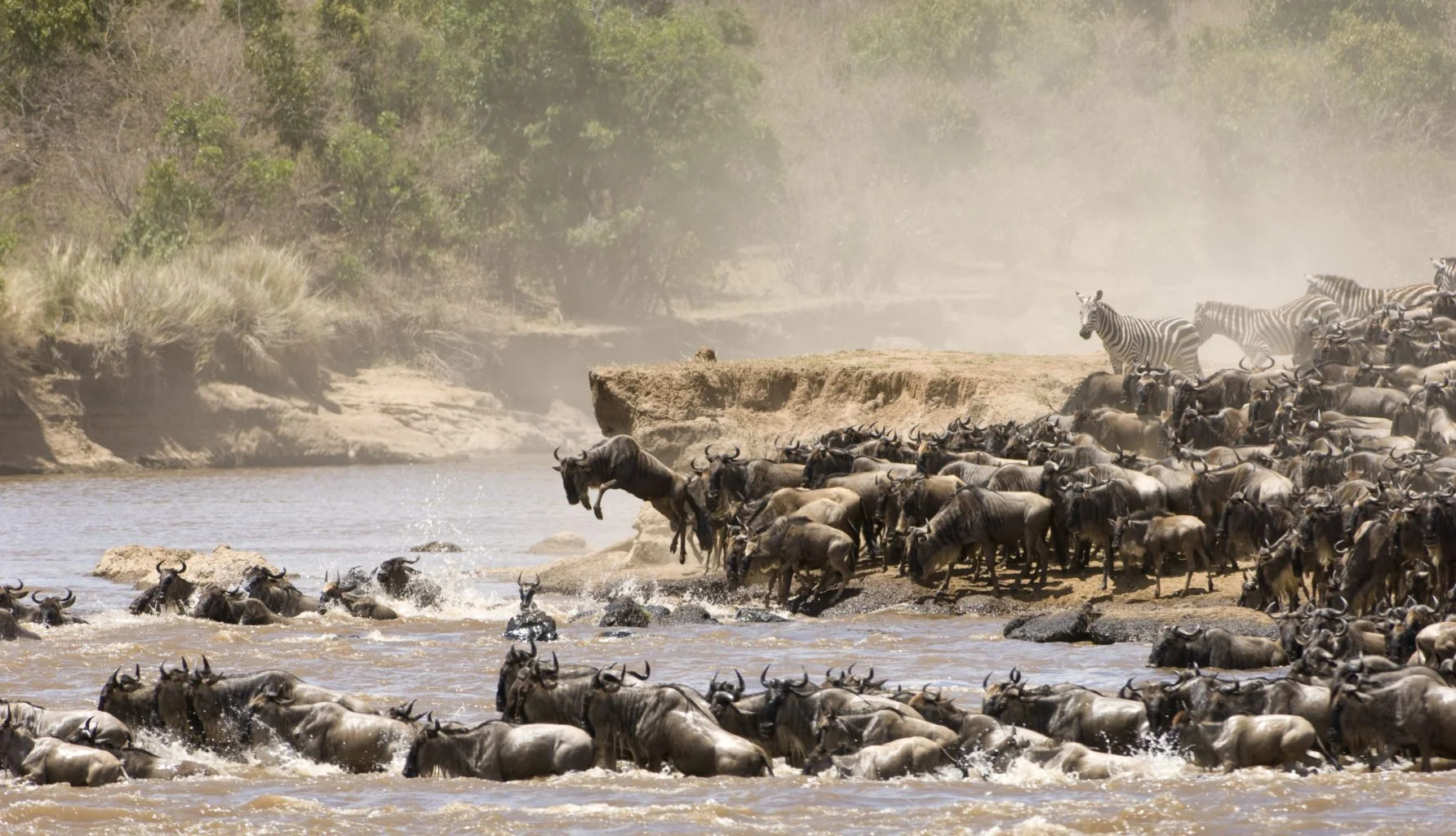
Mara River crossings
Year-round wildlife
Where to See the Wildebeest Migration
The best place to see the Great Wildebeest Migration changes throughout the year. For January–February calving season, focus on Southern Serengeti and the Ndutu plains. During June and July, the herds generally move through the Western Corridor and Grumeti area. From August through October, Northern Serengeti and the Mara River region become important migration areas, offering opportunities for dramatic river-crossing scenes. Central Serengeti and Seronera are excellent for year-round wildlife and can be incorporated into many migration itineraries. Because the Serengeti is enormous, choosing accommodation close to the expected migration route can reduce driving time and maximise your game-viewing opportunities.
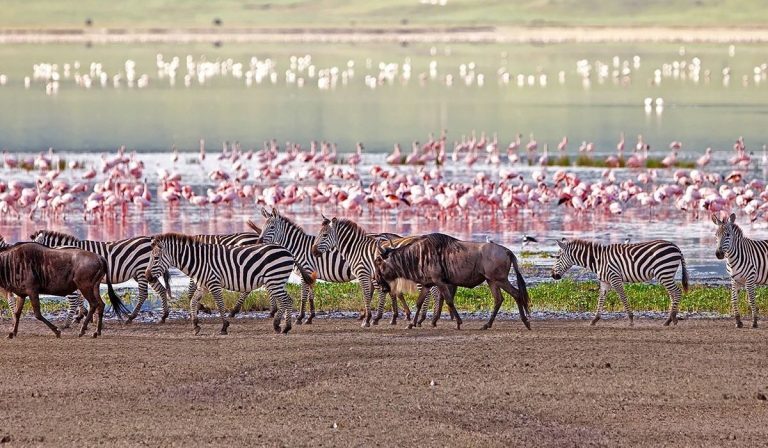
Migration calendar wheelPeak wildebeest calving around Ndutu: newborn calves and dramatic predator action.
A general guide: the herds follow the rains, so exact locations vary every year.
How Long Should a Migration Safari Be?
A Serengeti Migration Safari should ideally allow enough time for changing wildlife conditions and unpredictable herd movements. A 3–4-day Serengeti stay can provide excellent game viewing, while 5–7 days gives you greater flexibility to explore different areas and wait for wildlife activity. Travellers combining Tarangire, Ngorongoro Crater and Serengeti may prefer a 7–10-day Northern Tanzania safari. Photographers and serious wildlife enthusiasts can benefit from longer stays, particularly when targeting specific migration events such as calving or river crossings. Private safaris offer additional flexibility because daily game drives can be adjusted according to wildlife sightings, weather, road conditions and the interests of the travellers.
- 3–4 daysExcellent Serengeti game viewing
- 5–7 daysFlexibility to explore different areas and wait for wildlife
- 7–10 daysNorthern Tanzania safari with Tarangire and Ngorongoro Crater
- LongerPhotographers targeting calving or river crossings
Where Should You Stay During a Serengeti Migration Safari?
Choosing the right Serengeti accommodation can significantly improve your Great Migration experience. For January and February calving, consider lodges and camps in Southern Serengeti and Ndutu. During June and July, accommodation in or near the Western Corridor can position you closer to migration activity. For August–October, Northern Serengeti camps around Kogatende and nearby areas are strategically placed for potential Mara River crossings. Central Serengeti and Seronera offer excellent resident wildlife and a wide choice of luxury lodges, mid-range tented camps, mobile camps and safari camps. Always consider seasonal location, road access, wildlife concentration, comfort level and budget when choosing accommodation.
| When | Where to stay | Why |
|---|---|---|
| Jan–Feb | Southern Serengeti & Ndutu | Calving |
| Jun–Jul | Western Corridor | Herds moving north |
| Aug–Oct | Northern Serengeti, Kogatende | Mara River crossings |
| All year | Central Serengeti & Seronera | Resident wildlife |
How to Plan a Great Migration Safari
- 1Pick your migration experience
- 2Match your travel dates
- 3Choose region & accommodation
- 4Decide duration & transport
- 5Book popular camps early
Planning a successful Great Migration Safari starts with matching your travel dates to your preferred wildlife experience. Decide whether you want wildebeest calving, predator action, Grumeti River crossings or Mara River crossings. Next, select the most suitable Serengeti region, accommodation style, safari duration and transportation. Consider whether a private 4x4 safari, shared safari or fly-in safari best matches your budget and travel preferences. Allow flexibility because rainfall controls the migration and exact herd locations can change. Book popular camps early, especially during peak migration months. A good itinerary should also consider park fees, travel time, game-drive schedules, guide expertise, safety and responsible wildlife viewing.
How to Book a Great Migration Safari
To book a Great Migration Safari, start by selecting your preferred dates, migration experience, budget and accommodation level. Choose a reputable Tanzania safari operator offering experienced guides, reliable 4x4 vehicles and transparent pricing. Ask for a detailed itinerary showing accommodation, game drives, park fees, meals, transfers and any internal flights. If Mara River crossings are your priority, choose Northern Serengeti accommodation positioned near likely crossing areas. If calving is your goal, prioritise Southern Serengeti and Ndutu. Private tailor-made safaris provide greater flexibility than fixed group itineraries. Booking well ahead is recommended for popular camps, lodges and peak-season travel, particularly around July–October.
How Much Does a Serengeti Migration Safari Cost?
The cost of a Serengeti Migration Safari depends on accommodation, season, safari duration, group size, transport and whether the trip is private or shared. As a broad market guide, budget or camping safaris may start around US$250–$390 per person per day, while luxury safaris commonly start around US$990–$2,500 per person per day and can rise substantially. Peak migration periods generally command higher prices, while April and May are often less expensive. Your quotation may include accommodation, meals, transport, game drives and park fees, but inclusions vary between operators. Always request a transparent, itemised safari quotation before booking.
Broad market guide per person, based on the daily rates above. Peak migration months cost more; April and May are often less expensive. Request an itemised quotation.
What to Pack for a Serengeti Migration Safari
For a Serengeti Migration Safari, pack lightweight, comfortable and neutral-coloured clothing suitable for warm days and cool mornings. Essential items include long-sleeved shirts, trousers, fleece or warm jacket, hat, sunglasses, sunscreen, insect repellent and comfortable walking shoes. Bring binoculars and camera equipment, plus spare batteries, memory cards and a power bank. A reusable water bottle and small daypack are useful during game drives. Early mornings can be surprisingly cold, so layered clothing is recommended. If your itinerary includes flights to Serengeti airstrips, check luggage restrictions carefully. Carry essential medication and important travel documents, and follow your safari operator’s pre-departure packing instructions.
How to Get to Tanzania for a Serengeti Migration Safari
Most international travellers begin their Tanzania safari through Kilimanjaro International Airport, which provides convenient access to Arusha and the Northern Safari Circuit. From Arusha, travellers can reach Serengeti by safari vehicle or take a scheduled or charter flight to an airstrip inside or near the park. Tanzania’s national park information lists several Serengeti airstrips, including Seronera, Kusini, Lobo, Kirawira, Kogatende and Lamai. Driving allows you to combine Serengeti with destinations such as Tarangire and Ngorongoro Crater, while flying saves time and is particularly convenient for luxury or short migration safaris.
What Essential Requirements Are Needed for a Serengeti Migration Safari?
Essential requirements for a Serengeti Migration Safari include a valid passport, appropriate Tanzania entry permission or visa where applicable, travel insurance, confirmed accommodation and safari arrangements. Pack suitable clothing, personal medication, sun protection, insect repellent and essential travel documents. Travellers should also prepare for early-morning departures, long game drives, changing weather and remote wilderness conditions. Check current entry and travel requirements before departure, as regulations can change. Your safari operator should provide information about airport transfers, park fees, luggage allowances, accommodation, emergency procedures and wildlife regulations. Following official park rules is essential for protecting both visitors and Tanzania’s wildlife.
- Valid passport
- Entry permission or visa
- Travel insurance
- Confirmed accommodation
- Safari arrangements
- Personal medication
Is It Safe to Go on a Serengeti Migration Safari?
Yes, a Serengeti Migration Safari can be a safe and rewarding experience when travellers follow professional guidance and park regulations. Always remain inside the safari vehicle unless your guide confirms that leaving is permitted and safe. Never approach, feed or attempt to touch wild animals. During Mara River crossings, vehicles must remain stationary in designated viewing areas and must not approach animals crossing the river. Choose an experienced safari operator and professional guide, follow instructions carefully and maintain appropriate travel insurance. Wildlife is unpredictable, so responsible behaviour is essential. Respecting park regulations also helps protect the Serengeti ecosystem and ensures a better experience for future visitors.
Leave the vehicle without permission, or approach, feed or touch wild animals.
Vehicles stay stationary in designated viewing areas and never approach crossing animals.
Serengeti Migration Safari Photography Tips
For outstanding Serengeti Migration photography, use a camera with a versatile telephoto lens, fast shutter speeds and adequate memory capacity. Carry spare batteries because long game drives can limit opportunities to recharge equipment. Early morning and late afternoon offer beautiful natural light, while a wider lens can capture enormous wildebeest herds against the Serengeti landscape. For action photography, use a fast shutter speed to freeze running animals, dust and river-crossing drama. Be patient and anticipate behaviour rather than chasing photographs. At Mara River crossings, follow designated viewing rules and never pressure your guide to drive closer to wildlife or disturb animals for a better image.
- Versatile telephoto lens
- Wide lens for herds
- Fast shutter speeds
- Spare batteries
- Golden-hour light
- Patience & anticipation
How to Choose the Best Serengeti Migration Safari
Choose the best Serengeti Migration Safari by comparing timing, location, accommodation, itinerary, guide experience, transport, inclusions and price—not simply the cheapest package. First decide which migration event matters most: calving, predator action, Grumeti River activity or Mara River crossings. Then choose accommodation near the expected migration route. Private 4x4 safaris offer flexibility and are excellent for families, couples and photographers, while shared safaris can provide better value. Look for experienced local guides, well-maintained safari vehicles, transparent pricing, responsible tourism practices and responsive customer support. A well-designed itinerary should balance migration viewing with other Northern Tanzania highlights such as Ngorongoro and Tarangire.
- Timing
- Location
- Accommodation
- Itinerary
- Guide experience
- Transport
- Inclusions
- Price
Why Choose a Tanzania Serengeti Migration Safari?
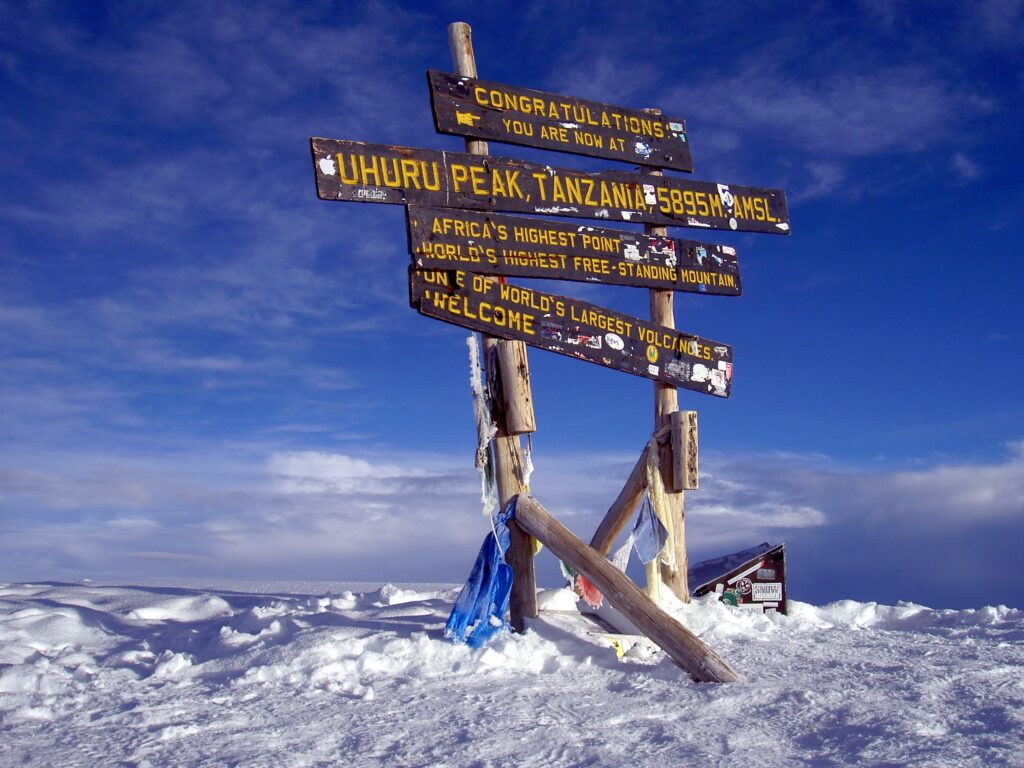
A Tanzania Serengeti Migration Safari offers an extraordinary combination of wildlife, landscapes, adventure and authentic African wilderness. The Serengeti is famous for the Great Wildebeest Migration, Big Five, large predator populations and spectacular savannah scenery. Depending on the season, travellers can witness newborn wildebeest during calving, huge herds crossing open plains, predator action or dramatic river crossings. Tanzania also makes it possible to combine Serengeti with Ngorongoro Crater, Tarangire, Mount Kilimanjaro and Zanzibar, creating a diverse African holiday. With expert local guides, carefully selected accommodation and a tailor-made itinerary, a Serengeti migration safari can deliver an unforgettable wildlife experience while supporting responsible tourism and conservation.
- Great Migration
- Big Five
- Large predators
- Savannah scenery
- Combine with Ngorongoro, Tarangire, Kilimanjaro & Zanzibar
Final Thought
The Serengeti Wildebeest Migration is a year-round natural journey shaped by rainfall, fresh grazing and the instinctive movement of wildlife. There is no single guaranteed migration date, making expert planning and strategic accommodation particularly important. Choose January–February for calving, June–July for Western Serengeti migration activity, or August–September for the possibility of spectacular Mara River crossings. Give yourself enough time to explore, use an experienced Tanzania safari guide and follow responsible wildlife-viewing regulations. Whether you choose a luxury lodge safari, private 4x4 adventure, fly-in safari or tailor-made Great Migration itinerary, the Serengeti offers extraordinary opportunities to witness one of nature’s greatest spectacles.
Great Wildebeest Migration: Frequently Asked Questions
When is the best time to see the wildebeest migration in Tanzania?
The best time depends on the experience you want. January and February are ideal for wildebeest calving in Southern Serengeti and Ndutu. June and July bring the herds to the Western Corridor and Grumeti. August and September are the most popular months for possible Mara River crossings in Northern Serengeti, and October can still be excellent. Because the herds follow rainfall, exact timing varies each year.
When do the Mara River crossings happen?
Mara River crossings usually take place in Northern Serengeti between August and October, with August and September often the most active months. Herds may cross back and forth several times as they follow fresh grazing and rainfall. Crossings can happen at any time of day and sometimes not for several days, so staying three or more nights near Kogatende or Lamai improves your chances.
Where is the migration in January and February?
In January and February the herds gather on the short-grass plains of Southern Serengeti and the Ndutu area, near the Ngorongoro Conservation Area, for the calving season. Hundreds of thousands of wildebeest calves are born within a few weeks, attracting lions, cheetahs and hyenas. This is one of the most rewarding times for predator action, and the green plains make beautiful photographs.
Can a river crossing be guaranteed on safari?
No responsible safari operator can guarantee a river crossing, because the herds respond to rainfall, grazing and natural instinct rather than a fixed schedule. You can greatly improve your chances by travelling between August and September, staying in Northern Serengeti camps near the Mara River, allowing several full days for game drives and travelling with an experienced guide who reads herd behaviour.
How many animals take part in the Great Migration?
More than 1.5 million wildebeest take part in the Great Migration, accompanied by hundreds of thousands of zebras, gazelles and other herbivores. Together they travel in a roughly circular journey through the Serengeti-Mara ecosystem in search of fresh grass and water. This vast movement of animals also supports large populations of predators, including lions, leopards, cheetahs, hyenas and Nile crocodiles.
Is the Great Migration better in Tanzania or Kenya?
The herds spend most of the year in Tanzania’s Serengeti, moving through the southern, central, western and northern regions, and only cross into Kenya’s Masai Mara for part of the dry season. Tanzania therefore offers migration viewing for more months, including the calving season and Grumeti activity, while Northern Serengeti provides Mara River crossings with fewer vehicles than many busy areas.
How far in advance should I book a migration safari?
Book a Great Migration safari as early as possible, ideally nine to twelve months ahead for July to October travel, when well-located Northern Serengeti camps fill quickly. Calving-season camps around Ndutu are also popular in January and February. Booking early secures your preferred accommodation, the best-positioned camps and flight availability, while still allowing your private itinerary to be fine-tuned.
How much does a Great Migration safari cost?
As a broad market guide, budget or camping migration safaris may start around US$250–$390 per person per day, while luxury safaris commonly start around US$990–$2,500 per person per day and can rise substantially. Prices depend on season, accommodation, safari length, transport and inclusions. Peak migration months cost more, while April and May are often less expensive. Always request an itemised quotation.
Which airstrip should I fly into for the migration?
Choose your airstrip by season. For Mara River crossings from August to October, fly into Kogatende or Lamai in Northern Serengeti. For the Western Corridor in June and July, Kirawira is convenient. For calving season, Kusini serves Southern Serengeti, and Seronera is ideal for Central Serengeti. Scheduled and charter flights connect these airstrips with Arusha, saving valuable safari time.
How many days do I need for a migration safari?
Plan at least three to four days in the Serengeti, but five to seven days is ideal for a migration safari, giving you flexibility to follow the herds and wait for calving or river-crossing action. Combining Tarangire, the Ngorongoro Crater and the Serengeti creates a seven- to ten-day Northern Tanzania safari. Photographers often benefit from even longer stays.
Follow the Herds on a Private Migration Safari
Tell us your travel dates and the migration moment you dream of, from calving in Ndutu to Mara River crossings, and we will place you in the right camp at the right time on a private tailor-made safari.