African Safari Tours

Arusha National Park Wildlife

Arusha National Park Wildlife

Arusha National Park is one of Tanzania's most distinctive wildlife destinations precisely because of what it lacks: there are no lions here, and elephants are rare and seldom seen. What the park offers instead is a different kind of safari experience. Large, healthy giraffe populations browse the open Ngurdoto Crater grasslands and acacia woodland, often at astonishingly close range. In the montane forest around the Momella Route, troops of black-and-white colobus monkeys leap through the canopy, their long white tails trailing behind them. Buffalo, zebra, warthog, and bushbuck graze the Momella Lakes floodplains alongside flamingos and pelicans. Because dangerous predators are almost entirely absent, Arusha National Park is one of only a handful of Tanzanian parks where visitors can leave the vehicle behind: guided walking safaris with an armed ranger and canoe safaris across the Momella Lakes put you on foot and on water among giraffe, buffalo, and hippo, delivering an intimate, low-risk wildlife encounter unlike anywhere else on the northern safari circuit.

Wildlife of Arusha National Park

No lions, few elephants, and no shortage of remarkable sightings — here is what makes the park's wildlife unique.

🦙

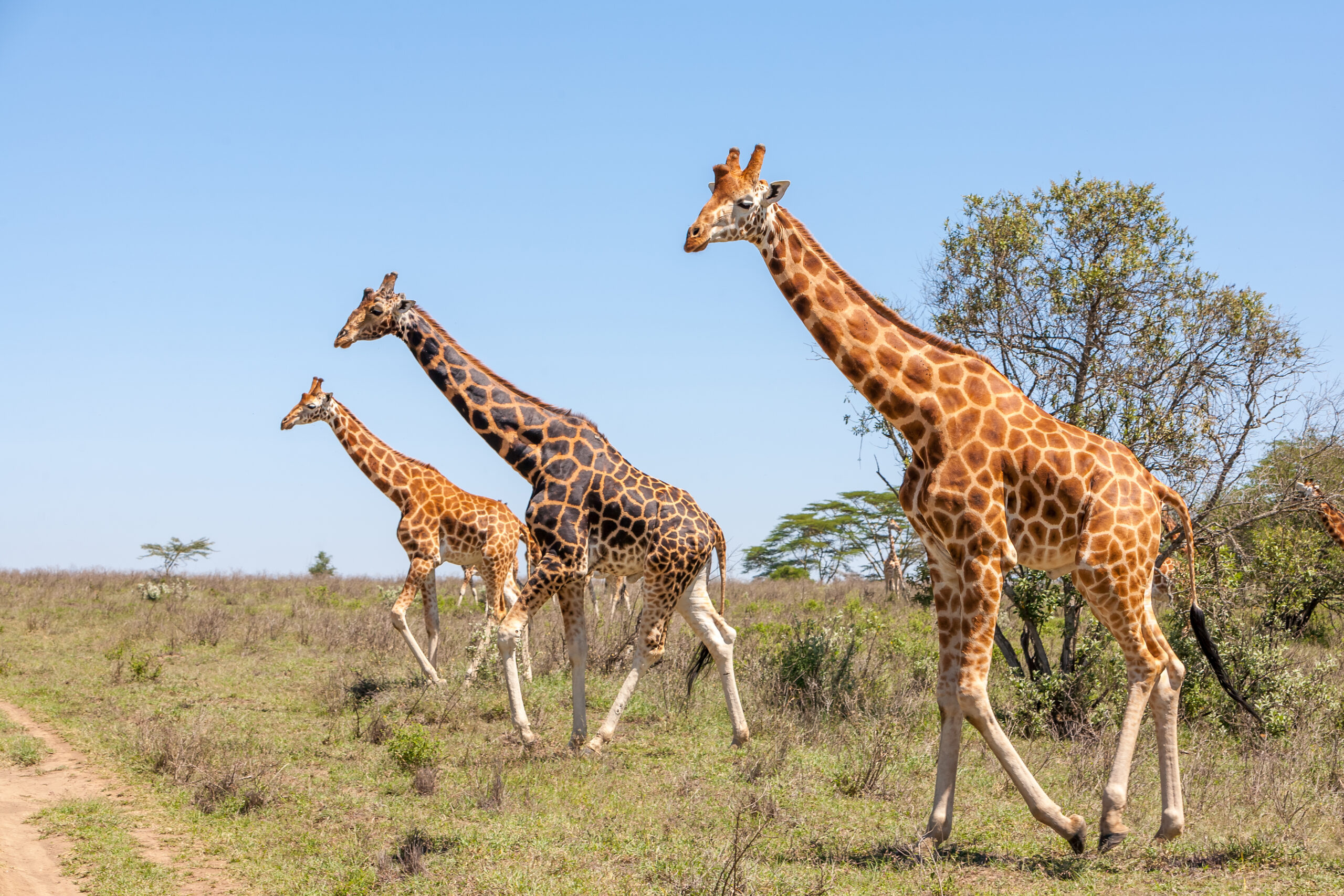
Giraffes

Arusha National Park holds one of Tanzania's densest giraffe populations. Masai giraffe move in loose herds across the Ngurdoto Crater rim grasslands and open acacia woodland near the Momella Lakes, often browsing beside the road at a distance of just a few metres. Because vehicle traffic is light and the terrain compact, sightings are near-guaranteed on almost any game drive, walking safari, or canoe outing, making this park one of the most reliable places in East Africa to watch giraffe behaviour up close, including necking contests between young males and mothers nursing calves in the open.

🐒

Black-and-White Colobus Monkeys

The montane forest cloaking Mount Meru's lower slopes is the best place in northern Tanzania to see black-and-white colobus monkeys. These striking primates, with flowing white cape-like fur and long tufted tails, live in troops high in the forest canopy along the Momella Route and around Ngurdoto Crater. Unlike most monkeys they eat mainly leaves, so they move slowly and are easier to photograph than fast-moving vervets. Their spectacular leaps between treetops, sometimes ten metres or more, are a highlight of any forest walk or drive through this shaded, fig-tree-rich section of the park.

🐕

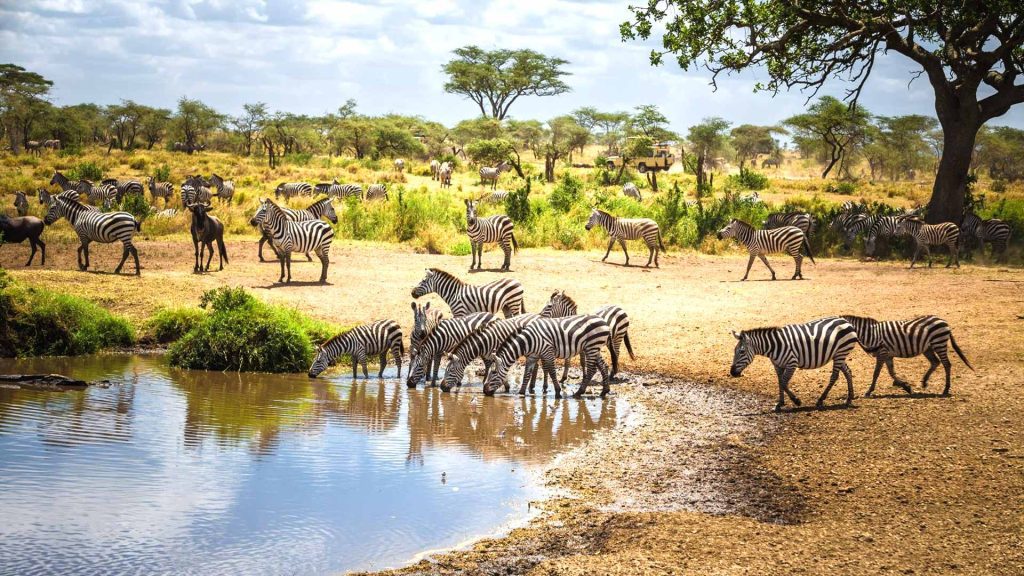
Buffalo & Zebra

Cape buffalo and Burchell's zebra gather in substantial numbers around the Momella Lakes floodplains and the open grassland of the Ngurdoto Crater floor, which is closed to vehicles and viewed only from the rim, giving spectacular panoramic sightings of mixed herds below. Buffalo here tend to be calmer and less skittish than in parks with heavier predator pressure, allowing closer, more relaxed observation. Zebra herds mix freely with giraffe and warthog across the same grasslands, creating classic East African savanna scenes that are easily reached on a half-day or full-day visit from Arusha town.

🐷

Warthogs & Bushbuck

Warthog are a constant, entertaining presence throughout Arusha National Park, trotting across grassy clearings with tails raised while kneeling to graze on short grass near the lake shores. The park is also one of the more dependable places to see bushbuck, a shy, striking antelope with white flank spots and spiralled horns on the males, which favour the cover of forest edges and thicket near the Momella gate and picnic sites. Both species are frequently spotted at close range on walking safaris, where the slower pace and quiet approach on foot make sightings more intimate than from a vehicle.

💩

Why There Are No Lions

Arusha National Park's relatively small size, dense forest cover, and fragmented habitat cannot support a viable lion population, and the last resident pride disappeared decades ago as the park's ecosystem proved too confined and prey-poor for large territorial predators to persist long-term. Leopard are present but rarely seen in the thick forest, and elephant numbers remain low because the park lacks the extensive open range elephants need. This absence of dangerous ground predators is precisely what makes the park ecologically unusual, and it is the reason activities normally too risky elsewhere in Tanzania, walking and canoeing among wildlife, are possible here.

🦠

Walking Safaris & Close Wildlife Encounters

Because Arusha National Park has no lions and very few elephants, it is one of the only parks in Tanzania offering official walking safaris, led by a licensed guide and an armed ranger from the Tanzania Wildlife Management Authority, and canoe safaris paddling quietly across the Momella Lakes among hippo, buffalo, and waterbirds. Both activities let visitors experience the park's giraffe, zebra, buffalo, and colobus monkeys on foot or from the water at a pace and proximity impossible on a standard game drive, an experience unavailable in the Serengeti, Ngorongoro Crater, or Tarangire, where predator density makes walking too dangerous.

Plan Your Arusha National Park Safari

Trip Length
6 – 15+ days
Comfort Level
Safari Style
Operator Rating
Specialized Tours
Filter by Operator
Other Tour Features

Arusha National Park Wildlife: Frequently Asked Questions

Why are there no lions in Arusha National Park?

Arusha National Park is too small and its habitat too fragmented and forest-dense to sustain a viable lion population; the last resident pride vanished decades ago because the confined terrain could not support the large prey base and territory size lions require long-term. Leopard remain present but stay hidden in thick montane forest, and elephant numbers are low for the same reason, the park lacks the extensive open range elephants need to roam. This absence of dangerous ground predators is what makes Arusha National Park ecologically unusual among Tanzania's parks, and it is the direct reason walking and canoe safaris are permitted here.

Is Arusha National Park safe to visit without lions and elephants present?

Yes, the near-absence of lions and elephants is exactly what makes Arusha National Park one of Tanzania's safest parks for close, active wildlife experiences. Buffalo, the animal responsible for most safari injuries elsewhere, are still present, so walking and canoe safaris are always led by a licensed guide and an armed Tanzania Wildlife Management Authority ranger who reads animal behaviour and keeps safe distances at all times. Vehicles remain available for guests who prefer a standard game drive. Visitors consistently describe the park as relaxed and unhurried compared with predator-dense reserves like the Serengeti or Ngorongoro Crater.

What makes Arusha National Park's giraffe population special?

Arusha National Park holds one of the densest concentrations of Masai giraffe in northern Tanzania, with herds regularly seen browsing the open grassland around Ngurdoto Crater and the Momella Lakes at very close range. Because there are no lions to keep them wary and cautious, giraffe here tend to be calmer and more approachable than in predator-heavy parks, often continuing to feed unhurried within metres of vehicles, walking groups, or canoes. This combination of high density and relaxed behaviour makes Arusha one of the most reliable and rewarding places in East Africa to photograph and observe giraffe up close.

Where is the best place to see black-and-white colobus monkeys in the park?

The best sightings of black-and-white colobus monkeys come from the montane forest along the lower slopes of Mount Meru, particularly the Momella Route and the forested rim around Ngurdoto Crater, where fig trees and dense canopy provide their preferred habitat. These striking primates, with flowing white fur and long tufted tails, travel in troops and are most active feeding on leaves in the mid-morning. A guided walking safari through this forest section, moving slowly and quietly on foot, gives far better views and photographic opportunities than a vehicle passing through on the main drive circuit.

How does a walking safari work in Arusha National Park?

A walking safari in Arusha National Park is led by a licensed park guide alongside an armed Tanzania Wildlife Management Authority ranger, typically lasting two to four hours through forest trails, grassland edges, or along the Momella Lakes shoreline. Because dangerous predators are essentially absent, the pace is unhurried, with frequent stops to examine tracks, birdlife, plants, and small wildlife up close. Groups stay small, usually under eight people, and walk in single file at a measured pace. It is widely regarded as one of the most immersive and educational safari activities available anywhere in northern Tanzania.

What is a canoe safari on the Momella Lakes like?

A canoe safari glides quietly across one of the Momella Lakes in a guided two-person canoe, typically lasting one to two hours, offering close views of hippo pods, buffalo drinking at the shoreline, waterbirds including flamingos and pelicans, and giraffe browsing along the banks, all from water level with no engine noise to disturb wildlife. The activity runs only on lakes cleared for safety by park rangers and is suspended if hippo activity is deemed too risky that day. It pairs naturally with a half-day visit and is unavailable in almost any other Tanzanian national park.

When is the best time of day to see wildlife in Arusha National Park?

Early morning, shortly after the park gates open around six-thirty, offers the coolest temperatures and the most active wildlife, with giraffe, zebra, and buffalo feeding in open grassland before the day warms. Late afternoon, from around four o'clock until closing, is the second-best window, as animals return to graze after the midday heat and forest birdlife becomes noticeably more vocal. Walking safaris are usually scheduled in the morning when animals are most active and temperatures most comfortable, while canoe safaris run in calmer conditions typically offered in both morning and afternoon slots.

What is the best time of year for Arusha National Park wildlife viewing?

The dry seasons, roughly late June through October and again in January and February, offer the clearest wildlife viewing, as vegetation thins and animals concentrate near the Momella Lakes and permanent water sources, while trails stay firm underfoot for walking safaris. The long rains from March to May bring lush green scenery and excellent birdlife but can make forest trails muddy and occasionally limit walking routes. Giraffe, buffalo, and colobus monkeys are present and visible year-round regardless of season, since the park's wildlife does not migrate, making Arusha a reliable destination in any month.

Can you see the Big Five in Arusha National Park?

No, Arusha National Park does not offer Big Five viewing; lions are absent, elephant sightings are rare and unpredictable, and rhino do not occur in the park at all. Leopard are present but live deep within dense montane forest and are almost never seen. Buffalo are the one Big Five species reliably encountered, often in sizeable herds near the Momella Lakes. Visitors seeking a Big Five safari should pair Arusha National Park with Tarangire, Ngorongoro Crater, or the Serengeti, while treating Arusha itself as a distinct experience built around giraffe, colobus monkeys, and its unique walking and canoe safaris.

How many giraffe live in Arusha National Park?

Arusha National Park does not publish a single fixed giraffe count, since numbers shift with seasonal movement and periodic surveys, but the park is widely recognised by guides and researchers as holding one of the highest giraffe densities relative to its size anywhere in northern Tanzania. The compact 137-square-kilometre park concentrates Masai giraffe herds around the Ngurdoto Crater grassland and Momella Lakes floodplain, meaning visitors typically encounter multiple herds, sometimes a dozen or more individuals, within just a few hours of driving, walking, or paddling through the park's accessible sections.

Are the animals in Arusha National Park dangerous on a walking safari?

Buffalo remain the primary safety consideration on any walking safari in Arusha National Park, since they can be unpredictable at close range, which is why every walk is led by an armed Tanzania Wildlife Management Authority ranger trained to assess animal behaviour and maintain safe distances at all times. Giraffe, zebra, warthog, bushbuck, and colobus monkeys pose essentially no threat to walkers. With lions absent and elephants rarely encountered, the overall risk profile is significantly lower than walking safaris offered in predator-dense reserves elsewhere in East Africa, which is precisely why this activity is permitted here at all.

Do zebra and giraffe share the same habitat in the park?

Yes, zebra and giraffe are frequently seen grazing and browsing together across the same open grassland areas around Ngurdoto Crater's rim and the Momella Lakes floodplain, since neither species competes directly for food, zebra graze grass while giraffe browse acacia and other trees at height. Warthog often join the same mixed herds, kneeling to graze nearby, creating classic multi-species savanna scenes within a compact, easily walkable area. This close proximity of species without the wariness predator pressure usually creates is one of the more distinctive features of game viewing in Arusha National Park.

What birds might I see alongside wildlife at the Momella Lakes?

The alkaline Momella Lakes attract flocks of lesser and greater flamingo, along with pelicans, herons, storks, and numerous waterfowl species, often visible in the same frame as buffalo, giraffe, or hippo drinking at the shoreline, making the lakeshore one of the richest combined wildlife and birding areas in the park. A canoe safari puts visitors at eye level with this birdlife in a way no vehicle can match. Guides frequently point out fish eagles perched along the shore and augur buzzards soaring above the crater rim during the same outing that features giraffe and colobus sightings.

Why should I choose Foot Slopes Tours and Safaris for an Arusha National Park safari?

Foot Slopes Tours and Safaris is a Tanzania-based operator with guides who hold official Tanzania Wildlife Management Authority walking safari certification, meaning every walking and canoe safari booked through us is led correctly and legally, not improvised. Our team plans Arusha National Park visits around the specific wildlife travellers want to see, giraffe herds, colobus monkey troops, or the Momella Lakes canoe route, rather than a generic drive-through. Being locally based means real-time knowledge of trail conditions, lake safety status, and seasonal animal movement, translating into higher-quality sightings than a foreign-booked, templated itinerary can typically offer.

Does Foot Slopes Tours and Safaris include walking and canoe safaris in its itineraries?

Yes, Foot Slopes Tours and Safaris builds walking safaris and Momella Lakes canoe safaris directly into Arusha National Park itineraries whenever a guest's schedule and interests allow, rather than treating them as generic optional add-ons. Because these activities require an armed ranger and advance permit coordination with the park authority, booking through a locally based operator who handles that paperwork in advance means guests avoid the scheduling delays and availability gaps that commonly frustrate independent or last-minute bookings arranged through overseas agents unfamiliar with the park's specific activity permit process.

How experienced are Foot Slopes Tours and Safaris guides with Arusha National Park wildlife?

Our guides are Tanzanian nationals with years of hands-on field experience specifically in Arusha National Park, trained to track giraffe herd movement, locate colobus monkey troops in the forest canopy, and read buffalo behaviour safely during walking and canoe safaris. This local, park-specific expertise means better sightings and a safer experience than generalist guides who split time across many parks without deep familiarity with any single one. Guests consistently note in reviews that this specialised knowledge, particularly around forest wildlife and lake safety, was a defining factor in the quality of their Arusha National Park experience with us.

Can Foot Slopes Tours and Safaris combine Arusha National Park with other northern circuit parks?

Yes, Foot Slopes Tours and Safaris routinely combines a half or full day in Arusha National Park with Tarangire, Lake Manyara, Ngorongoro Crater, and the Serengeti as part of longer northern circuit itineraries, since Arusha National Park sits closest to Kilimanjaro International Airport and Arusha town, making it a natural first or last stop. This lets guests experience Arusha's unique giraffe, colobus monkey, walking, and canoe safaris alongside the Big Five viewing found deeper in the circuit, giving a fuller and more varied wildlife experience than visiting any single park alone would provide.

Plan With Confidence

Plan Your Arusha National Park Wildlife

Tell us your dates, style, and preferred parks, and we will build the perfect itinerary around you.

Book Now Online →

What Our Travelers Say

Real 5-star reviews from guests who traveled with us

“
★★★★★

Our Private African luxury Safari experience with Foot Slopes Tours and Safaris was nothing short of exceptional. From the very beginning, owner Gabriel was incredibly responsive, making the entire booking process smooth and stress-free. Gabriel went above and

Charlotte T
“
★★★★★

We had an incredible private safari experience with Foot Slopes Tours and Safaris. Their office staff was very helpful and informative, and they communicated very well. Our pick-ups to and from the airport were on time and hassle-free, an unforgettable Safari

Evans Aiden
“
★★★★★

Foot Slopes Tours and Safaris is truly one of the best local tour companies in Tanzania. From start to finish, their service was professional, reliable, and personalized. The team went above and beyond to make sure every detail of our trip was perfect. Our saf

André T
“
★★★★★

Our family chose Foot Slopes Tours and Safaris for a custom 11-day safari itinerary, and we couldn’t be happier with our choice! Everything from our initial inquiry to building our custom itinerary to pre-departure and on-trip support was top quality. Communic

Ida N