Fastest Animals in the World: Air, Water and Land
What are the fastest animals in the world? Speed is one of nature's greatest survival tools, helping predators catch prey and prey escape danger. This guide ranks the fastest animals on Earth across air, water and land, from the peregrine falcon's record-breaking hunting dive to the black marlin, sailfish and cheetah. You will learn top speeds in km/h and mph, how scientists measure speed, why acceleration and endurance matter and which speedsters you can see in the wild. We also show where to watch cheetahs, gazelles, wildebeest and ostriches racing across the open plains on a private Tanzania safari.
Quick Answer: What Is the Fastest Animal in the World?
The fastest animal in the world is the peregrine falcon, reaching about 389 km/h (242 mph) in a hunting dive. The fastest land animal is the cheetah, at roughly 100 to 120 km/h (62 to 75 mph). The fastest sea animals are the black marlin and sailfish, estimated at around 100 to 130 km/h (62 to 80 mph).
01Top 10 Fastest Animals in the World
Ranking the fastest animals in the world is not as simple as it sounds, because animals move through air, water and over land in very different ways. Diving birds use gravity, fish push through dense water and land mammals rely on muscle power and grip. Some speeds come from careful scientific measurement, while others are estimates still debated by researchers. This top ten list combines the most widely cited records across all habitats, from the sky to the sea, with approximate top speeds in kilometres and miles per hour for each record-breaking animal. Prepare to be truly amazed.
Peregrine falcon
The peregrine falcon is the fastest animal on Earth. During its hunting dive, called a stoop, it has been recorded at about 389 km/h (242 mph). Tucked wings, a streamlined body and special bony tubercles in its nostrils help it breathe and stay in control while striking birds in mid-air. No other animal comes close to this.
Golden eagle
The golden eagle is one of the fastest birds in a dive, with estimated speeds of about 240 to 320 km/h (150 to 200 mph) when swooping on prey. Powerful and agile, it hunts hares, rabbits, foxes and young hoofed animals across mountains and open country in the Northern Hemisphere and parts of Africa. It is truly majestic.
Mexican free-tailed bat
In 2016, researchers tracked Mexican free-tailed bats flying at about 160 km/h (99 mph), making them possibly the fastest animals in level, powered flight rather than a dive. These small bats live in huge colonies in the Americas, emerging at dusk in spectacular swirling clouds to hunt moths and other flying insects. Their speed surprised scientists.
White-throated needletail
The white-throated needletail, a swift found across Asia and Australia, is often listed as the fastest bird in level flight, with claimed speeds of up to about 169 km/h (105 mph). The figure is debated, but its slim, sickle-shaped wings and short tail make it an extraordinarily quick and agile aerial insect hunter. It is a remarkable flier.
Black marlin
The black marlin is often called the fastest fish in the ocean, with claimed speeds of up to about 129 km/h (80 mph), based on how fast it pulls fishing line. Scientists consider this an overestimate, but it is still exceptionally quick. Black marlins live in warm Indian and Pacific Ocean waters, including off East Africa.
Sailfish
The sailfish is famous for its tall, sail-like dorsal fin and remarkable speed, with estimates of up to about 110 km/h (68 mph), although recent research suggests lower sustained speeds. Sailfish hunt sardines by slashing their bills through dense schools of fish. They live in warm oceans, including the Indian Ocean around Zanzibar. They are stunning hunters.
Cheetah
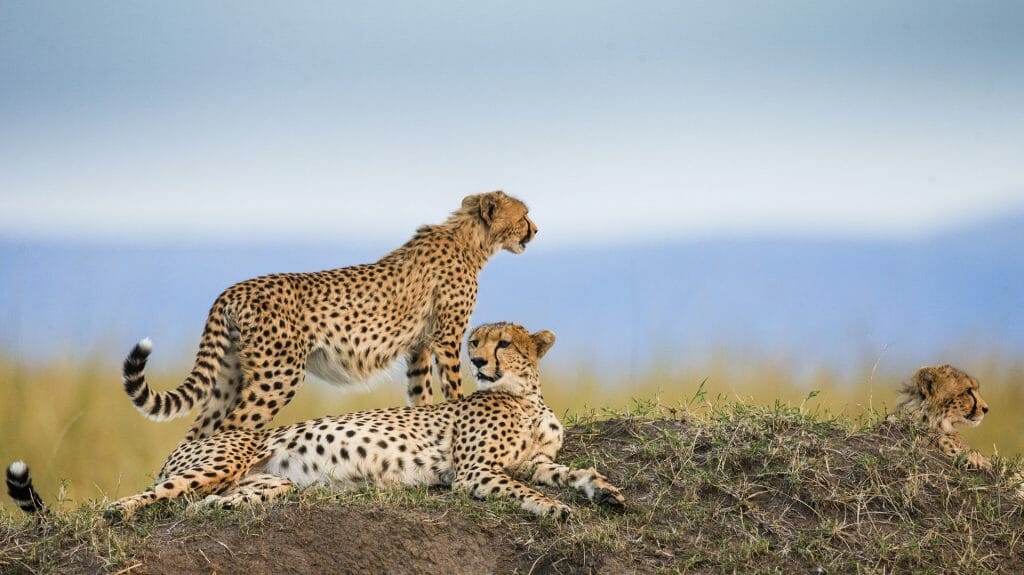
The cheetah is the fastest land animal, reaching about 100 to 120 km/h (62 to 75 mph) in short sprints of 20 to 30 seconds. It can accelerate from zero to around 96 km/h (60 mph) in about three seconds. Tanzania's Serengeti and Ndutu plains are among Africa's best places to watch cheetahs hunt. It is pure, breathtaking power.
Pronghorn
The pronghorn of North America is the second fastest land animal, reaching about 88 km/h (55 mph). More impressively, it can sustain high speeds over long distances, cruising at around 56 km/h (35 mph) for several kilometres. Scientists believe it evolved this endurance to outrun extinct predators such as the American cheetah. It is a stamina champion.
Swordfish
The swordfish is one of the ocean's fastest predators, with estimated burst speeds of around 97 km/h (60 mph). Special heat-generating tissue warms its eyes and brain, improving vision in cold, deep water. It uses its long, flat bill to slash and stun prey such as squid and fish during high-speed attacks. It is a deep-sea legend.
Springbok
The springbok, a graceful gazelle of southern Africa, can reach about 88 km/h (55 mph). It is famous for pronking, leaping stiff-legged up to around two metres into the air, possibly to signal fitness to predators. In East Africa, the similar Thomson's gazelle races across the Serengeti at speeds of about 80 km/h. Both are wonderfully quick.
02Fastest Flying Animals
The sky is home to the fastest animals on the planet. Birds of prey use gravity to reach astonishing speeds in hunting dives, while swifts, bats and seabirds rely on powerful wings for fast level flight. Even tiny creatures such as hummingbirds and dragonflies perform incredible aerial feats for their size. Beyond the record holders already listed, these six remarkable flyers show the variety of speed in the air, from Arctic falcons and ocean wanderers to bright African birds you might spot over the plains and lakes of Tanzania on safari. Look up often during your safari adventures.
Gyrfalcon
The gyrfalcon, the world's largest falcon, lives in the Arctic and can reach about 200 km/h (125 mph) in a dive. Unlike the peregrine, it often chases prey in fast, low, level flight over tundra and coasts. Its thick plumage and powerful build make it a superb hunter in freezing conditions. It is a true survivor.
Frigatebird
Frigatebirds are ocean wanderers with the largest wingspan relative to body weight of any bird, allowing them to stay aloft for weeks. They are often credited with speeds of around 150 km/h (95 mph), though figures vary. They snatch fish from the sea surface and even chase other seabirds to steal food. They are true aerial pirates.
Spur-winged goose
The spur-winged goose of sub-Saharan Africa is one of the fastest birds in level flight, with reported speeds of up to about 140 km/h (88 mph). Found around lakes, rivers and wetlands, including in Tanzania, this large goose is named after the bony spurs on the bend of each wing. Watch for them near Lake Manyara.
Common swift
The common swift spends most of its life on the wing, eating, drinking and even sleeping in flight. It has been recorded at around 111 km/h (69 mph) during fast display flights. Each year, common swifts migrate between Europe and sub-Saharan Africa, so you may see them over Tanzania between roughly October and April. Look skyward.
Anna's hummingbird
For its body size, Anna's hummingbird may be the fastest bird of all. During courtship dives, males reach about 385 body lengths per second, faster relative to size than a peregrine falcon or a fighter jet. Although tiny, it shows how relative speed can be just as impressive as raw top speed. Nature constantly surprises us all.
Dragonflies
Dragonflies are among the fastest flying insects, with some species reaching around 50 km/h (31 mph). Even more impressive is their hunting success, as they catch flying prey in mid-air with remarkable accuracy, thanks to excellent eyesight and four independently controlled wings. They are common around Tanzania's lakes, rivers and wetlands. They are ancient aerial hunters.
03Fastest Sea Animals
Water is far denser than air, so swimming fast requires powerful muscles and highly streamlined bodies. The fastest sea animals include billfish, tunas, makos and marine mammals, each with clever adaptations to reduce drag and generate thrust. Many ocean speed records are estimates, because measuring wild fish at sea is extremely difficult. Alongside the marlin, sailfish and swordfish ranked above, these six fast swimmers reveal how speed works underwater, from warm-bodied tunas and makos to dolphins, orcas and the surprisingly quick penguin, some found in East Africa's Indian Ocean waters. Each one is a marvel of natural engineering.
Wahoo
The wahoo is a sleek, torpedo-shaped fish of tropical and subtropical seas, with burst speeds estimated at around 78 km/h (48 mph). Its fearsome teeth and lightning strikes make it a prized catch for sport anglers. Wahoo are found in warm Indian Ocean waters, including around Zanzibar and the Tanzanian coast. It is a striking ocean predator.
Shortfin mako
The shortfin mako is widely considered the fastest of its kind, with burst speeds often estimated at around 70 km/h (45 mph). Like tunas, it can keep its body warmer than the surrounding water, powering fast muscles. Makos are famous for spectacular leaps out of the water and live in temperate and tropical oceans worldwide. Few rival it.
Bluefin and yellowfin tuna
Tunas are built for speed and endurance, with torpedo-shaped bodies, fins that fold into grooves and warm muscles. Bluefin and yellowfin tuna can reach burst speeds of around 70 to 75 km/h (43 to 47 mph) and migrate thousands of kilometres across oceans. Yellowfin tuna live in the warm waters off Tanzania. They are remarkable ocean athletes.
Orca
The orca, or killer whale, is one of the fastest marine mammals, reaching about 56 km/h (35 mph) in short bursts. Orcas hunt in highly coordinated family pods, using speed, intelligence and teamwork to catch fish, seals and even large whales. They live in every ocean, from polar seas to the tropics. They are true apex predators.
Common dolphin
Common dolphins are among the fastest dolphins, reaching around 60 km/h (37 mph) in bursts. They often travel in large, playful pods, riding the bow waves of boats. In Zanzibar, dolphin trips at Kizimkazi offer chances to see bottlenose and Indo-Pacific humpback dolphins, though respectful, responsible viewing is essential. Their playful energy delights travelers of every age.
Gentoo penguin
The gentoo penguin is the fastest swimming bird, reaching about 36 km/h (22 mph) underwater. Its wings have evolved into stiff flippers, and its streamlined body cuts through cold Antarctic waters while chasing krill and fish. Penguins prove that some birds are far faster swimming in the sea than walking on land. They are wonderfully agile swimmers.
04Fast African Animals You Can See on Safari
On land, speed often decides the outcome of the chase between predator and prey, and nowhere is this drama more visible than on the African savanna. The Serengeti and Ngorongoro are home to some of the fastest land animals on Earth, from big cats and wild dogs to antelopes, wildebeest and the ostrich. For a complete ranking of land speedsters, see our guide to the fastest land animals. Here are six fast African animals you can watch on a private Tanzania safari, with their approximate top speeds and the best places to see them in action. Enjoy the chase.
Thomson's gazelle
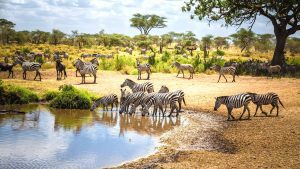
Thomson's gazelles can reach about 80 to 90 km/h (50 to 55 mph) and change direction rapidly, making them hard for predators to catch. They are a favourite prey of cheetahs. Large herds graze the short-grass plains of the Serengeti and Ndutu, where tense cheetah chases often unfold in front of safari vehicles. Patience brings great rewards.
Wildebeest
Wildebeest can run at about 80 km/h (50 mph), and their stamina carries them hundreds of kilometres each year during the Great Migration. Calves can stand and run within minutes of birth, a vital defence against predators. The best place to see them is the Serengeti, following the herds through the seasons. Their journey is truly epic.
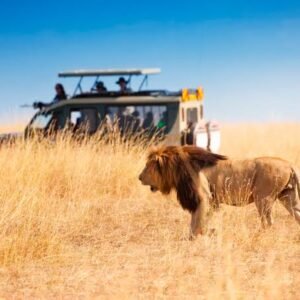
Lion
Lions can reach about 80 km/h (50 mph), but only in short bursts, so they rely on stealth, teamwork and ambush rather than long chases. Lionesses do most of the hunting, often at dawn and dusk. The Serengeti and Ngorongoro Crater offer some of Africa's best lion sightings on a private safari. Their roars carry for kilometres.
Ostrich
The ostrich is the fastest bird on land and the fastest two-legged runner, reaching about 70 km/h (43 mph) and sustaining around 50 km/h for long distances. Powerful legs cover several metres in a single stride. Ostriches are common in the Serengeti and Ngorongoro, especially on open grassy plains. Watch them sprint across the savanna at sunset.
African wild dog
African wild dogs reach about 65 to 70 km/h (40 to 44 mph) and are famous for their endurance, chasing prey over long distances as a highly cooperative pack. They are among Africa's most successful hunters. In Tanzania, Nyerere and Ruaha national parks offer some of the best chances of sightings. Spotting a pack is truly unforgettable.
Leopard
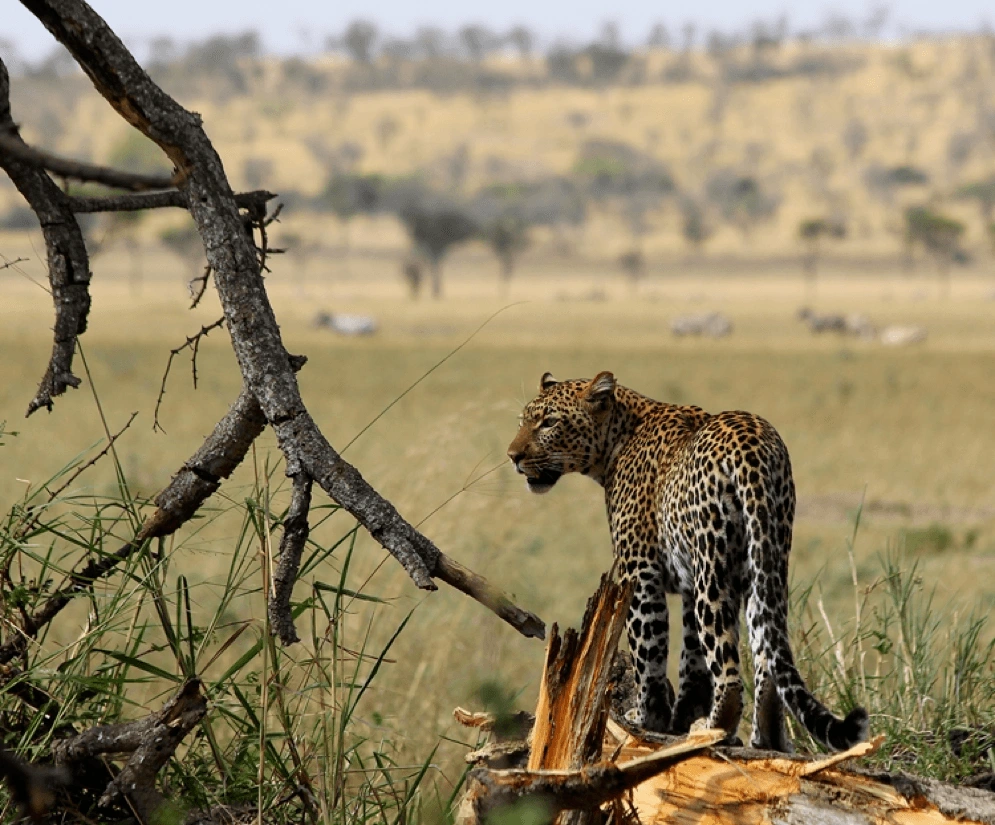
Leopards can sprint at around 58 km/h (36 mph), but they rely on stealth, strength and patience more than speed. They are also superb climbers, often hauling prey into trees. The Serengeti's Seronera Valley is one of Africa's best places to spot leopards resting on branches along rivers. Seeing one in a tree is a safari highlight.
05Types of Animal Speed Explained
Speed in the animal kingdom can be measured in several ways, and the fastest animal depends on which type of speed you mean. Some animals hold records for top speed, others for explosive acceleration, long-distance endurance or speed relative to body size. Understanding these differences helps explain why the cheetah wins a sprint, while the pronghorn and wildebeest win over distance. These five tabs explain the main types of animal speed, how scientists measure them and how humans compare, with examples you can see for yourself on a private safari in Tanzania's Serengeti and Ngorongoro. Speed takes many forms.
Top Speed
Record lovers
Peregrine falcon and cheetah
Top speed is the fastest velocity an animal can reach, usually for a very short time. The peregrine falcon holds the overall record at about 389 km/h in a dive, while the cheetah leads on land at roughly 100 to 120 km/h. Scientists measure top speeds using GPS collars, high-speed video and radar. Records keep improving with technology.
See cheetahs →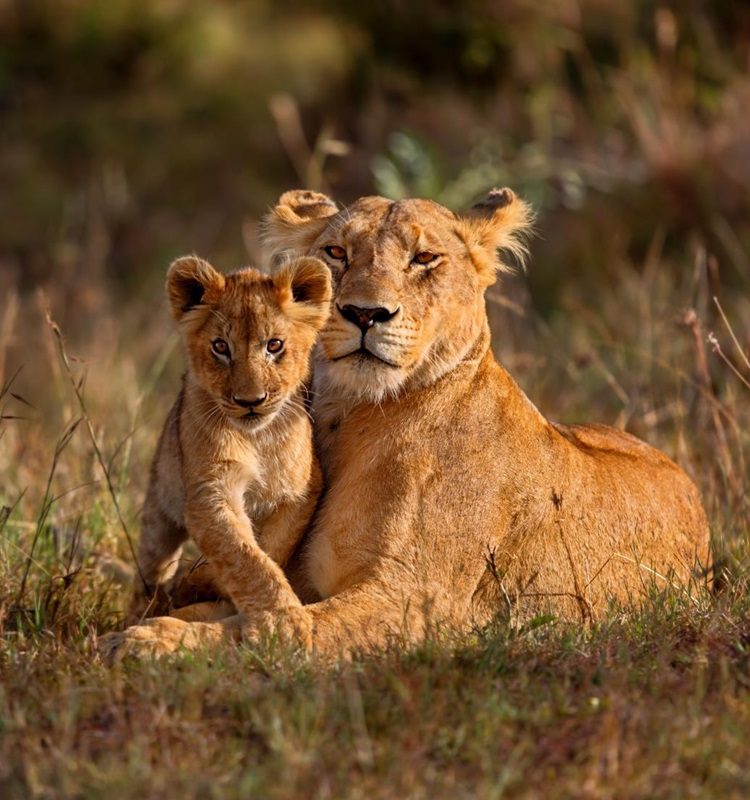
Acceleration
Predator fans
Cheetah's explosive start
Acceleration measures how quickly an animal reaches high speed. Cheetahs can go from zero to about 96 km/h in roughly three seconds, faster than many sports cars, thanks to a flexible spine, long legs and grippy, semi-retractable claws. Rapid acceleration lets predators close the gap before prey can escape. It is a breathtaking sight to witness live.
Big cats safari →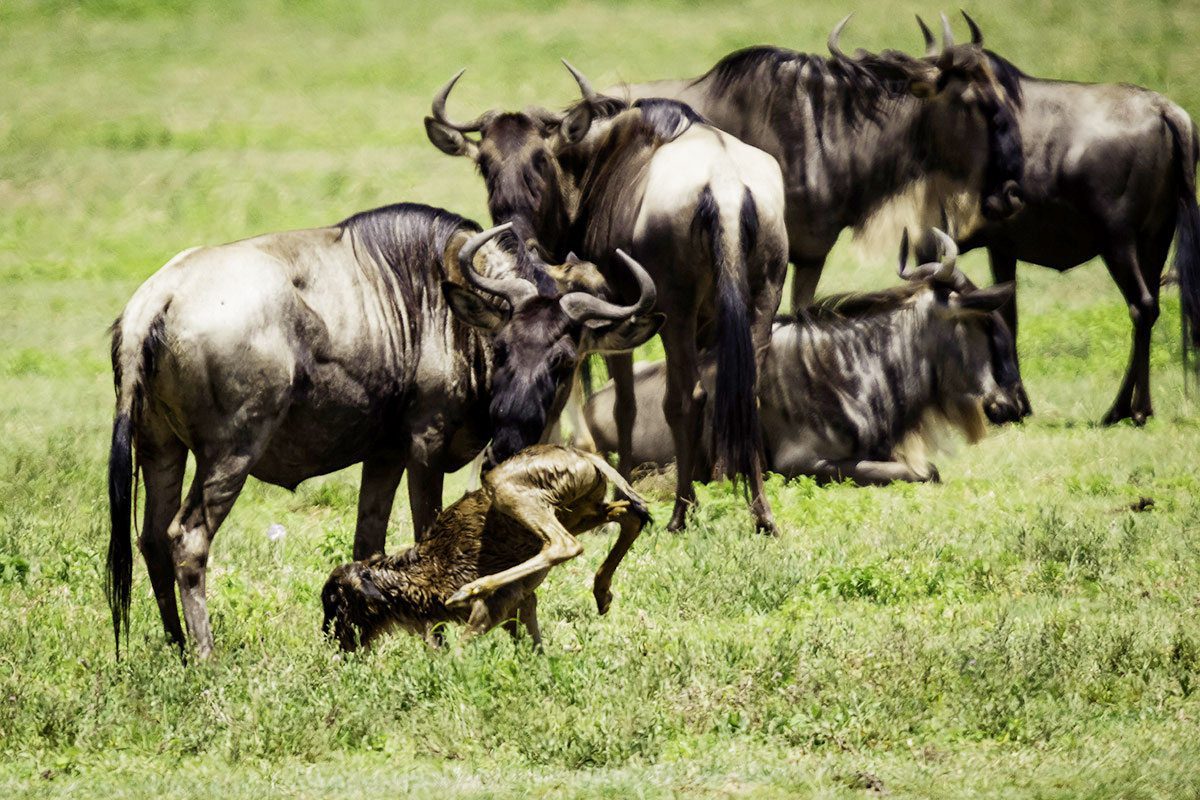
Endurance
Migration watchers
Pronghorn, wildebeest and wild dog
Endurance is the ability to keep moving fast over long distances. The pronghorn can cruise at around 56 km/h for several kilometres, while African wild dogs chase prey for long distances until it tires. Wildebeest combine speed with stamina, travelling hundreds of kilometres each year during the Great Migration across the Serengeti. Stamina often matters more than raw speed.
Where to see the migration →
Relative Speed
Curious minds
Tiny but astonishing
Relative speed compares how many body lengths an animal covers per second. By this measure, tiny creatures are the true champions. A Californian mite, Paratarsotomus macropalpis, runs about 322 body lengths per second, and Anna's hummingbird dives at around 385 body lengths per second, far beyond a cheetah's relative speed. Small can be truly mighty in nature.
Photograph fast animals →
Humans vs Animals
Families and kids
Usain Bolt vs the cheetah
The fastest recorded human sprint belongs to Usain Bolt, who reached about 44.7 km/h (27.8 mph) during his 100-metre world record in 2009. That is impressive for a person, but a cheetah, lion, wildebeest or even an ostrich would easily outrun him. Humans excel instead at long-distance endurance running. Even children love comparing these speeds on safari.
Family safaris →06See the World's Fastest Animals on Safari
Watching the fastest animals in the world in their natural habitat is an unforgettable experience. Tanzania's Serengeti, Ndutu, Ngorongoro Crater and southern parks offer outstanding chances to see cheetahs sprint, gazelles leap and wildebeest gallop across the plains. Timing, location and an expert guide make all the difference. Use this checklist to plan a safari focused on speedsters, then contact our Arusha-based specialists, who will design a private tailor-made Tanzania safari with expert guides, private 4x4 vehicles and well-located camps close to the action. Fast-moving wildlife moments await you. Every game drive brings new surprises, so keep cameras ready.
Where to go0/4
When to go0/4
What to bring0/4
07Fastest Animals in the World: FAQs
What is the fastest animal in the world?
The fastest animal in the world is the peregrine falcon, which reaches about 389 km/h (242 mph) during its hunting dive, known as a stoop. No other animal is known to move faster. In level flight, the Mexican free-tailed bat and white-throated needletail are among the fastest, at around 160 km/h or more. It is truly remarkable.
What is the fastest land animal?
The cheetah is the fastest land animal, reaching about 100 to 120 km/h (62 to 75 mph) in short sprints lasting 20 to 30 seconds. It can accelerate from zero to about 96 km/h in roughly three seconds. The Serengeti and Ndutu in Tanzania are among the best places to see cheetahs hunting. It is pure, breathtaking power.
What is the fastest animal in the sea?
The black marlin and sailfish are usually named the fastest sea animals, with estimated speeds of around 100 to 130 km/h (62 to 80 mph). However, these figures are debated, and recent research suggests lower sustained speeds. Swordfish, wahoo, tunas and the shortfin mako are also among the fastest ocean swimmers. Ocean speed remains hard to measure.
What is the fastest bird in the world?
The peregrine falcon is the fastest bird, diving at about 389 km/h (242 mph). The golden eagle and gyrfalcon are also exceptionally fast divers. In level flight, the white-throated needletail and spur-winged goose are among the fastest birds, while the ostrich is the fastest bird on land at about 70 km/h. Birds dominate the speed charts overall.
What is the second fastest animal in the world?
The golden eagle is often named the second fastest animal overall, with diving speeds estimated at about 240 to 320 km/h (150 to 200 mph). On land, the second fastest animal is the North American pronghorn, reaching about 88 km/h and sustaining high speeds over longer distances than any other land mammal. Both are remarkable athletes in nature.
Which is faster, sailfish or black marlin?
The black marlin is often credited with higher speeds, up to about 129 km/h, compared with about 110 km/h for the sailfish. However, both figures are estimates based on fishing line speed, and scientists believe real speeds are lower. Both are extremely fast billfish living in warm oceans, including the Indian Ocean. Both are thrilling ocean hunters.
How fast can a cheetah run?
A cheetah can run at about 100 to 120 km/h (62 to 75 mph), making it the fastest land animal. It can only maintain this speed for around 20 to 30 seconds before overheating and tiring. Its flexible spine, long legs, large nostrils and grippy claws make these explosive sprints possible. It is breathtaking to watch in person.
How fast can a lion run?
A lion can run at about 80 km/h (50 mph), but only for short bursts. Because lions tire quickly, they depend on stealth, teamwork and ambush, often hunting at dawn, dusk or night. Lionesses do most of the hunting. The Serengeti and Ngorongoro Crater offer excellent lion sightings on safari. Their power is truly awe-inspiring to see.
What is the fastest animal in Africa?
The cheetah is the fastest land animal in Africa and the world, reaching about 100 to 120 km/h. Other fast African animals include the Thomson's gazelle, springbok, wildebeest, lion, ostrich and African wild dog. Many of these speedsters live in Tanzania's Serengeti, Ngorongoro and southern parks such as Nyerere and Ruaha. Africa is a speed lover’s paradise.
What is the fastest insect in the world?
Dragonflies are among the fastest reliably measured flying insects, with some species reaching around 50 km/h (31 mph). Some horseflies have been claimed to fly even faster, but those figures are unverified. Relative to body size, tiger beetles are extraordinary runners, covering well over 100 body lengths per second. Small creatures can be astonishingly quick in nature.
How fast is the fastest human compared with animals?
The fastest recorded human, Usain Bolt, reached about 44.7 km/h (27.8 mph) during his 2009 100-metre world record. A cheetah is more than twice as fast, and lions, wildebeest, gazelles and ostriches would all outrun him. Humans, however, are excellent long-distance endurance runners compared with many animals. We are better at stamina than at speed, and that is fine.
Where can I see cheetahs in Tanzania?
The best places to see cheetahs in Tanzania are the Serengeti's open plains, especially the southern Serengeti and Ndutu area during the calving season from about January to March. Cheetahs are also seen in the central Seronera area and occasionally in Tarangire and Ruaha. Expert guides greatly improve your chances. Ndutu is a cheetah hotspot.
What is the fastest animal over long distances?
The pronghorn is considered the best long-distance runner among land mammals, cruising at around 56 km/h for several kilometres. In Africa, wild dogs are famous for endurance hunting, and wildebeest travel hundreds of kilometres during the Great Migration. The ostrich can also sustain about 50 km/h over long distances. Stamina is its own kind of speed.
When is the best time to see fast animals on safari?
The best times are early morning and late afternoon, when predators such as cheetahs and lions are most active. For dramatic chases, visit the southern Serengeti and Ndutu during the calving season from January to March, or the Serengeti in the dry season from June to October, when wildlife gathers. Your guide will know the best spots.
Wildlife Guides
See Fast Animals on a Private Safari
Watch Africa's Fastest Animals in Action
See cheetahs sprint, gazelles leap and wildebeest race across the Serengeti on a private tailor-made Tanzania safari, with expert guides, private 4x4 vehicles and well-located camps designed by our Arusha-based team around your dates and interests.
Book Now Online →What Our Travelers Say
Real 5-star reviews from guests who traveled with us