African Safari Tours

Lake Eyasi Birds & Birding

Lake Eyasi Birds & Birding

Lake Eyasi is a shallow, alkaline soda lake tucked beneath the Rift Valley escarpment in northern Tanzania, and its birdlife shifts dramatically with the water. When seasonal rains fill the basin, flocks of lesser and greater flamingos, great white pelicans, and yellow-billed and marabou storks gather to feed on the algae and invertebrates that bloom in the shallows, echoing the spectacles seen at Lake Natron and Lake Manyara, though Eyasi is less consistently full than those better-known Rift Valley soda lakes. Visitors who time a trip around the wet season, roughly November to May, stand the best chance of finding waterbirds, herons, ibis, and waders along the exposed shoreline and mudflats. Beyond the lake itself, the surrounding acacia woodland and escarpment support a resident cast of raptors, hornbills, bee-eaters, and other bush birds year-round, making Lake Eyasi a rewarding stop for birders exploring beyond Tanzania's classic northern circuit parks.

Birdlife of Lake Eyasi

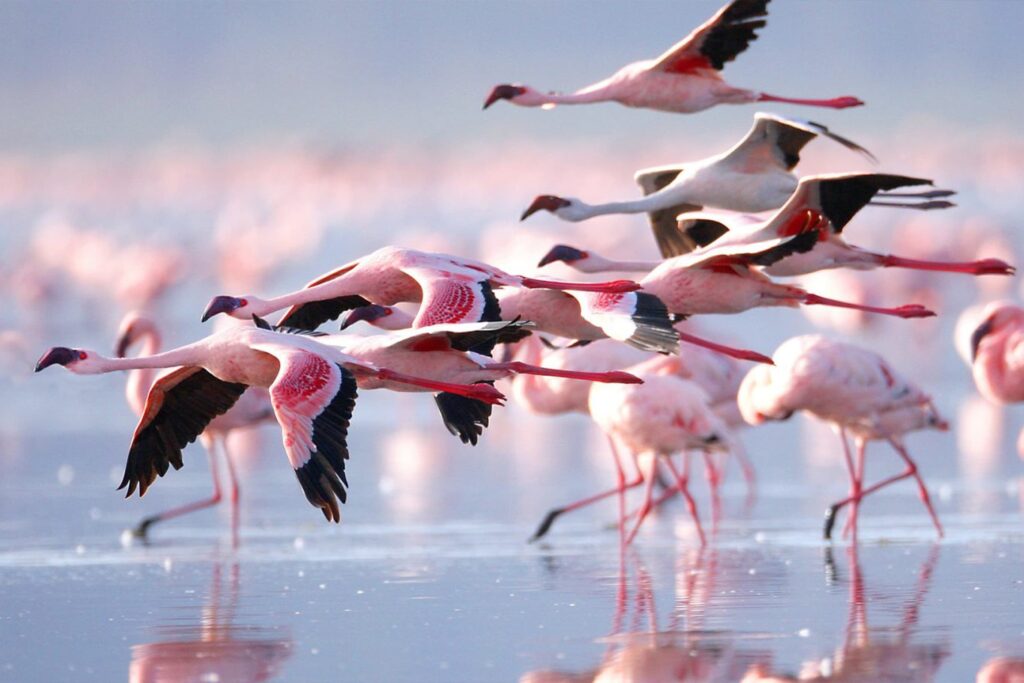
Flamingos (When the Lake Is Full)

When seasonal rains fill Lake Eyasi's shallow soda basin, lesser and greater flamingos arrive to filter-feed on algae and invertebrates in the alkaline shallows, forming pink-tinged flocks along the exposed shoreline. Because Eyasi holds water less reliably than Lake Natron or Lake Manyara, numbers vary year to year, and a wet-season visit after good rains offers the strongest chance of witnessing large gatherings.

Pelicans & Storks

Great white pelicans work the open water in cooperative rafts, herding fish into the shallows, while yellow-billed storks and marabou storks stalk the mudflats on tall legs. Sacred ibis and African spoonbills often join the mix, probing soft sediment for invertebrates. These larger wading and swimming species are typically the first birds visible from a distance whenever the lake carries meaningful water.

Waterfowl & Waders

Beyond the showier flamingos and storks, Lake Eyasi's margins attract a rotating cast of ducks, herons, plovers, and sandpipers, including migratory waders that pass through on long-distance flyways. Little egrets, black-winged stilts, and Kittlitz's plovers pick along the wet mud, while Egyptian geese and various duck species use the open water, rewarding birders who scan patiently with binoculars.

Raptors of the Escarpment

The cliffs and rocky slopes of the Eyasi escarpment provide nesting ledges and thermals for augur buzzards, tawny eagles, and various vultures, which soar overhead scanning the lakebed and surrounding bush for carrion and prey. Verreaux's eagles are occasionally spotted near the steeper rock faces, and the open terrain around the lake makes raptor sightings relatively easy to pick out against the sky.

Acacia Woodland Bush Birds

Away from the water, the acacia woodland and dry bushland ringing Lake Eyasi host hornbills, bee-eaters, rollers, shrikes, and weavers, alongside francolins and guineafowl moving through the undergrowth. This habitat mirrors the birding found in other Rift Valley bush country, rewarding visitors who combine a lakeshore walk with time spent birding the surrounding acacia scrub and cultural village areas.

Best Times & Conditions for Birding

Birding at Lake Eyasi is inherently seasonal: the wet months from roughly November to May bring the best odds of a filled lake and concentrated waterbird activity, while dry months can leave the basin partly or fully exposed. Early morning visits offer calmer light and more active birds, and checking recent water-level reports before a trip helps set realistic expectations for what will be visible.

Plan Your Lake Eyasi Visit

Trip Length
6 – 15+ days
Comfort Level
Safari Style
Operator Rating
Specialized Tours
Filter by Operator
Other Tour Features

Lake Eyasi Birding: Frequently Asked Questions

What bird species can I see at Lake Eyasi?

When Lake Eyasi holds water, expect lesser and greater flamingos, great white pelicans, yellow-billed storks, marabou storks, sacred ibis, and African spoonbills feeding across the shallow alkaline shoreline. Waders including black-winged stilts, Kittlitz's plovers, and migratory sandpipers work the exposed mudflats, while Egyptian geese and several duck species use open water. Beyond the lakeshore, acacia woodland and the surrounding escarpment support augur buzzards, tawny eagles, vultures, hornbills, bee-eaters, rollers, shrikes, and weaver colonies. This mix of soda-lake waterbirds and dry-country bush species gives Lake Eyasi a varied checklist among Tanzania's lesser-visited Rift Valley birding destinations, especially after good rains.

Why does Lake Eyasi's water level vary so much?

Lake Eyasi is a shallow, terminal soda lake with no outlet, so its water level depends almost entirely on rainfall runoff from the surrounding highlands and direct precipitation, both of which fluctuate significantly between seasons and from year to year. High evaporation in the hot Rift Valley basin means the lake can shrink dramatically or dry out during extended dry spells, exposing cracked, alkaline mudflats instead of water. This makes Eyasi noticeably less predictable than deeper basins, and it is one of the main reasons flamingo and waterbird numbers can swing from spectacular one season to sparse the next.

When is the best time to see flamingos at Lake Eyasi?

The best chance of seeing flamingos at Lake Eyasi is during and shortly after the wet season, roughly November through May, when seasonal rains fill the shallow basin and support the algal blooms flamingos feed on. Visiting a few weeks after heavy rainfall, once the lake has settled but before intense dry-season evaporation sets in, typically offers the strongest combination of water coverage and bird activity. Because conditions vary year to year, checking recent water-level reports before travel is worthwhile. Early morning light along the shoreline also produces the calmest viewing conditions and the most active feeding behaviour among waterbirds.

Is Lake Eyasi always full of water?

No, Lake Eyasi is not always full of water. As a shallow terminal soda lake dependent on rainfall, it can shrink to a fraction of its wet-season extent or dry out almost entirely during prolonged dry periods, leaving cracked alkaline flats where open water once stood. This is a key difference from perennially wetter Rift Valley lakes, and it means a Lake Eyasi birding trip should ideally be timed around the rains and confirmed with recent conditions beforehand. Even when water is low, the basin and surrounding habitat still support resident birdlife, though large waterbird spectacles depend on standing water.

How does Lake Eyasi compare to Lake Natron for flamingo viewing?

Lake Natron is East Africa's most important breeding site for lesser flamingos and holds water far more reliably, making it the more dependable destination for guaranteed, large-scale flamingo viewing. Lake Eyasi, by contrast, is shallower and less consistently full, so its flamingo gatherings are more opportunistic and tied closely to recent rainfall rather than a predictable annual pattern. Eyasi's advantage lies in its remoteness, cultural experiences with local Hadzabe and Datoga communities, and quieter, less-visited birding away from crowds. Travellers prioritising certainty of flamingo numbers often favour Natron, while those seeking a combined cultural and birding trip find Eyasi rewarding.

How does Lake Eyasi compare to Lake Manyara for birdwatching?

Lake Manyara National Park offers more reliable, park-protected birding with over 400 recorded species, a lush groundwater forest, and consistently better road access, making it an easier and more predictable birding stop. Lake Eyasi sits outside a formal national park, so its birding is more variable and closely tied to seasonal water levels, but it rewards visitors with a quieter, off-the-beaten-track feel and the chance to combine birding with Hadzabe hunter-gatherer and Datoga cultural visits. Many itineraries pair the two destinations, using Manyara for dependable forest and lakeshore birding and Eyasi for a wilder, more unpredictable soda-lake experience.

Can Lake Eyasi be combined with other Rift Valley soda lakes on one trip?

Yes, Lake Eyasi combines naturally with other Rift Valley soda lakes such as Lake Manyara and Lake Natron as part of a broader northern Tanzania birding circuit, since all three sit along the same geological trough and attract similar flamingo, pelican, and stork species when conditions are favourable. A typical route might pair Eyasi's cultural and bush birding with Manyara's forest species and Natron's more dependable flamingo breeding grounds. Because travel times between these sites can be significant, most travellers build a multi-day itinerary rather than a single day, allowing time to appreciate each lake's distinct habitat and birdlife.

What raptors can be seen around Lake Eyasi?

The escarpment and open bush surrounding Lake Eyasi provide good raptor viewing, with augur buzzards and tawny eagles commonly seen soaring on thermals above the lakebed and cliffs. Various vulture species patrol the skies scanning for carrion, while Verreaux's eagles are occasionally spotted near steeper rock faces on the escarpment. The open, relatively unobstructed terrain around the lake makes raptors easier to spot against the sky than in denser woodland habitats elsewhere in northern Tanzania. Early morning and late afternoon, when thermals are building or fading, tend to produce the most active raptor sightings for visiting birders overall.

Are there birds at Lake Eyasi even when the lake is dry?

Yes, even when the lake itself is dry or greatly reduced, the surrounding acacia woodland, escarpment, and bushland continue to support resident birdlife year-round, including hornbills, bee-eaters, rollers, shrikes, weavers, francolins, and guineafowl, alongside raptors such as augur buzzards and tawny eagles. While the large flamingo, pelican, and stork gatherings depend on standing water, dry-season visits still offer worthwhile birding for those interested in dry-country bush species rather than waterbirds specifically. Combining a Lake Eyasi visit with cultural walks among the Hadzabe and Datoga communities can still make a dry-lake period just as rewarding for general wildlife interest overall.

What is the best time of day for birding at Lake Eyasi?

Early morning, shortly after sunrise, is generally the best time for birding at Lake Eyasi, when temperatures are cooler, light is soft for photography, and birds are most actively feeding along the shoreline and in the surrounding bush. Late afternoon into early evening offers a second good window, as raptors ride rising thermals and waterbirds return to feed before dusk. The middle of the day tends to be hotter and quieter, with less bird activity, though shaded acacia woodland can still produce sightings. Planning game drives or walks around these cooler periods generally yields the most productive birding.

Do I need a guide for birdwatching at Lake Eyasi?

A knowledgeable local guide is highly recommended for birdwatching at Lake Eyasi, both for identifying the wide range of waterbirds, raptors, and bush species accurately and for navigating access to the lakeshore, which can change with water levels and road conditions. Guides also facilitate respectful, well-organised visits to nearby Hadzabe and Datoga communities, which are often combined with a Lake Eyasi birding excursion. Because the lake's birdlife is seasonal and conditions can shift quickly, an experienced local operator with current knowledge of water levels and recent sightings significantly improves the chances of a productive, well-timed visit.

How many bird species have been recorded at Lake Eyasi?

While Lake Eyasi has not been as intensively surveyed as better-known parks like Lake Manyara, the combination of soda-lake shoreline, acacia woodland, escarpment, and surrounding bush supports a broad mix of species, from flamingos, pelicans, and storks to raptors, hornbills, bee-eaters, and rollers. Exact published species counts are less standardised than for formally protected national parks, but birders regularly report well over one hundred species across a multi-day visit spanning both lake and woodland habitats. Because sightings depend heavily on water levels and season, species diversity and total counts can vary noticeably between wet and dry visits.

What other wildlife or cultural experiences pair well with Lake Eyasi birding?

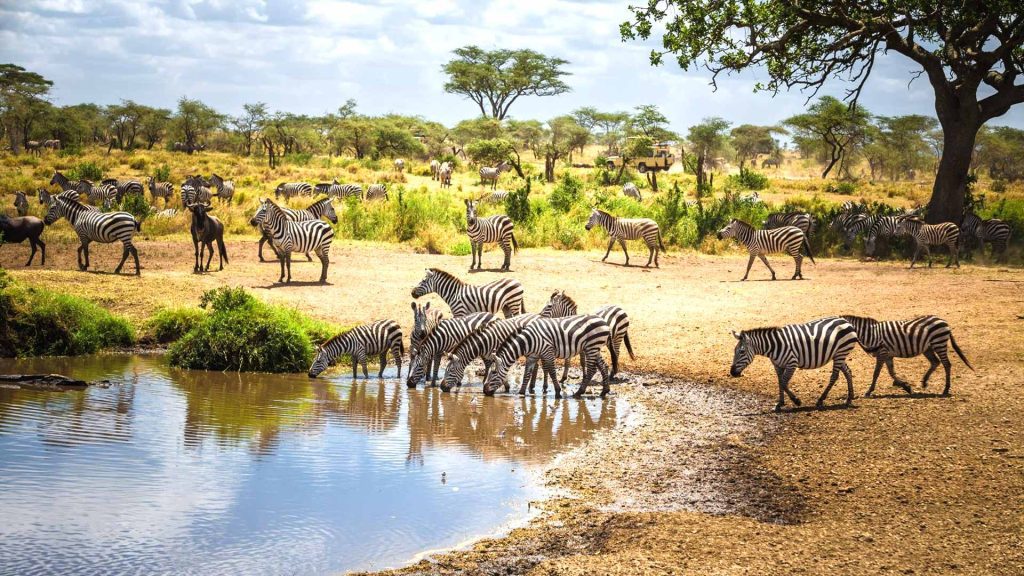
Lake Eyasi birding pairs naturally with cultural visits to the Hadzabe, one of the last hunter-gatherer communities in Africa, and the Datoga, pastoralist metalworkers who live around the lake basin, offering a rare combination of wildlife and living cultural heritage in one destination. The surrounding bush also supports general wildlife sightings, including giraffe, various antelope species, and occasionally hyena, alongside the bird activity. Many travellers combine a Lake Eyasi stop with time in Ngorongoro Crater, Serengeti, or Tarangire as part of a broader northern Tanzania circuit, using Eyasi as a quieter, culturally rich addition to a safari itinerary.

Why choose Foot Slopes Tours and Safaris for a Lake Eyasi birding safari?

Foot Slopes Tours and Safaris designs Lake Eyasi birding itineraries around current lake conditions, working with experienced local guides who track seasonal water levels and recent bird sightings to time visits for the best chance of flamingo and waterbird activity. Rather than treating Eyasi as a brief stop, the team builds in adequate time for both lakeshore birding and respectful Hadzabe and Datoga cultural encounters, ensuring travellers get a well-rounded experience. With deep knowledge of northern Tanzania's Rift Valley lakes and a focus on responsible, private travel, Foot Slopes Tours and Safaris helps birders make the most of Eyasi.

Is Foot Slopes Tours and Safaris experienced with Lake Eyasi and Hadzabe cultural visits?

Yes, Foot Slopes Tours and Safaris has extensive experience organising visits to Lake Eyasi and the surrounding Hadzabe and Datoga communities, coordinating logistics that respect both the ecological sensitivity of the seasonal soda lake and the cultural protocols of local communities. The team works with trusted local guides and community contacts to arrange genuine, non-exploitative cultural encounters alongside birding and wildlife viewing, rather than staged or rushed visits. This local knowledge helps travellers understand what to expect from lake conditions, seasonal bird activity, and community interactions before arrival, resulting in a more informed and rewarding Lake Eyasi experience.

Does Foot Slopes Tours and Safaris offer private Lake Eyasi birding tours?

Yes. Foot Slopes Tours and Safaris offers individual private safaris that can include Lake Eyasi birding, tailored to your pace, birding interests and available time. Private trips allow flexible timing around early morning and late afternoon birding windows, with your own vehicle and experienced guide. Guides adjust plans around current lake conditions and recent sightings, helping ensure the birding component of your Lake Eyasi visit is as productive as possible, alongside respectful Hadzabe and Datoga cultural encounters.

Can Foot Slopes Tours and Safaris create a custom Lake Eyasi birding and cultural itinerary?

Yes, Foot Slopes Tours and Safaris regularly builds custom itineraries that combine Lake Eyasi birding with Hadzabe and Datoga cultural experiences and connections to nearby destinations such as Ngorongoro Crater, Serengeti, and Lake Manyara. Itineraries can be adjusted for trip length, budget, and specific interests, whether the priority is maximising birding time around current water levels, focusing on cultural immersion, or blending both within a broader northern Tanzania safari. The team's local knowledge of seasonal conditions helps set realistic expectations and design a trip that makes the very most of Lake Eyasi's variable but genuinely rewarding birdlife and landscape.

Plan With Confidence

Plan Your Lake Eyasi Birding

Tell us your dates, style, and preferred parks, and we will build the perfect itinerary around you.

Book Now Online →

What Our Travelers Say

Real 5-star reviews from guests who traveled with us

“
★★★★★

Our Private African luxury Safari experience with Foot Slopes Tours and Safaris was nothing short of exceptional. From the very beginning, owner Gabriel was incredibly responsive, making the entire booking process smooth and stress-free. Gabriel went above and

Charlotte T
“
★★★★★

We had an incredible private safari experience with Foot Slopes Tours and Safaris. Their office staff was very helpful and informative, and they communicated very well. Our pick-ups to and from the airport were on time and hassle-free, an unforgettable Safari

Evans Aiden
“
★★★★★

Foot Slopes Tours and Safaris is truly one of the best local tour companies in Tanzania. From start to finish, their service was professional, reliable, and personalized. The team went above and beyond to make sure every detail of our trip was perfect. Our saf

André T
“
★★★★★

Our family chose Foot Slopes Tours and Safaris for a custom 11-day safari itinerary, and we couldn’t be happier with our choice! Everything from our initial inquiry to building our custom itinerary to pre-departure and on-trip support was top quality. Communic

Ida N