
Cheetah vs Leopard: What's the Difference?
Cheetah vs leopard: what is the difference? These two spotted African big cats are often confused, yet they look, hunt and live in very different ways. The cheetah is a slender sprinter built for speed on open plains, while the leopard is a powerful, stealthy climber that hides prey in trees. This guide explains every key difference, from spots, face markings and size to speed, strength, hunting style, behaviour and conservation status. You will also learn simple tips to tell them apart on safari and the best places to see both magnificent big cats on a private Tanzania safari.
Quick Answer: What Is the Difference Between a Cheetah and a Leopard?
Cheetahs have solid round black spots, black tear marks on their faces, slim bodies and long legs built for speed, reaching about 100 to 120 km/h. Leopards have rosette-shaped spots, no tear marks and stocky, muscular bodies built for climbing and strength. Cheetahs hunt by day on open plains, while leopards hunt mostly at night by ambush.
0110 Key Differences Between Cheetahs and Leopards
At first glance, cheetahs and leopards look remarkably similar, with golden coats covered in black spots. Look closer, however, and almost everything about them is different, from their body shape and markings to the way they hunt, climb, communicate and raise their young. These differences reflect two completely different survival strategies: speed versus stealth. Understanding them makes every big cat sighting more exciting and helps you identify each cat confidently. Here are the ten most important differences between cheetahs and leopards, explained clearly with facts you can check for yourself on safari. You will never confuse them again.
Spots vs rosettes
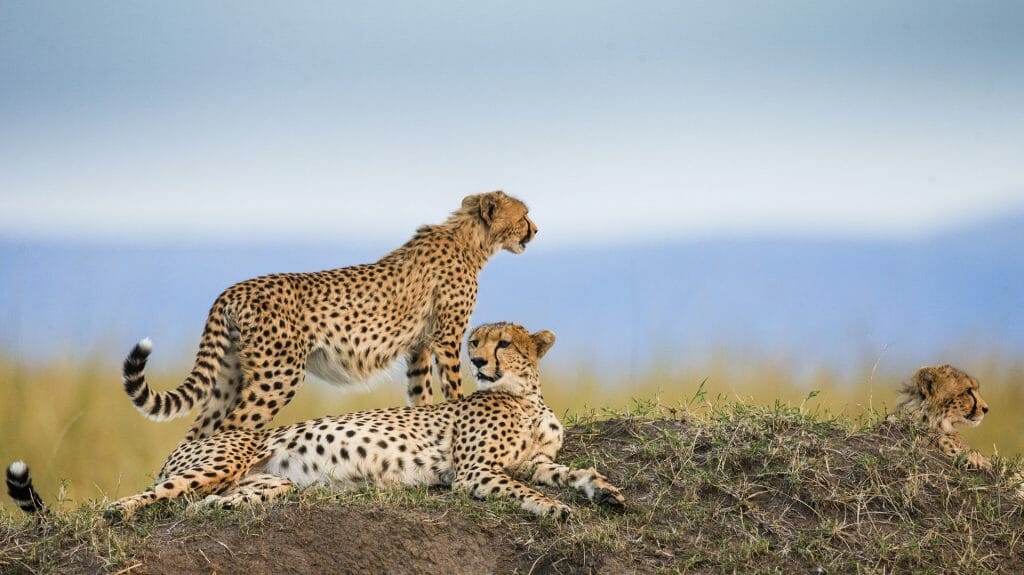
The easiest way to tell them apart is their coat pattern. Cheetahs have single, solid round black spots evenly scattered across their golden fur. Leopards have rosettes, rose-shaped clusters of dark spots around a lighter centre, which provide superb camouflage in trees, long grass and dappled woodland shade. Look closely at the coat pattern first.
Tear marks on the face
Cheetahs have distinctive black tear marks running from the inner corner of each eye down to the mouth, thought to reduce sun glare while hunting by day. Leopards have no tear marks; their faces are covered in small spots, with a broader head and a more powerful jaw suited to gripping heavy prey. Faces tell the story.
Body shape and size
Cheetahs are tall, slender and lightweight, typically weighing about 35 to 65 kg, with long legs, a small head and a deep chest. Leopards are shorter and stockier, with powerful shoulders and thick limbs. Male leopards can weigh up to around 90 kg, while females are much smaller. Their silhouettes look completely different from afar.
Speed
The cheetah is the fastest land animal, reaching about 100 to 120 km/h in short bursts and accelerating from zero to around 96 km/h in about three seconds. Leopards are much slower, reaching around 58 km/h, but rarely need to chase far because they rely on stealth and a short, explosive pounce. Both are superb hunters.
Hunting style
Cheetahs stalk prey on open plains, then launch a high-speed chase lasting less than a minute, tripping their prey and suffocating it with a throat bite. Leopards are ambush hunters, creeping close under cover before pouncing. They are opportunistic and patient, hunting everything from insects and birds to antelope. Each strategy works brilliantly for its own habitat.
Climbing and strength
Leopards are exceptional climbers and among the strongest cats for their size, able to haul prey as heavy as themselves high into trees, away from lions and hyenas. Cheetahs can scramble onto low branches and termite mounds but are not true climbers. They lack the strength to defend kills against larger predators. Leopards are powerful.
Day vs night
Cheetahs are diurnal, hunting mainly in the morning and late afternoon to avoid lions and hyenas, which hunt mostly at night. Leopards are largely nocturnal and crepuscular, resting in trees or thick cover by day and hunting after dark. This is why leopards are often seen draped over branches in the daytime. Timing shapes every sighting.
Social life
Female cheetahs are solitary, but male cheetahs, often brothers, may form small coalitions that hunt and defend territory together. Leopards are almost entirely solitary, meeting only to mate, and males defend large territories marked by scent and scratches. Seeing two leopards together usually means a mother with her cub. Each lifestyle suits the cat perfectly.
Cubs and calls
Cheetah cubs have a fluffy grey mantle along their backs that may mimic the aggressive honey badger, deterring predators. Cheetahs chirp, purr and hiss but cannot roar. Leopards produce a deep, rasping call often compared to sawing wood, and their cubs are hidden in dense cover, caves or rocky outcrops. Both are fascinating to hear.
Range and conservation
Leopards are the most widespread big cat, found across much of Africa and parts of Asia. Cheetahs survive mainly in eastern and southern Africa, with a tiny Asiatic population in Iran, and only around 7,000 adults remain. Both species are listed as Vulnerable, threatened by habitat loss, conflict and illegal trade. Every sighting truly matters.
02Cheetah vs Leopard: Side-by-Side Profiles
Seeing the cheetah and leopard side by side makes their differences even clearer. Each cat has evolved a unique body, lifestyle and set of skills that suits its habitat and prey. These profiles summarise the most important facts about each species, then answer popular questions, such as which cat would win a fight and how the leopard compares with the jaguar, another spotted cat often confused with both. Explore these five tabs for a quick, fact-packed comparison of the cheetah and leopard, plus their vital roles in keeping Africa's ecosystems healthy and balanced. Both cats are truly remarkable.
Cheetah at a Glance
Speed lovers
Built for speed
Scientific name Acinonyx jubatus. Cheetahs weigh about 35 to 65 kg, have solid round spots and black tear marks, and reach about 100 to 120 km/h. They live mainly on open plains in eastern and southern Africa, hunt by day and mostly eat gazelles, impalas and young wildebeest. Around 7,000 adults remain. It is truly elegant.
Best places to see cheetahs →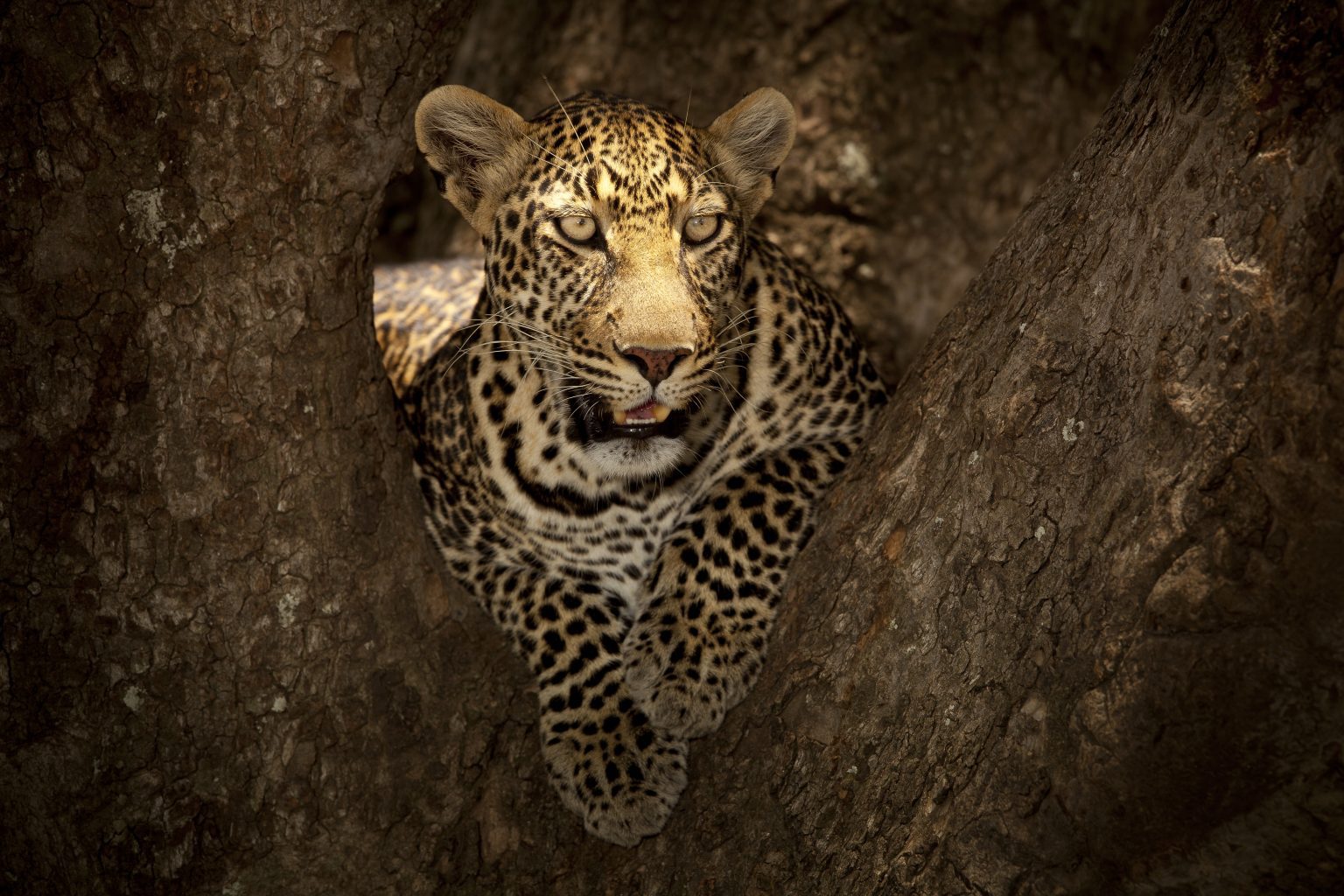
Leopard at a Glance
Big cat enthusiasts
Built for strength and stealth
Scientific name Panthera pardus. Leopards weigh about 30 to 90 kg, with males much larger than females, and have rosette-shaped spots. They thrive in forests, woodland, savanna and mountains across Africa and Asia, hunt mainly at night and eat a wide variety of prey, from rodents and birds to antelope. It is the master of stealth and power.
Leopard safari →
Who Would Win, Cheetah or Leopard?
Curious minds
The leopard usually dominates
In a fight, a leopard would almost always win. It is heavier, stronger and has a more powerful bite and fully retractable claws, while the cheetah's lighter frame is built for running, not fighting. In the wild, leopards may steal cheetah kills and even kill cheetah cubs, so cheetahs usually avoid confrontation. Strength beats speed in close combat.
Dangerous animals in Africa →
Leopard vs Jaguar vs Cheetah
Wildlife learners
Three spotted cats, three ranges
Jaguars live only in Central and South America, while leopards live in Africa and Asia, and cheetahs mainly in Africa. Jaguars are bulkier, with larger rosettes that often contain small central spots. Leopards have smaller rosettes without central spots, and cheetahs have plain solid spots. In Tanzania, you will only see cheetahs and leopards. Each is unique.
African big cat facts →
Why Both Cats Matter
Conservation-minded travelers
Keeping ecosystems balanced
As predators, cheetahs and leopards help control herbivore numbers, keeping grazing animals healthy and preventing overgrazing. Cheetahs often target fast gazelles, while leopards take a wider range of prey across different habitats. Protecting both cats protects entire ecosystems, and responsible safari tourism helps fund parks, rangers and local community conservation. Every visitor can help protect them for the future.
Book a sustainable safari →03How to Tell a Cheetah from a Leopard on Safari
On safari, sightings often happen quickly or at a distance, so knowing what to look for helps you identify each cat in seconds. Expert guides use a combination of clues, including where the cat is resting, its body shape, face markings and tail, and the time of day. With a little practice and a good pair of binoculars, you will soon recognise each cat before your guide even names it. These six practical identification tips will help you tell a cheetah from a leopard confidently on your Tanzania safari. Practice makes identifying them both easy and great fun.
Check the spots
Look at the coat through binoculars. Solid, evenly spaced round spots mean cheetah, while clusters of spots forming rosettes mean leopard. In dim light or at a distance, rosettes can look like blotches, so combine this clue with others, such as face markings and body shape, for a confident identification. Spots are the quickest clue to check.
Look at the face
Black tear marks from the eyes to the mouth are a cheetah's signature feature. Leopards have spotted faces without tear marks, larger heads and thicker necks. If the cat looks towards you, the face is often the fastest and most reliable clue, even when the body is partly hidden in grass or branches. Faces rarely lie.
Compare the build
Cheetahs look lean and long-legged, almost like a greyhound, with a small rounded head and deep chest. Leopards look low, muscular and compact, with heavy shoulders and thick paws. When a cat is walking across open ground, its silhouette alone often tells you which species you are watching. Shape is a very reliable clue for every observer.
Note where it rests
Location is a strong clue. Leopards are often seen draped over tree branches, hidden in thick bush or resting on rocky kopjes. Cheetahs prefer open plains, sitting upright on termite mounds, low rises or fallen logs to scan for prey. A cat resting high in a tall tree is almost certainly a leopard. Look up into trees.
Watch the tail
A cheetah's tail ends in several dark rings and usually a bushy white tip, helping cubs follow their mother through long grass. A leopard's tail is long and spotted, with a white underside at the tip that curls upward when it walks. Tails are easy to see when cats hang from branches or walk away.
Consider the time of day
Cheetahs are most active in daylight, especially in the morning and late afternoon, so a spotted cat hunting on open plains in daylight is probably a cheetah. Leopards are mostly active at night and around dawn and dusk, often resting quietly in trees or thick cover during the heat of the day. Timing offers another helpful clue.
04Where to See Cheetahs and Leopards in Tanzania
Tanzania is one of the few places in Africa where you can see both cheetahs and leopards on the same safari. Cheetahs thrive on the vast short-grass plains of the Serengeti ecosystem, while leopards prefer riverine woodland, rocky kopjes and dense bush. Choosing the right parks and seasons dramatically improves your chances of seeing both cats. These six Tanzania destinations offer the best opportunities to compare cheetahs and leopards in the wild, with tips on where each cat is most often seen and when to visit for the best sightings. Each one offers truly memorable big cat moments.
Ndutu and southern Serengeti
Ndutu and the southern Serengeti plains are among the best places in Africa to see cheetahs, especially from January to March during the calving season. Leopards are also found in the woodlands around Lake Ndutu and Lake Masek. This makes the area excellent for seeing both cats within a few days. It is a true big cat paradise.
Seronera Valley
Seronera, in the central Serengeti, is famous as one of Africa's best places to see leopards, often resting in sausage and acacia trees along the Seronera River. Cheetahs are also regularly seen on the surrounding plains year-round, making Seronera ideal for comparing both cats on a single game drive. Seronera is a leopard lover’s dream destination.
Eastern Serengeti kopjes
The Gol Kopjes and Namiri Plains in the eastern Serengeti offer excellent cheetah sightings on open plains, while rocky kopjes provide shelter for leopards. Fewer vehicles make this area peaceful and rewarding. The green season, from about November to May, is often the best time to visit for big cats. It feels wild and wonderfully remote.
Tarangire National Park
Tarangire's riverine woodland and baobab-studded landscapes support leopards, which are sometimes spotted along the Tarangire River. Cheetahs occasionally appear in more open areas, including around the Silale Swamp. Although sightings are less frequent than in the Serengeti, Tarangire is a rewarding first stop on a northern circuit safari. Keep your binoculars ready at all times here.
Lake Manyara and Ngorongoro
Lake Manyara's groundwater forest is home to leopards, though they can be shy, while the Ngorongoro Crater offers occasional sightings of both cats. Cheetahs are more often seen on the plains of the wider Ngorongoro Conservation Area. These areas combine easily with the Serengeti for a complete big cat safari. Patience is always richly rewarded here.
Ruaha National Park
Ruaha in southern Tanzania is one of Africa's great big cat strongholds, with good leopard populations in its woodlands and kopjes and cheetahs on its open plains. Its remote, uncrowded wilderness makes every sighting feel exclusive. Ruaha suits experienced safari travelers seeking wild, quiet and authentic big cat encounters. It is truly unforgettable for visitors.
05Big Cat Spotting Checklist
Spotting cheetahs and leopards takes patience, good timing and a keen eye, but the rewards are unforgettable. Use this checklist to prepare for your big cat safari, from choosing the best areas and seasons to bringing the right equipment and knowing what clues to look for. A private safari gives you the flexibility to wait at sightings for as long as you like. When you are ready, contact our Arusha-based specialists, who will design a private tailor-made Tanzania safari focused on big cats and expert guiding. Your next big cat adventure is waiting for you right here in Tanzania.
Where to go0/4
What to look for0/4
What to bring0/4
06Cheetah vs Leopard: FAQs
What is the difference between a cheetah and a leopard?
Cheetahs have solid round spots, black tear marks, slim bodies and long legs built for speed, reaching about 100 to 120 km/h. Leopards have rosette-shaped spots, no tear marks and stocky, powerful bodies built for climbing and strength. Cheetahs hunt by day on open plains, while leopards are mostly nocturnal ambush hunters in woodland. Both are spectacular.
How can you tell a cheetah from a leopard?
Look for three quick clues. Cheetahs have black tear marks on their faces, solid round spots and a lean, long-legged shape. Leopards have rosette spots, spotted faces without tear marks and a stocky, muscular build. Leopards are often seen in trees, while cheetahs prefer open plains and termite mounds. Your guide will help you check these features every time.
Which is faster, a cheetah or a leopard?
The cheetah is much faster, reaching about 100 to 120 km/h in short sprints, making it the fastest land animal on Earth. Leopards reach around 58 km/h. Leopards rarely need high speed, as they rely on stealth, camouflage and a short, explosive pounce to catch prey at close range. Speed and stealth are two very different winning strategies.
Which is stronger, a cheetah or a leopard?
The leopard is far stronger. It has a heavier, more muscular body, a powerful bite and strong shoulders that allow it to drag prey as heavy as itself high into trees. Cheetahs are built for speed rather than strength and often lose kills to stronger predators such as leopards, lions and hyenas. Strength is the leopard’s greatest advantage.
Who would win in a fight, a cheetah or a leopard?
A leopard would almost always win a fight against a cheetah. Leopards are heavier, stronger and have fully retractable claws and a more powerful bite. Cheetahs usually avoid confrontation, because injuries could stop them from hunting. Leopards sometimes steal cheetah kills and may even kill cheetah cubs in the wild. Survival matters more than winning.
Can cheetahs climb trees?
Cheetahs can climb onto low, sloping branches, fallen trees and termite mounds to scan for prey, but they are not true climbers like leopards. Their semi-retractable claws and slender build are designed for gripping the ground while running at speed, not for climbing tall trunks or hauling prey into trees. Leopards are the real climbers here.
Do cheetahs and leopards live in the same places?
Their ranges overlap in many parts of Africa, including Tanzania's Serengeti, but they prefer different habitats. Cheetahs favour open grasslands and plains, while leopards prefer woodland, riverine forest, rocky kopjes and dense bush. This means you can often see both cats in the same park, but in different areas. Your guide knows where to look for each one.
Are cheetahs and leopards endangered?
Both cheetahs and leopards are listed as Vulnerable. Only around 7,000 adult cheetahs are estimated to remain in the wild, making them one of Africa's most threatened big cats. Leopards are more widespread but face habitat loss, conflict with people and illegal trade. Responsible tourism helps support their protection. Every sighting supports their survival in the wild.
Can cheetahs roar like leopards?
No, cheetahs cannot roar. They communicate with high-pitched chirps, purrs, growls and hisses. Leopards make a deep, rasping call often compared to the sound of sawing wood, which carries over long distances at night. Hearing either call on safari is a thrilling and memorable experience for every visitor. Both calls are unforgettable sounds of the African night.
Is a jaguar the same as a leopard?
No, jaguars and leopards are different species. Jaguars live only in Central and South America and are bulkier, with larger rosettes that often contain small spots inside. Leopards live in Africa and Asia and have smaller rosettes without central spots. In Tanzania, you will see leopards and cheetahs, but not jaguars. Each is magnificent in its own way.
Which is bigger, a cheetah or a leopard?
Cheetahs are taller and longer-legged, but leopards are usually heavier and more muscular. Cheetahs typically weigh about 35 to 65 kg, while male leopards can weigh up to around 90 kg. Female leopards are much smaller than males, so a large male leopard is generally the more powerful of the two. Size depends on sex and age.
Where can I see leopards in Tanzania?
The Seronera Valley in the central Serengeti is one of Africa's best places to see leopards, especially in trees along the river. Tarangire, Lake Manyara, Ruaha and the woodlands around Ndutu also offer sightings. Leopards are shy and elusive, so an experienced guide and patience greatly improve your chances. Keep watching the tree branches carefully during game drives.
Where can I see cheetahs in Tanzania?
The best places to see cheetahs in Tanzania are Ndutu and the southern Serengeti plains, especially from January to March, the eastern Serengeti's Gol Kopjes and Namiri Plains, and the central Seronera Valley year-round. Open short-grass plains with plenty of gazelles provide the best chances of seeing cheetahs hunting. Expert guiding makes a real difference to sightings.
Do cheetahs and leopards live alone?
Leopards are almost entirely solitary, meeting only to mate, while mothers raise cubs alone. Female cheetahs are also solitary, but male cheetahs, often brothers, may live in small coalitions that hunt and defend territories together. Seeing a coalition of male cheetahs is a special highlight on a Serengeti safari. Leopards are true loners of the bush.
Big Cat Guides
Book a Big Cat Safari
See Cheetahs and Leopards in the Wild
Compare Africa's spotted cats for yourself on a private tailor-made Tanzania safari, with expert guides who know where cheetahs hunt and leopards rest, private 4x4 vehicles and camps close to the Serengeti's best big cat areas.
Book Now Online →What Our Travelers Say
Real 5-star reviews from guests who traveled with us