
23 Amazing Facts About Mount Kilimanjaro
Mount Kilimanjaro is Africa's highest mountain at 5,895 metres (19,341 feet) and the tallest free-standing mountain in the world. Rising from the plains of northern Tanzania, this dormant volcano has three cones, five climate zones, shrinking equatorial glaciers and a fascinating history, and thousands of trekkers reach its summit every year without technical climbing skills. This guide reveals 23 amazing facts about Mount Kilimanjaro, covering its height, geology, glaciers, wildlife, history, culture, climbing routes and records, plus its five climate zones and practical tips for planning your own private Kilimanjaro climb. It is one of the mountain's most remarkable features.
What are the most amazing facts about Mount Kilimanjaro?
Mount Kilimanjaro is Africa's highest mountain at 5,895 metres and the world's tallest free-standing mountain. It is a dormant volcano with three cones, Kibo, Mawenzi and Shira, and climbers pass through five climate zones from rainforest to arctic summit. Its glaciers sit just south of the equator, and no technical climbing is needed to reach Uhuru Peak.
01Mount Kilimanjaro Height and Geology Facts
Kilimanjaro's size and volcanic origins make it one of the most remarkable mountains on Earth. Rising almost five kilometres above the surrounding plains, it dominates the skyline of northern Tanzania and can be seen from far across the border in Kenya on clear days. Its three volcanic cones tell a story of eruptions and collapses that shaped the mountain over hundreds of thousands of years. The six facts below explain Kilimanjaro's height, volcanic structure and global status, revealing why it is often called the Roof of Africa and attracts climbers from every continent. It never fails to amaze visitors.
Africa's highest mountain
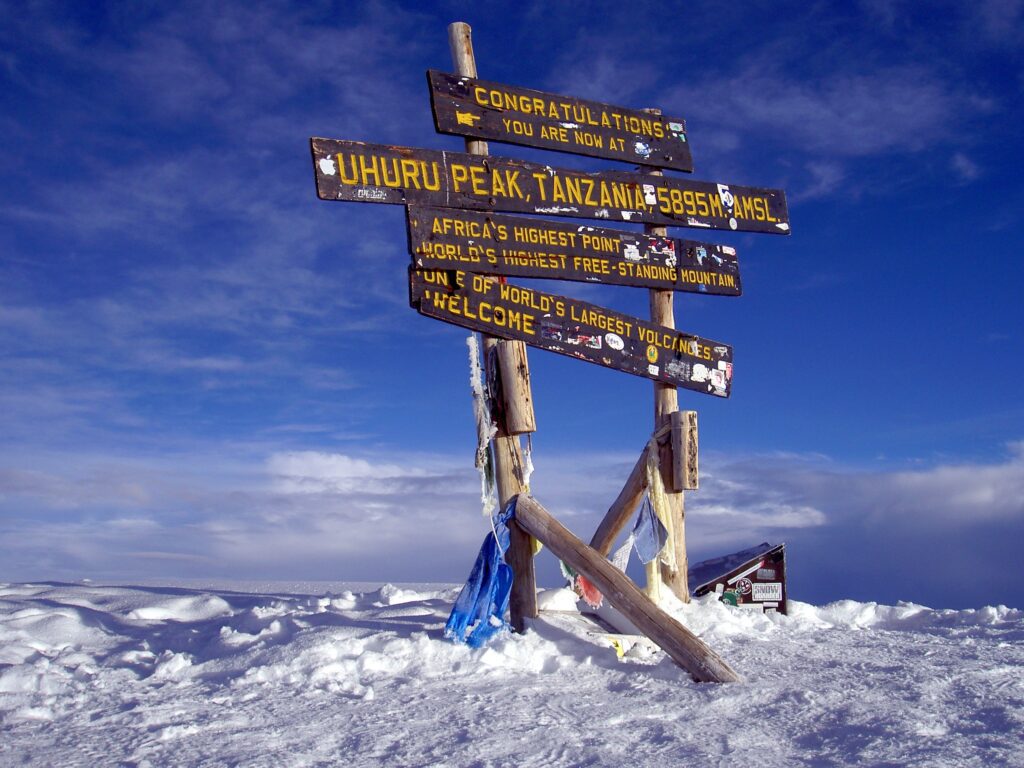
Mount Kilimanjaro rises to 5,895 metres, or 19,341 feet, above sea level at Uhuru Peak, making it the highest mountain in Africa. This is the official figure used by Tanzania's national park authority. Standing on its summit means standing on the highest point of the entire African continent, a dream for climbers worldwide. It is truly remarkable.
The tallest free-standing mountain
Unlike peaks in the Himalayas or Andes, Kilimanjaro is not part of a mountain range. It rises on its own from the surrounding plains, roughly 4,900 metres from base to summit, making it the tallest free-standing mountain in the world. This isolation gives Kilimanjaro its iconic silhouette and dramatic views from every direction. A fascinating detail indeed.
A dormant stratovolcano
Kilimanjaro is a dormant stratovolcano built from layers of lava, ash and rock deposited over many eruptions. It is not considered extinct, because volcanic gases still escape from fumaroles in Kibo's inner crater. Scientists believe its last major eruption happened hundreds of thousands of years ago, and there is no sign of an imminent eruption.
Three volcanic cones
Kilimanjaro is made up of three volcanic cones. Kibo, the youngest and highest, holds Uhuru Peak and the summit crater. Mawenzi, at about 5,149 metres, is a jagged peak climbed only by technical mountaineers with special permission. Shira, the oldest, collapsed long ago to form the beautiful Shira Plateau crossed by the Lemosho and Machame routes.
One of the Seven Summits
Kilimanjaro is one of the Seven Summits, the highest peaks on each of the seven continents. It is widely considered the most accessible of the seven because it requires no technical mountaineering skills. Many climbers who dream of completing the Seven Summits start with Kilimanjaro, using it to test their fitness and altitude tolerance. Truly remarkable, indeed.
Visible from Kenya, but in Tanzania
Although Kilimanjaro lies entirely in Tanzania, it stands close to the Kenyan border, and its snowy summit is famously visible from Amboseli National Park in Kenya on clear days. This has led some visitors to believe the mountain is in Kenya. In fact, every official climbing route begins and ends on the Tanzanian side. A true wonder.
02Kilimanjaro Climate, Glaciers and Nature Facts
Few places on Earth pack as much natural variety into a single mountain as Kilimanjaro. In just a few days, climbers walk from warm farmland and rainforest to moorland, alpine desert and an icy summit, passing through ecosystems as different as those found between the equator and the poles. The mountain also feeds rivers, supports unique plants and shelters wildlife on its lower slopes. The six facts below explore Kilimanjaro's climate zones, disappearing glaciers, summit crater, wildlife and remarkable plants, showing why it is one of Africa's most important natural treasures. It is one of Kilimanjaro's most fascinating features.
Five climate zones in one climb
Climbers pass through five distinct climate zones: cultivated farmland, montane rainforest, heath and moorland, alpine desert and the arctic summit. Walking up Kilimanjaro is often compared to travelling from the equator to the North Pole in about a week. Temperatures range from warm and humid at the base to well below freezing at the summit.
Glaciers just south of the equator
Despite lying only about 330 kilometres south of the equator, Kilimanjaro's summit is crowned by glaciers and ice fields. Scientists estimate that the mountain has lost most of its ice cover since the early twentieth century, and some studies suggest the glaciers could largely disappear within the coming decades. Seeing them now is a special privilege.
A crater within a crater
Kibo's summit holds a large crater about 2.5 kilometres wide, and inside it lies a smaller inner cone with the Reusch Crater and a deep Ash Pit. Some special expeditions camp inside the crater at Crater Camp, close to the Furtwängler Glacier. Very few climbers ever see these dramatic volcanic features up close. It is truly remarkable.
Wildlife on the lower slopes
Kilimanjaro's rainforest is home to black-and-white colobus monkeys, blue monkeys, bushbabies and many forest birds, while elephants, buffalo and leopards live in more remote areas. Most climbers see monkeys and birds on the first day. Higher up, wildlife becomes rare, although ravens and occasional small mammals live surprisingly close to the summit. It is a remarkable fact.
Giant plants found nowhere else
Kilimanjaro's moorland is famous for giant groundsels and giant lobelias, strange plants that look as if they belong on another planet. The giant groundsel species found here grows only on Kilimanjaro and has adapted to freezing nights and intense sun. Climbers on the Machame, Lemosho and Umbwe routes often photograph these remarkable plants near Barranco Camp.
A vital water source
Rainfall and melting ice on Kilimanjaro feed streams and rivers that support farms, villages and towns on its slopes and the plains below. The fertile volcanic soil, combined with this water, allows local farmers to grow coffee, bananas and vegetables. Protecting Kilimanjaro's forests is therefore essential for both wildlife and the livelihoods of local communities.
03Mount Kilimanjaro History and Culture Facts
Kilimanjaro has fascinated people for centuries, from the Chagga communities who farm its fertile slopes to European explorers who first reported snow on an African mountain near the equator. Its story includes a famous first recorded ascent, a summit named to celebrate freedom and international recognition as a World Heritage Site. Even the origin of its name remains a mystery. The six facts below explore Kilimanjaro's history and culture, explaining how the mountain became a national symbol of Tanzania and one of the world's most famous trekking destinations today. It is one of the mountain's most remarkable features.
The meaning of the name is a mystery
No one knows for certain where the name Kilimanjaro comes from. Popular theories suggest it combines the Swahili word kilima, meaning hill or mountain, with a Chagga or Maasai word that may mean white, shining or caravan. Different communities have used their own names for the mountain for generations, adding to its mystery. A fascinating detail indeed.
The Chagga people of the slopes
The Chagga people have lived on Kilimanjaro's fertile southern and eastern slopes for centuries, developing clever irrigation channels and home gardens of bananas and coffee. Many Kilimanjaro guides and porters come from Chagga communities. Visitors can learn about Chagga history, food and farming on cultural tours near Moshi and Marangu before or after their climb.
First recorded summit in 1889
The first recorded ascent of Kilimanjaro's highest point was made in 1889 by German geographer Hans Meyer and Austrian climber Ludwig Purtscheller, supported by local guide Yohani Lauwo and a team of porters. Lauwo reportedly lived to a very old age and is remembered as an important figure in Kilimanjaro's climbing history. Few mountains anywhere can compare.
Uhuru means freedom
The summit was named Uhuru Peak after Tanganyika gained independence from Britain in 1961. Uhuru means freedom in Swahili, and around independence a torch of freedom was lit on the summit as a symbol of hope and light. The peak's name continues to remind Tanzanians and visitors of the nation's journey to independence. It is truly remarkable.
A national park since 1973
Kilimanjaro National Park was established in 1973 to protect the mountain above the forest line, and it later expanded to include more of the montane forest. Today it is managed by Tanzania National Parks, which sets climbing rules, park fees and guide requirements. All climbers must be accompanied by licensed guides on the mountain. Few mountains compare.
A UNESCO World Heritage Site
Kilimanjaro National Park was inscribed as a UNESCO World Heritage Site in 1987, recognising its exceptional natural beauty, unique ecosystems and status as the highest free-standing mountain in the world. This international recognition highlights the importance of protecting Kilimanjaro's forests, wildlife and glaciers for future generations of climbers, scientists and local communities. Ask our guides for more.
04Kilimanjaro Climbing and Record Facts
Kilimanjaro is one of the world's most climbed high mountains, welcoming tens of thousands of trekkers each year from every single corner of the globe. Its non-technical routes make the summit achievable for well-prepared beginners, while its altitude still demands respect. The mountain has also inspired remarkable records, from very young and very old climbers to incredibly fast mountain runners. The five facts below cover Kilimanjaro's climbing routes, popularity, summit night traditions, porters and records, giving you a clear picture of what climbing Africa's highest mountain really involves today. It is one of the mountain's most remarkable features.
No technical skills required
Kilimanjaro can be climbed without ropes, ice axes or technical mountaineering experience, which is why it attracts so many first-time trekkers. However, the altitude makes it a serious challenge. Good fitness, gradual acclimatisation, suitable gear and experienced guides are essential, and longer routes give climbers the best chance of reaching Uhuru Peak safely. A fascinating detail indeed.
Seven main climbing routes
There are seven main routes up Kilimanjaro: Marangu, Machame, Lemosho, Shira, Rongai, Northern Circuit and Umbwe, plus the Mweka route used for descent. Each offers different scenery, difficulty and acclimatisation. Lemosho and the Northern Circuit offer excellent acclimatisation, Machame is the most popular, and Marangu is the only route with huts. Our guides love explaining this fact.
Tens of thousands climb each year
Tens of thousands of people attempt Kilimanjaro every year, supported by an even larger number of guides, cooks and porters. Porters carry tents, food and equipment, and responsible operators follow fair treatment guidelines, including weight limits and proper wages. The mountain's tourism provides vital employment for communities across the Kilimanjaro region. It never fails to amaze visitors.
Summit night begins at midnight
Most climbers start their final ascent around midnight, walking through the cold and dark for six to eight hours to reach the crater rim and then Uhuru Peak around sunrise. Starting at night allows climbers to reach the summit when conditions are usually more stable, and to descend in daylight to a lower camp. Truly remarkable, indeed.
Remarkable Kilimanjaro records
Kilimanjaro has seen extraordinary achievements. Climbers in their late eighties have reached the summit, children around the minimum age have succeeded with careful preparation, and elite mountain runners have completed the round trip in just a few hours. These records are remarkable, but most climbers enjoy a steady seven or eight-day climb instead. It is truly remarkable.
05Kilimanjaro's Five Climate Zones Explained
One of the most amazing facts about Kilimanjaro is that climbers pass through five distinct climate zones on the way to the summit. Each zone has its own temperatures, vegetation, wildlife and challenges, and walking through them feels like a journey across several continents. Understanding the zones helps climbers pack the right clothing and appreciate the incredible changes they see each day. Use the tabs below to explore each of Kilimanjaro's five climate zones, from the fertile cultivated slopes at the base to the icy arctic summit at Uhuru Peak. It is one of the mountain's most remarkable features.

Cultivation Zone
Cultural visits before or after the climb
Coffee farms, banana groves, Chagga villages
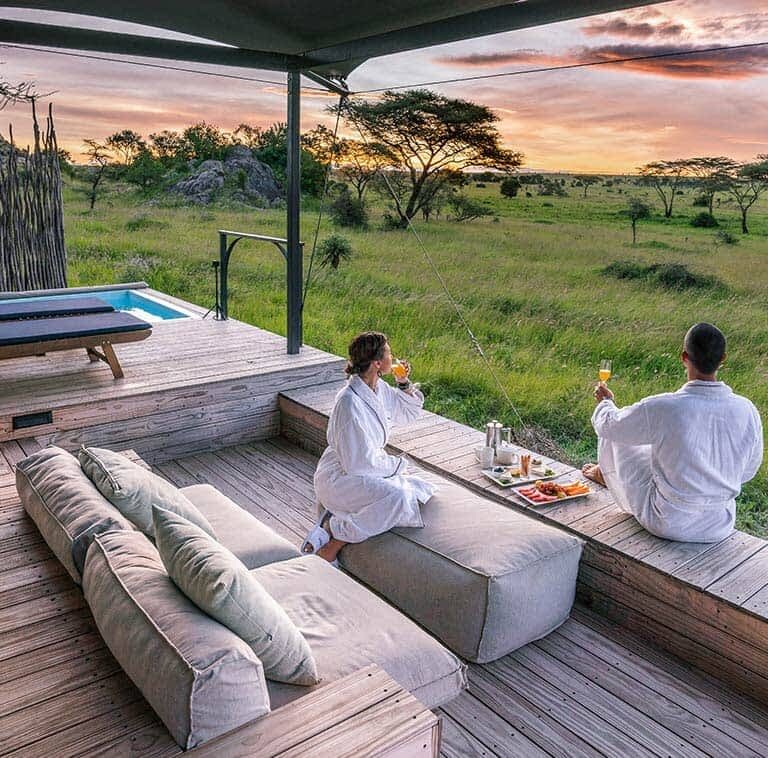
The lower slopes of Kilimanjaro are covered with farmland, villages and coffee and banana plantations, thanks to fertile volcanic soil and good rainfall. This is where the Chagga people have lived and farmed for centuries. Climbers pass through this zone on the drive to the park gates, and many visit coffee farms or waterfalls here.
Things to do in the Kilimanjaro region →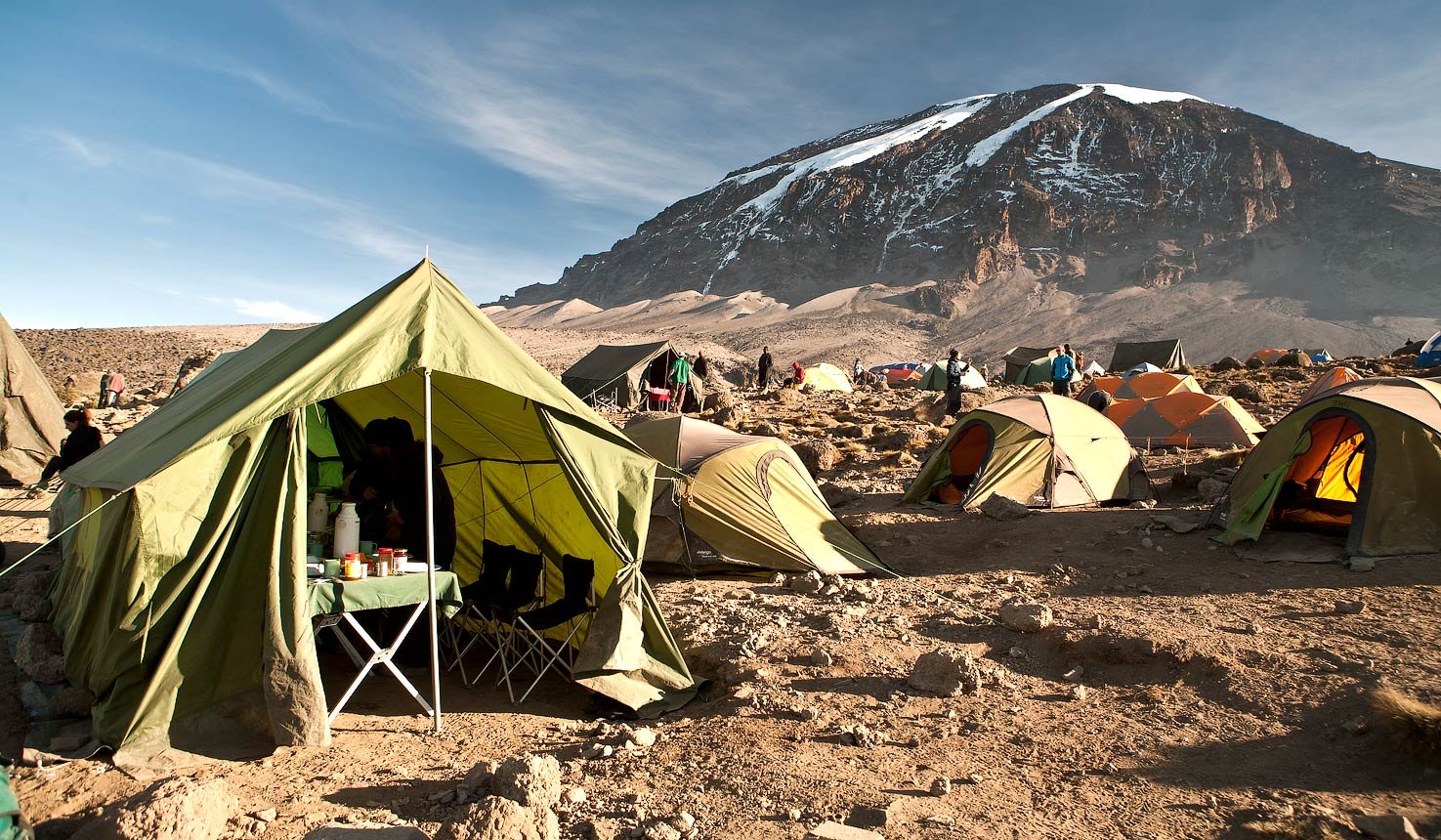
Montane Rainforest Zone
Wildlife and birdwatching on day one
Colobus monkeys, giant ferns, mossy trees
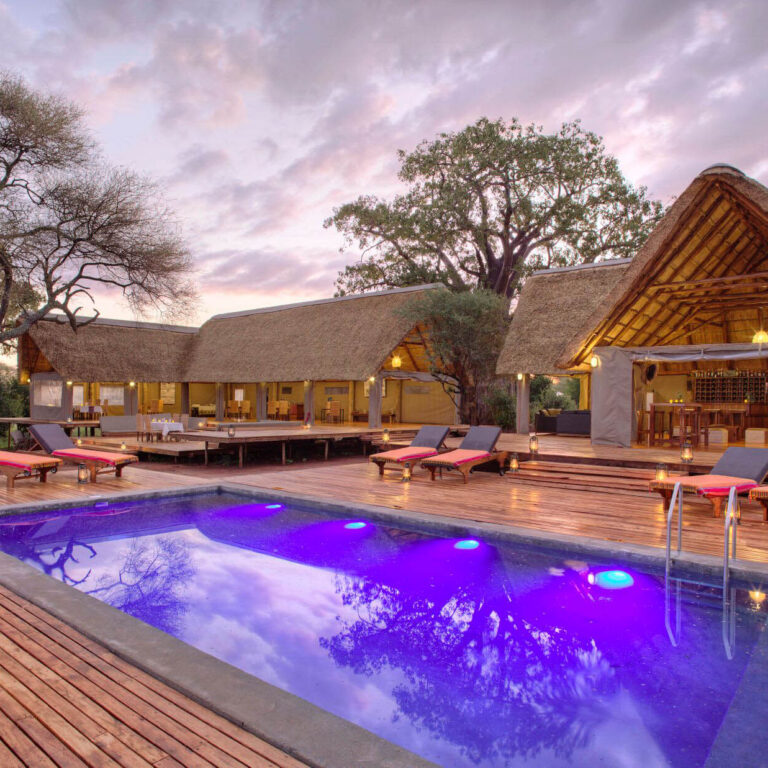
The rainforest zone is lush, green and humid, with tall trees draped in moss, giant ferns and colourful flowers. It receives the most rainfall on the mountain, so trails can be muddy. Climbers often see black-and-white colobus monkeys and blue monkeys and hear many forest birds on the first day of their trek. A fascinating detail indeed.
Machame Route →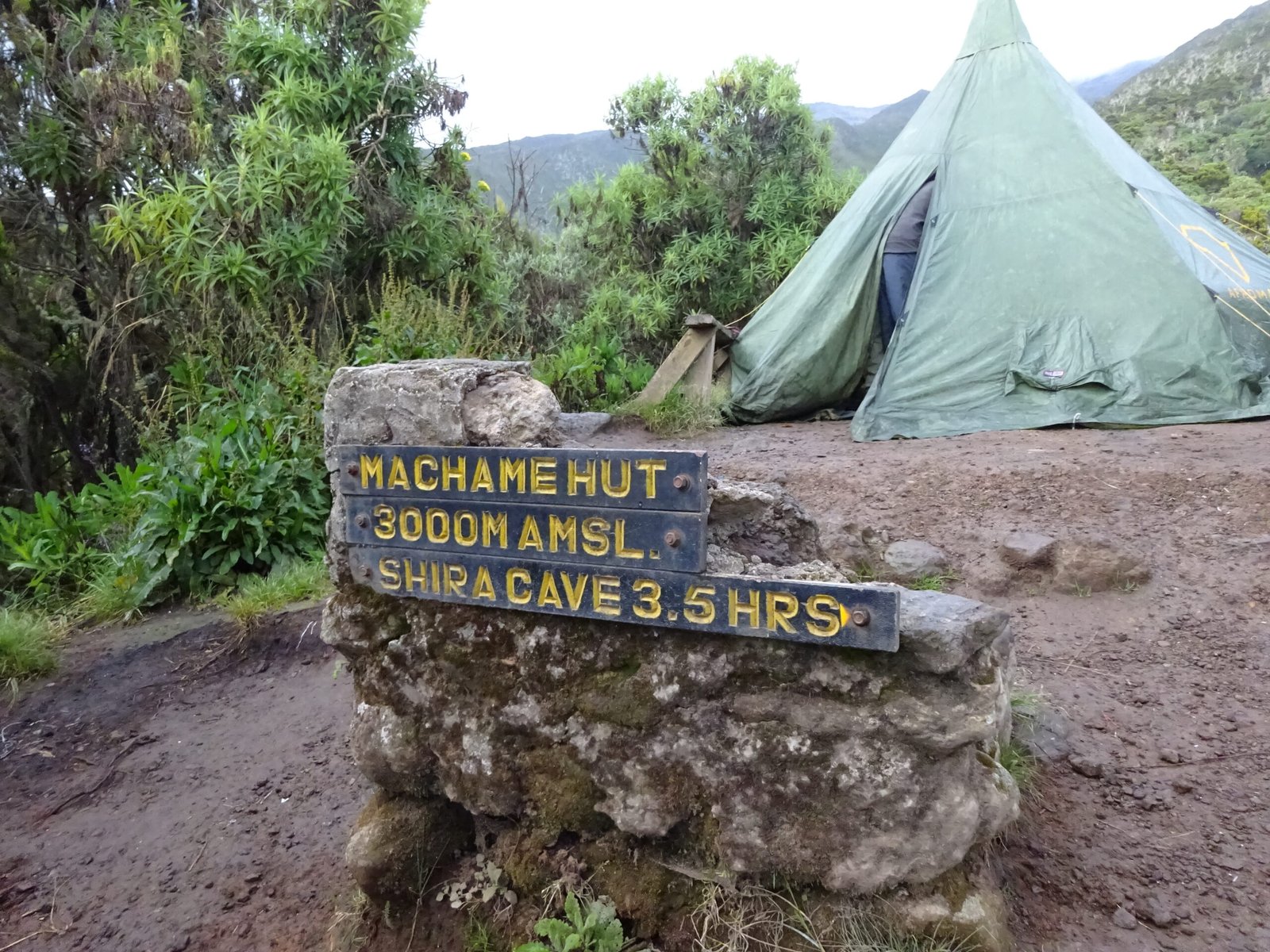
Heath and Moorland Zone
Scenery and photography
Giant groundsels, lobelias, open views
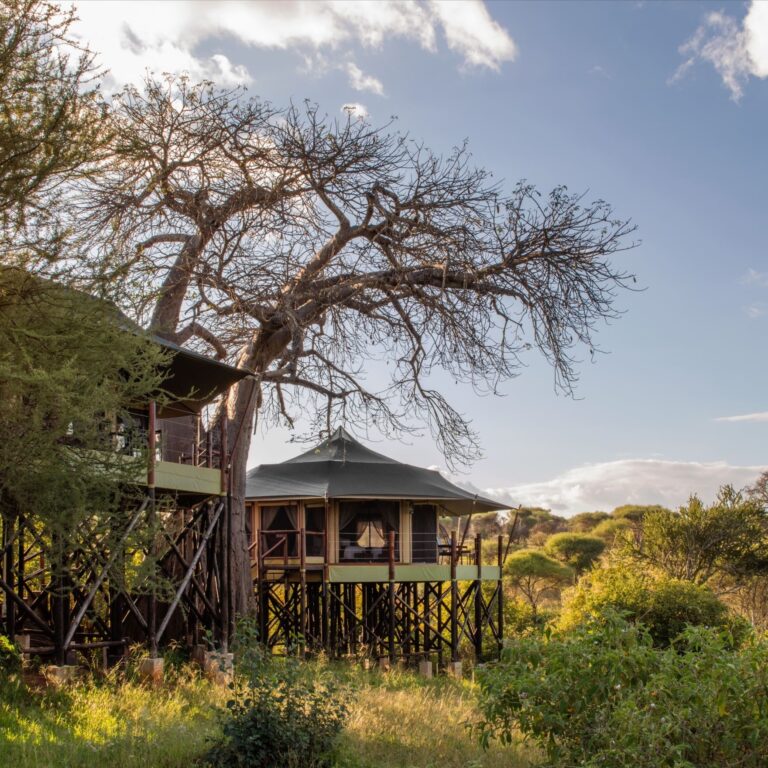
Above the forest, the landscape opens into heath and moorland with heather, grasses and wildflowers, and later the famous giant groundsels and lobelias. Views of Kibo and the plains below become spectacular. Days are often sunny, but nights turn cold, and climbers usually spend several nights camping in this zone. It is truly one of a kind.
Kilimanjaro camps →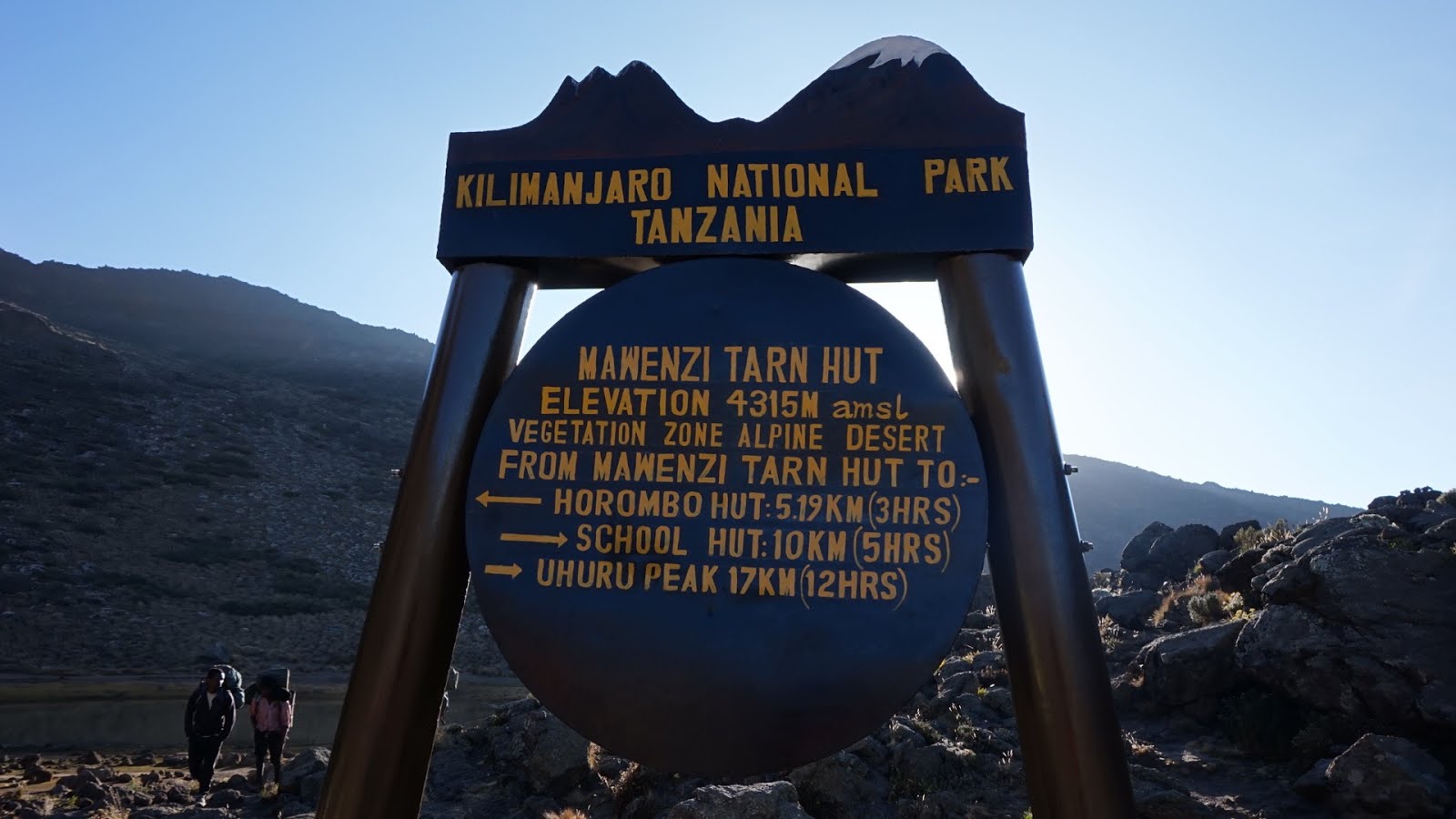
Alpine Desert Zone
Acclimatisation days
Lava Tower, barren landscapes, big skies
The alpine desert is dry, rocky and almost lunar, with very little vegetation and strong sunshine. Temperatures can swing from hot in the day to below freezing at night. This zone includes famous landmarks such as Lava Tower, used for acclimatisation, and high camps like Barafu and Kibo Hut, where climbers prepare for summit night.
Acclimatisation guide →
Arctic Summit Zone
Summit night and sunrise at Uhuru Peak
Glaciers, crater rim, Uhuru Peak
The arctic summit zone is cold, windy and very high, with about half the oxygen available at sea level. Glaciers, snow and ice fields surround the crater rim, and temperatures often fall well below freezing at night. Climbers spend only a short time here, enjoying sunrise and views from Uhuru Peak before descending. It is truly remarkable.
Summit day guide →06Plan Your Own Kilimanjaro Climb
Reading about Kilimanjaro's amazing facts often inspires travellers to see the mountain for themselves. With the right preparation, a well-chosen route and an experienced local operator, reaching Uhuru Peak is an achievable goal for many fit and determined people. Our Arusha team plans private Kilimanjaro climbs with professional guides, fairly treated porters, quality equipment and daily health checks. The three cards below highlight the most important planning decisions, linking to our detailed guides on routes, the best time to climb and preparing as a beginner for Africa's highest mountain. It is one of the mountain's most remarkable features.
Choose your route
Choosing the right route is the most important planning decision. Lemosho and the Northern Circuit offer the best acclimatisation and quieter trails, Machame offers outstanding scenery and value, and Marangu provides huts instead of tents. Seven or more days on the mountain gives you the best chance of reaching the summit comfortably and safely. A true wonder.
Pick the best time
The best times to climb Kilimanjaro are the dry seasons from January to early March and from June to October, when trails are drier and summit views are clearer. April and May are the wettest months. Many climbers combine their trek with a safari in the Serengeti and Ngorongoro Crater, or relax afterwards on Zanzibar.
Prepare as a beginner
Kilimanjaro rewards preparation. Train with long hikes for three to six months, pack layered clothing and broken-in boots, and learn about altitude sickness before you go. On the mountain, walk slowly, drink plenty of water and follow your guides' advice. Our complete beginner's guide explains every step in detail. Our guides happily explain this on the climb.
07Mount Kilimanjaro Facts FAQs
How tall is Mount Kilimanjaro?
Mount Kilimanjaro is 5,895 metres, or 19,341 feet, tall at its highest point, Uhuru Peak. This makes it the highest mountain in Africa and the tallest free-standing mountain in the world. It rises roughly 4,900 metres from its base on the surrounding plains, creating its iconic snow-capped silhouette over northern Tanzania. Our guides love explaining this fact.
Where is Mount Kilimanjaro located?
Mount Kilimanjaro is located in northern Tanzania, close to the border with Kenya, near the towns of Moshi and Arusha. It lies about 330 kilometres south of the equator and is protected within Kilimanjaro National Park. Most climbers fly into Kilimanjaro International Airport, about an hour's drive from Moshi. Our Arusha team can tell you much more.
Is Mount Kilimanjaro in Kenya or Tanzania?
Mount Kilimanjaro is entirely in Tanzania. It stands close to the Kenyan border, and its summit is famously visible from Amboseli National Park in Kenya on clear days, which causes some confusion. All official climbing routes start and finish on the Tanzanian side, inside Kilimanjaro National Park, managed by Tanzania National Parks. It is a remarkable fact.
Is Kilimanjaro an active volcano?
Kilimanjaro is a dormant volcano, not an extinct one. Its main cone, Kibo, still has fumaroles that release volcanic gases in the inner crater, but there has been no major eruption for hundreds of thousands of years. Scientists monitor the mountain, and there are no signs that an eruption is expected in the foreseeable future.
What are Kilimanjaro's three volcanic cones?
Kilimanjaro has three volcanic cones: Kibo, Mawenzi and Shira. Kibo is the youngest and highest, home to Uhuru Peak and the summit crater. Mawenzi is a jagged peak of about 5,149 metres, climbed only by technical mountaineers. Shira is the oldest cone, which collapsed to form the wide, scenic Shira Plateau. It never fails to amaze visitors.
How many climate zones does Kilimanjaro have?
Kilimanjaro has five main climate zones: the cultivated farmland zone, montane rainforest, heath and moorland, alpine desert and the arctic summit zone. Climbers pass through all five on their way to Uhuru Peak, experiencing a dramatic change from warm, humid forest to freezing, windy conditions near the glaciers at the top. Our guides love explaining this fact.
Does Kilimanjaro still have glaciers?
Yes, Kilimanjaro still has glaciers and ice fields near its summit, including the Furtwängler Glacier and the Northern Icefield. However, they have shrunk dramatically since the early twentieth century, and scientists warn that much of the remaining ice could disappear in the coming decades. Climbing soon gives you a chance to see them. A fascinating detail indeed.
Who first climbed Mount Kilimanjaro?
The first recorded ascent to Kilimanjaro's highest point was made in 1889 by German geographer Hans Meyer and Austrian mountaineer Ludwig Purtscheller. They were supported by local guide Yohani Lauwo and a team of porters. Local people had lived on the mountain's slopes for centuries before this recorded climb. It is one of Kilimanjaro's most fascinating features.
What does Uhuru mean?
Uhuru means freedom in Swahili. Kilimanjaro's highest point was named Uhuru Peak to celebrate Tanganyika's independence in 1961, when a torch was lit on the summit as a symbol of freedom and hope. The name connects the mountain closely with Tanzania's national identity and history, making the summit especially meaningful. It is truly one of a kind.
How many people climb Kilimanjaro each year?
Tens of thousands of people from around the world attempt to climb Kilimanjaro every year, making it one of the most popular high-altitude treks on Earth. They are supported by many thousands of local guides, cooks and porters. The busiest months are during the dry seasons, especially July, August and around the festive season. Few mountains compare.
Do you need experience to climb Kilimanjaro?
No technical climbing experience is needed to climb Kilimanjaro on any of its standard routes. However, the high altitude makes it a demanding trek, so good fitness, careful preparation and a longer route are important. Experienced guides support climbers throughout, monitoring health and helping them reach Uhuru Peak safely. Our guides happily explain this on the climb.
How long does it take to climb Kilimanjaro?
Most Kilimanjaro climbs take between five and nine days, depending on the route and itinerary. Longer routes such as Lemosho and the Northern Circuit provide better acclimatisation and higher success rates. Beginners are usually advised to choose seven days or more, with nights in Moshi or Arusha before and after the climb. Few mountains anywhere can compare.
What animals live on Mount Kilimanjaro?
Kilimanjaro's lower forests are home to black-and-white colobus monkeys, blue monkeys, bushbabies and many birds, while elephants, buffalo and leopards live in more remote areas. Climbers most often see monkeys and birds on the first day. Higher up, wildlife becomes very rare, although white-necked ravens are common around camps. Our Arusha team can tell you much more.
Why is Kilimanjaro called the Roof of Africa?
Kilimanjaro is called the Roof of Africa because Uhuru Peak, at 5,895 metres, is the highest point on the African continent. Standing on its summit, climbers look out over the clouds and the plains of Tanzania and Kenya far below. The name reflects both its height and its iconic status as Africa's greatest mountain. Truly remarkable, indeed.
Kilimanjaro Guides
Plan Further: Mount Kilimanjaro
Kilimanjaro Climbs
Discover More
Climb Mount Kilimanjaro With Us
Ready to see Kilimanjaro's glaciers, giant groundsels and sunrise from Uhuru Peak for yourself? Our Arusha team will plan a private Kilimanjaro climb with experienced guides, fairly treated porters, quality equipment and daily health checks.
Book Now Online →What Our Travelers Say
Real 5-star reviews from guests who traveled with us