African Safari Tours

How to Get to Ngorongoro Crater

How to Get to Ngorongoro Crater

Nearly every visitor to Ngorongoro Crater arrives by road. No commercial airstrip serves the crater rim itself, so the journey almost always begins in Arusha, the safari hub of northern Tanzania, and follows a tarmac-then-gravel route of roughly 3 to 4 hours through the market town of Mto wa Mbu and up the eastern wall of the Great Rift Valley escarpment. Most travelers see Ngorongoro not as a standalone destination but as one stop on a Northern Circuit itinerary, typically sequenced between Lake Manyara National Park and the Serengeti, with rim-top lodges serving as an overnight base before an early-morning descent onto the caldera floor. Travelers flying into Kilimanjaro International Airport or Arusha Airport connect to this road route by vehicle, while those combining Ngorongoro with a fly-in Serengeti safari often drive one leg and fly the other. Foot Slopes Tours and Safaris arranges every transfer along the way.

Ways to Reach Ngorongoro Crater

Three practical ways travelers reach the crater rim, each with a different balance of time, cost, and scenery.

Road Safari from Arusha

The most common way to reach Ngorongoro Crater is by road directly from Arusha, a drive of roughly 3 to 4 hours along a mostly paved highway that climbs through the market town of Mto wa Mbu and the Karatu highlands before reaching the crater rim. This is the standard transfer used by the great majority of Foot Slopes Tours and Safaris guests, whether starting a multi-day Northern Circuit safari or arriving for a short crater-only visit. The route passes coffee plantations, Maasai settlements, and views over Lake Manyara, making the drive itself part of the experience.

~3–4 hrs drive · Most common route

As Part of a Northern Circuit Route

Ngorongoro Crater rarely stands alone on an itinerary. Most travelers experience it as a stop within a Northern Circuit safari that links Tarangire and Lake Manyara National Parks with Ngorongoro before continuing west to the Serengeti, all connected by road. A typical sequence runs Arusha to Tarangire, on to Manyara, up to the Ngorongoro rim for an overnight stay and crater descent, then into the Serengeti. Foot Slopes Tours and Safaris most often designs this looping itinerary shape for first-time Tanzania visitors.

4 parks in one loop · Classic itinerary

Fly-In Plus Road Combo

Because no commercial airstrip serves the crater rim directly, travelers wanting to shorten time on unpaved roads often fly into a nearby airstrip, such as Lake Manyara or Seronera in the Serengeti, and drive only part of the Northern Circuit by road. A common pairing is flying into the Serengeti and driving out via Ngorongoro Crater on the way back to Arusha, or the reverse. Foot Slopes Tours and Safaris coordinates the flight and road legs as a single seamless transfer.

Fly one leg, drive the other

Gateway Airports

No airport sits on the crater rim itself — every route into Ngorongoro finishes with a road transfer.

AirportCodeTypeOnward Connection
Kilimanjaro International AirportJROMain international gatewayRoad transfer via Arusha to the Ngorongoro Crater rim, roughly 4–5 hrs total
Arusha AirportARKDomestic & regional hubStart of the standard road route; roughly 3–4 hrs by 4x4 to the crater rim
Lake Manyara AirstripNearest airstripRegional airstripClosest airstrip to the crater; light aircraft from Arusha or the Serengeti, then a short road transfer up to the rim
The final approach to the crater rim itself is always by road. Even travelers who fly into Kilimanjaro, Arusha, or Lake Manyara continue by 4x4 vehicle for the last stretch, since no commercial aircraft lands on the rim or descends into the caldera the way fly-in airstrips serve the Serengeti. Allow at least 3–4 hours for this closing road segment when planning arrival times.

Plan Your Ngorongoro Crater Safari

Trip Length
6 – 15+ days
Comfort Level
Safari Style
Operator Rating
Specialized Tours
Filter by Operator
Other Tour Features

Frequently Asked Questions: Getting to Ngorongoro Crater

What is the nearest airport to Ngorongoro Crater?

The nearest usable airport is Lake Manyara Airstrip, a small regional airstrip that receives light aircraft from Arusha, the Serengeti, and other northern circuit airstrips, followed by a road transfer up to the crater rim. For most travelers, however, Kilimanjaro International Airport (JRO) is the practical entry point, since it handles the bulk of international flights into northern Tanzania, followed by a road transfer to Arusha and then on to Ngorongoro. Arusha Airport (ARK) serves domestic and regional flights and sits at the start of the same road route. No airstrip sits directly on the crater rim itself.

How long does it take to drive from Arusha to Ngorongoro Crater?

The drive from Arusha to the Ngorongoro Crater rim takes roughly 3 to 4 hours under normal conditions, covering about 180 kilometers on a route that is mostly paved until the final ascent into the Ngorongoro Conservation Area. The road passes through Mto wa Mbu, a lively market town at the base of the Rift Valley escarpment, then climbs steadily through the Karatu highlands and coffee-growing areas before reaching the rim. Travel time can extend by 30 to 60 minutes with stops for photographs, wildlife sightings near Lake Manyara, or conservation area gate formalities, so most itineraries budget a half day for the transfer.

Can you fly directly to Ngorongoro Crater?

No scheduled commercial aircraft lands on the Ngorongoro Crater rim or inside the caldera itself, unlike the Serengeti, which has multiple fly-in airstrips. The closest option is Lake Manyara Airstrip, roughly an hour by road from the rim, which receives light aircraft connecting to Arusha and other northern circuit destinations. Travelers wanting to minimize road time typically fly into Lake Manyara or a Serengeti airstrip and then drive the remaining leg by 4x4 vehicle. Because the crater has no direct air access, virtually every visitor experiences at least part of the journey by road, making Ngorongoro fundamentally a road-safari destination.

What are the road conditions like descending into the crater?

The descent road from the Ngorongoro rim to the caldera floor is a steep, narrow, unpaved track carved into the crater wall, dropping roughly 600 meters in elevation over a series of switchbacks that takes about 30 to 45 minutes in a 4x4 safari vehicle. The road runs one-way during peak hours to manage traffic, with a separate ascent route on the opposite side of the caldera. Conditions are generally manageable in dry weather but can turn slick and rutted after rain, so experienced drivers and sturdy vehicles matter. Foot Slopes Tours and Safaris uses well-maintained 4x4 vehicles and drivers familiar with the crater's descent and ascent routes.

Is Ngorongoro Crater a national park?

No. Ngorongoro Crater sits within the Ngorongoro Conservation Area (NCA), a UNESCO World Heritage Site administered separately from Tanzania's national parks and one that permits limited human settlement, notably by Maasai pastoralist communities, alongside wildlife conservation. This dual-use designation distinguishes it from fully protected parks like the Serengeti or Tarangire, where no local habitation is allowed. Despite this technical distinction, Ngorongoro functions like a premier wildlife destination for visitors, with its own entry fees, gates, and vehicle regulations. The crater floor itself is a self-contained ecosystem within the wider conservation area, reached by road from the rim regardless of this administrative status.

How do I combine a visit to Ngorongoro Crater with the Serengeti?

Ngorongoro and the Serengeti are almost always combined, since they sit along the same road corridor roughly 3 to 4 hours apart depending on which part of the Serengeti you are visiting. The standard sequence has travelers overnighting on the Ngorongoro rim, descending into the caldera for an early-morning game drive, then continuing west by road into the Serengeti, often via the Naabi Hill gate. Some itineraries reverse this order or replace one leg with a short flight to save driving time. Foot Slopes Tours and Safaris designs both fully overland and fly-drive combinations depending on how much time and budget a trip allows.

How do I combine Ngorongoro Crater with Lake Manyara National Park?

Lake Manyara sits directly on the road route between Arusha and Ngorongoro, making it a natural first stop rather than a detour. Most Northern Circuit itineraries visit Manyara for a half-day or full-day game drive, then continue roughly 1.5 to 2 hours onward through Mto wa Mbu and up the escarpment to the Ngorongoro rim for the night. This sequencing means no extra driving is added to see Manyara's tree-climbing lions, flamingo-lined lake shores, and forested groundwater habitats. Foot Slopes Tours and Safaris typically builds Manyara into the first or second day of any Ngorongoro-bound itinerary for exactly this reason.

What is the best route from Arusha to Ngorongoro Crater?

The standard and most efficient route runs west from Arusha on the A104 highway to Mto wa Mbu, then climbs the Rift Valley escarpment through Karatu before entering the Ngorongoro Conservation Area at Lodoare Gate and continuing to the crater rim. This route passes Lake Manyara National Park's entrance, making it easy to combine both destinations without backtracking. The full drive covers roughly 180 kilometers and 3 to 4 hours, with the final stretch inside the conservation area often slower due to wildlife crossings and gate procedures. Nearly every operator, including Foot Slopes Tours and Safaris, uses this same well-established corridor.

How long does it take to descend from the rim to the crater floor?

The descent road drops from the rim at roughly 2,200 meters elevation to the caldera floor at about 1,700 meters, a journey of around 30 to 45 minutes by 4x4 vehicle on a dedicated switchback track. Most morning game drives depart the rim lodges before or around sunrise to reach the floor as animals are most active, then spend 4 to 6 hours exploring before ascending a separate route in the afternoon. The one-way descent and ascent roads help manage the volume of vehicles moving in and out of the crater daily, particularly during the busy July-to-September and January-to-February high seasons.

Is a 4x4 vehicle required to visit Ngorongoro Crater?

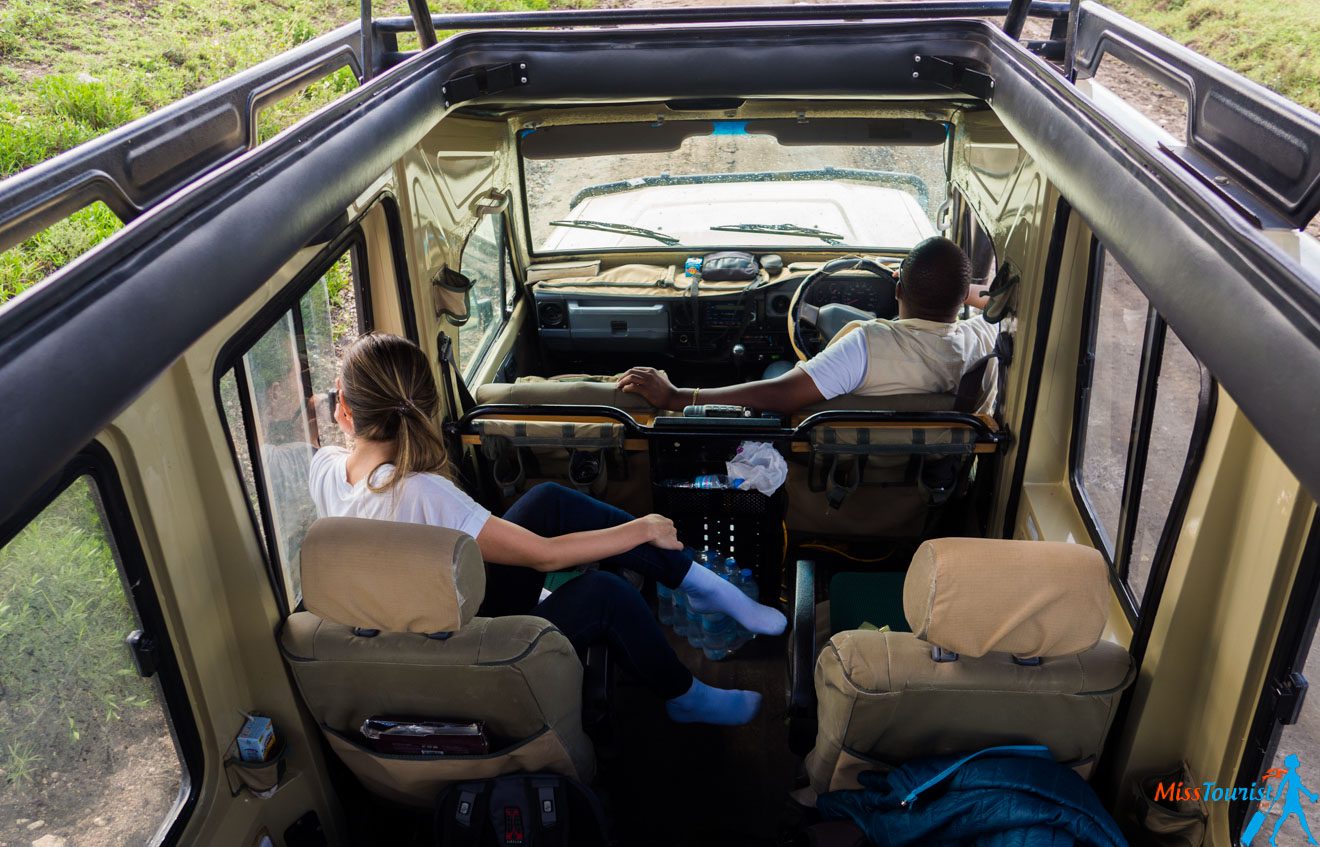
Yes. Ngorongoro Conservation Area regulations require registered 4x4 safari vehicles for game drives inside the crater, and the steep, unpaved descent and ascent roads make a capable vehicle a practical necessity as well as a rule. Standard sedans or minivans are not permitted on the crater floor circuits. Foot Slopes Tours and Safaris uses purpose-built 4x4 Land Cruisers with pop-up roof hatches for game viewing on every Ngorongoro transfer and crater descent, driven by guides experienced with the specific gradients, hairpin turns, and traffic patterns of the rim access roads, which differ meaningfully from ordinary game-drive terrain elsewhere on the Northern Circuit.

What does the Ngorongoro Conservation Area entry process involve?

Vehicles entering the Ngorongoro Conservation Area register at Lodoare Gate near Karatu, where conservation fees, crater service fees, and vehicle fees are paid and logged, typically covering a 24-hour access window from time of entry. A separate permit and payment apply specifically for descending onto the crater floor, on top of the general conservation area fee. Gate processing can take 20 to 40 minutes depending on traffic volume. Foot Slopes Tours and Safaris prepays and manages all NCA fees and permits in advance as part of every itinerary, so travelers pass through the gate without handling paperwork or payments themselves.

How far is Ngorongoro Crater from the Serengeti?

The distance and drive time between Ngorongoro and the Serengeti depend on which part of the park you are heading to: the drive to Seronera in central Serengeti takes roughly 3 to 4 hours over about 145 kilometers, while more remote areas like the northern Serengeti or western corridor can take considerably longer, sometimes 6 hours or more by road. This is why many itineraries fly one leg between Ngorongoro and the Serengeti rather than driving the full distance both ways, particularly when visiting the northern Serengeti during the Great Migration's river-crossing season between roughly July and October.

Why choose Foot Slopes Tours and Safaris for the road transfer to Ngorongoro Crater?

Foot Slopes Tours and Safaris handles every element of the Ngorongoro road transfer end to end: route planning, NCA gate fees and permits, vehicle selection, and driver-guides who know the crater's descent and ascent roads well. Rather than treating the drive as dead time, itineraries are built to include stops at Lake Manyara, Mto wa Mbu, and scenic overlooks along the escarpment, so the journey itself adds value to the safari. This local operational knowledge, combined with direct relationships at conservation area gates and rim lodges, means fewer delays and a smoother transition from Arusha into the Northern Circuit.

What vehicles and drivers does Foot Slopes Tours and Safaris use for Ngorongoro transfers?

Every Ngorongoro transfer with Foot Slopes Tours and Safaris uses purpose-built 4x4 Toyota Land Cruisers with pop-up roof hatches, sufficient ground clearance for the crater's descent and ascent roads, and comfortable seating for the drive from Arusha. Vehicles are maintained specifically for Northern Circuit terrain rather than shared with general transport use. Drivers are experienced safari guides, not just chauffeurs, trained to navigate the crater's switchback roads, manage gate procedures at Lodoare, and spot wildlife along the way, including near Lake Manyara. This pairing of a proper safari vehicle with a knowledgeable local guide is standard on every road itinerary, not an upgrade.

Does Foot Slopes Tours and Safaris handle Ngorongoro Conservation Area permits and fees?

Yes, all Ngorongoro Conservation Area fees, including general conservation fees, crater service fees, and vehicle entry charges, are calculated and prepaid by Foot Slopes Tours and Safaris as part of the itinerary cost before the trip begins. Travelers are not required to carry cash or process payments at Lodoare Gate or the crater descent checkpoint. This advance handling also reduces gate wait times, since paperwork is prepared ahead of arrival rather than processed on the spot. It is one of several logistical details, alongside vehicle booking and lodge coordination, that Foot Slopes Tours and Safaris manages so travelers can focus on the safari itself.

Can Foot Slopes Tours and Safaris build a custom Northern Circuit itinerary around Ngorongoro Crater?

Yes, Ngorongoro Crater is rarely booked as a standalone visit, and Foot Slopes Tours and Safaris routinely designs custom Northern Circuit itineraries that sequence it with Tarangire, Lake Manyara, and the Serengeti in whatever order best suits a traveler's timeframe, budget, and interests. Options range from a compact 3 to 4-day loop to longer 7 to 10-day itineraries with extended time in the Serengeti during migration season. Fly-drive combinations are also arranged for travelers who want to limit total road time. Every itinerary is built around actual drive times and gate logistics rather than generic templates, so the pacing stays realistic.

What support does Foot Slopes Tours and Safaris provide during the road transfer to Ngorongoro?

Throughout the Arusha-to-Ngorongoro road transfer, travelers are accompanied by an experienced driver-guide who manages route navigation, NCA gate procedures, rest and photo stops, and real-time updates on road or weather conditions along the escarpment. Vehicles are equipped for radio or phone communication with the broader Foot Slopes Tours and Safaris network, so any delays or changes can be coordinated quickly with rim lodges or onward Serengeti connections. This continuous, single-guide support from pickup in Arusha through arrival at the crater rim removes the coordination burden from travelers and keeps the Northern Circuit itinerary running smoothly and on schedule.

Plan With Confidence

Plan Your Ngorongoro Crater Safari

Tell us your dates, style, and preferred parks, and we will build the perfect itinerary around you.

Book Now Online →

What Our Travelers Say

Real 5-star reviews from guests who traveled with us

“
★★★★★

Our Private African luxury Safari experience with Foot Slopes Tours and Safaris was nothing short of exceptional. From the very beginning, owner Gabriel was incredibly responsive, making the entire booking process smooth and stress-free. Gabriel went above and

Charlotte T
“
★★★★★

We had an incredible private safari experience with Foot Slopes Tours and Safaris. Their office staff was very helpful and informative, and they communicated very well. Our pick-ups to and from the airport were on time and hassle-free, an unforgettable Safari

Evans Aiden
“
★★★★★

Foot Slopes Tours and Safaris is truly one of the best local tour companies in Tanzania. From start to finish, their service was professional, reliable, and personalized. The team went above and beyond to make sure every detail of our trip was perfect. Our saf

André T
“
★★★★★

Our family chose Foot Slopes Tours and Safaris for a custom 11-day safari itinerary, and we couldn’t be happier with our choice! Everything from our initial inquiry to building our custom itinerary to pre-departure and on-trip support was top quality. Communic

Ida N