
Top 10 Most Spoken Languages in Africa
Africa is one of the most linguistically diverse places on Earth, with somewhere between 1,500 and 3,000 languages spoken across 54 countries, depending on how linguists separate languages from dialects. The most spoken languages in Africa include Arabic, Swahili, English, French, Hausa, Yoruba, Amharic, Oromo, Igbo and Fula. Rankings change depending on whether native, second-language or total speakers are counted. This guide explains the top 10 African languages, where each is spoken, the major language families and the most useful everyday phrases for international travellers, with a special focus on Swahili for anyone planning a private tailor-made Tanzania safari holiday.
What is the most spoken language in Africa?
Arabic is generally ranked as the most spoken language in Africa by total speakers, mainly across North Africa, followed by Swahili, English and French. Swahili is the most widely spoken indigenous African lingua franca, used across East and Central Africa. Rankings vary between sources because some count only native speakers while others include second-language users.
01Top 10 Most Spoken Languages in Africa
Ranking the most spoken languages in Africa is difficult because sources count speakers differently, and many Africans speak three or more languages every day. The list below combines native and second-language speakers to show the languages with the widest reach across the continent. Speaker numbers are approximate estimates and vary between sources, so please treat them as a helpful guide rather than an exact count. Each card explains where the language is spoken, its language family and why it matters for travellers, business, education and culture, from North Africa and the Sahel to the Horn of Africa and beyond.
Arabic
Arabic is widely ranked as Africa's most spoken language, used across Egypt, Sudan, Libya, Tunisia, Algeria, Morocco and Mauritania. Local varieties such as Egyptian, Sudanese and Maghrebi Arabic differ greatly in pronunciation and vocabulary, while Modern Standard Arabic is used in media, education and formal writing. Learning a few greetings helps travellers across North Africa and the Sahel.
Swahili (Kiswahili)
Swahili, or Kiswahili, is Africa's most widely spoken indigenous lingua franca. It is a national language of Tanzania and Kenya and is widely used in Uganda, Rwanda, Burundi and eastern Congo. Most speakers learn it as a second language. For anyone planning a Tanzania safari, Swahili is the most useful African language to learn before travelling.
English
English is an official or major language in Nigeria, Ghana, Kenya, Tanzania, Uganda, Zambia, Zimbabwe and South Africa, among others. Most African English speakers use it as a second or third language for government, education, business and tourism. On safari in East Africa, professional guides, lodges and airports use English widely, making travel easy for international visitors.
French
French is spoken across West, Central and parts of North Africa, including Senegal, Côte d'Ivoire, Mali, Cameroon, the Democratic Republic of Congo and Madagascar. It is used in government, schools, business and diplomacy. Africa now holds a large proportion of the world's French speakers, so the continent plays a central role in the future of the French language.
Hausa
Hausa is the leading language of northern Nigeria and southern Niger, and it is understood in parts of Ghana, Cameroon and Chad. For centuries it has been a language of trade across the Sahel. Hausa belongs to the Chadic branch of the Afroasiatic family and has a strong tradition of radio, film, literature and popular music.
Yoruba
Yoruba is spoken by tens of millions of people, mainly in southwestern Nigeria and neighbouring parts of Benin and Togo. It is a tonal language, so a change in pitch can change a word's meaning. Yoruba culture has influenced music, religion, art and festivals far beyond Africa, especially in Brazil, Cuba and the Caribbean through the historic African diaspora.
Amharic
Amharic is the working language of Ethiopia's federal government and is spoken widely across the country. It belongs to the Semitic branch of the Afroasiatic family and is written in the distinctive Ge'ez, or Ethiopic, script. Visitors to Addis Ababa, Lalibela and Gondar hear Amharic everywhere, and simple greetings are always warmly appreciated by local people.
Oromo (Afaan Oromoo)
Oromo, also called Afaan Oromoo, is one of Africa's largest indigenous languages, with most speakers in Ethiopia and smaller communities in northern Kenya. It belongs to the Cushitic branch of the Afroasiatic family and is written in the Latin alphabet. Oromo culture is rich in oral history, music and ceremonies, including the traditional Gadaa system of governance.
Igbo
Igbo is the main language of southeastern Nigeria, spoken in states such as Anambra, Enugu, Imo, Abia and Ebonyi. It is a tonal language with many regional dialects. Igbo literature, music and proverbs are celebrated worldwide, and the language has a strong presence among Nigerian communities abroad. Visitors can experience it through markets, festivals and food.
Fula (Fulani)
Fula, also known as Fulani, Fulfulde or Pulaar, is a language continuum spoken from Senegal and Guinea to Nigeria, Cameroon and Chad. Its many regional varieties and names make reliable speaker estimates difficult. Traditionally linked with pastoral Fulani communities, Fula spread across the Sahel through centuries of trade and seasonal movement with livestock between fresh grazing lands.
02Most Spoken Languages by African Region
Language use in Africa changes dramatically from one region to the next, shaped by geography, trade routes, migration and colonial history. North Africa is dominated by Arabic and Berber languages, East Africa by Swahili, West Africa by Hausa, Yoruba and French, and Southern Africa by Zulu, Xhosa and English. Most people speak a local mother tongue at home, a regional lingua franca in markets and an official language at school or work. The six cards below summarise the main languages of each region, helping international travellers know exactly which words and phrases will be most useful before they arrive.
North Africa
North Africa is the heartland of Arabic on the continent, from Egypt and Libya to Tunisia, Algeria and Morocco. Berber, or Amazigh, languages such as Tamazight and Kabyle are spoken by millions and have official status in Morocco and Algeria. French remains common in business and education across the Maghreb, especially in Morocco, Algeria and Tunisia.
East Africa
Swahili connects East Africa, serving as a common language across Tanzania, Kenya, Uganda, Rwanda and Burundi. Alongside it, people speak hundreds of local languages, including Kikuyu, Luo, Luganda, Kinyarwanda and Maa, the language of the Maasai. English is widely used in tourism and government, so safari travellers rarely face serious language barriers in lodges, parks or airports.
West Africa
West Africa is one of the most linguistically rich regions on Earth. Hausa, Yoruba, Igbo, Fula, Wolof, Twi and Mandinka are major regional trade languages, while English, French and Portuguese serve as official languages. Nigeria alone has more than 500 languages, and many West Africans switch between several languages in a single everyday conversation at home or work.
Central Africa
In Central Africa, French is the main official language in countries such as Cameroon, Gabon, the Republic of Congo and the Democratic Republic of Congo. Lingala, Kikongo, Tshiluba and Swahili are national languages of the DRC, and Sango is a national language of the Central African Republic. Cameroon uses both French and English as official languages today.
Horn of Africa
The Horn of Africa is dominated by Afroasiatic languages. Amharic, Oromo, Tigrinya and Somali have tens of millions of speakers across Ethiopia, Eritrea, Somalia and Djibouti, with Arabic also important in trade, religion and education. Ethiopia's Ge'ez script is one of the oldest writing systems still in daily use in Africa, giving the region a unique written heritage.
Southern Africa
South Africa has 12 official languages, including Zulu, Xhosa, Afrikaans, English, Sesotho, Setswana and South African Sign Language. Zulu is the most common home language there, followed by Xhosa and Afrikaans. Across the region, Shona, Chichewa, Bemba and Portuguese are widely spoken, while the famous click consonants of Xhosa and Khoisan languages fascinate many international visitors on safari.
03Africa's Major Language Families
Linguists usually classify most of Africa's thousands of languages into a few large families based on common ancestry, vocabulary and grammar. Niger-Congo is the largest, followed by Afroasiatic and Nilo-Saharan, while Khoisan click languages and a few isolates complete the picture. Malagasy on Madagascar even belongs to a family from Southeast Asia. Understanding these families explains why two languages spoken only a few hundred kilometres apart can sound completely different from each other. The six cards below introduce each family, its best-known languages and where you are most likely to hear them during your travels across the African continent.
Niger-Congo
Niger-Congo is one of the largest language families in the world by number of languages, with well over 1,000 member languages. It includes the Bantu languages, such as Swahili, Zulu, Xhosa, Shona and Lingala, as well as Yoruba, Igbo, Fula and Wolof. Most languages spoken south of the Sahara belong to this vast and remarkably varied family.
Afroasiatic
The Afroasiatic family stretches across North Africa and the Horn of Africa. It includes the Semitic branch, with Arabic and Amharic, the Cushitic branch with Oromo and Somali, the Chadic branch with Hausa, and the Berber languages. Ancient Egyptian and its descendant Coptic also belong to this family, giving it a very long written history.
Nilo-Saharan
Nilo-Saharan languages are spoken along the Nile valley and across parts of the Sahara and East Africa. The family includes Dinka and Nuer in South Sudan, Luo in Kenya and Tanzania, Kanuri around Lake Chad and Maa, the language of the Maasai and Samburu. Linguists still debate how closely some of these languages are related.
Khoisan click languages
Khoisan is a collective name for southern African languages that use click consonants, including Nama and Taa. Linguists now divide them into several separate families. In Tanzania, Hadzane and Sandawe also use clicks, although they are not closely related to the southern languages. These languages are among the most phonetically complex and fascinating in the world today.
Austronesian: Malagasy
Malagasy, the national language of Madagascar, belongs to the Austronesian family, the same family as Malay, Indonesian and Hawaiian. Its closest relatives are languages of southern Borneo, reflecting voyages across the Indian Ocean more than a thousand years ago. Over the centuries, Malagasy also absorbed many words borrowed from Bantu languages, Arabic, French and English, making it truly unique.
European languages in Africa
English, French and Portuguese arrived with trade and colonial history, while Afrikaans developed from Dutch in southern Africa. Today they serve as official languages in many countries, used in parliaments, courts, universities and international business. Portuguese is official in Angola, Mozambique, Cabo Verde, Guinea-Bissau and São Tomé and Príncipe, and African varieties continue to develop unique character.
04What Languages Are Spoken in Tanzania?
Tanzania is home to more than 120 ethnic communities and well over 100 languages, yet almost everyone can communicate in Swahili. Kiswahili is the national language and the language of primary education, parliament and daily life, while English is used in secondary schools, universities, business and tourism. Local languages remain strong at home and in rural villages. For safari travellers this means communication is easy, and our guides speak excellent English. The six cards below introduce the languages you are most likely to hear on a private Tanzania safari, from the cities to Maasai bomas and Hadzabe camps.
Kiswahili, the national language
Kiswahili is Tanzania's national language and the glue that unites more than 120 ethnic communities. Founding president Julius Nyerere promoted it after independence to build national identity, and today nearly all Tanzanians speak it fluently. You will hear Swahili in markets, buses, lodges and radio, and locals warmly welcome visitors who try a few words.
English
English is widely used alongside Swahili in higher education, courts, business and international tourism. Safari guides, lodge staff, pilots and airport officials generally speak good English, so international travellers can communicate easily and confidently throughout their whole trip. In remote villages fewer people speak English, which makes a friendly Swahili greeting from visitors even more appreciated.
Maa, the Maasai language
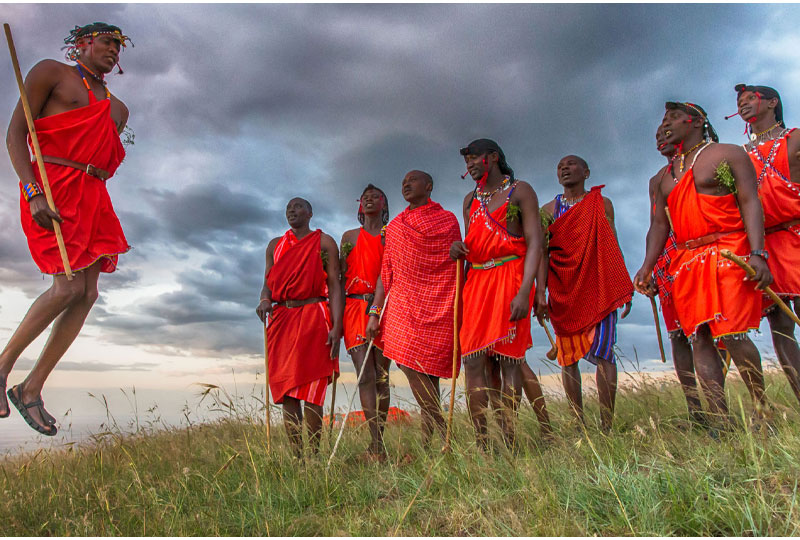
Maa is the language of the Maasai, who live across northern Tanzania, including the Ngorongoro Conservation Area and the plains around Arusha and Kilimanjaro. Visitors to a Maasai boma often hear the greeting Sopa and learn words related to cattle, the centre of Maasai life. Most Maasai also speak Swahili, and many younger people speak English.
Sukuma
Sukuma is spoken by the Sukuma people, Tanzania's largest ethnic community, who live mainly south of Lake Victoria around Mwanza and Shinyanga. It is a Bantu language closely related to Nyamwezi. Visitors travelling to the western Serengeti or Lake Victoria may hear Sukuma in villages, and the Sukuma Museum near Mwanza showcases traditional music and dance.
Chaga (Kichagga)
Chaga, or Kichagga, is a cluster of related Bantu dialects spoken on the slopes of Mount Kilimanjaro around Moshi and Marangu. The Chaga are known for their banana and coffee farms, terraced gardens and historic underground tunnels. Climbers and safari travellers visiting Moshi can enjoy cultural tours that introduce Chaga traditions, food and local coffee.
Hadzane, Datoga and Iraqw
Around Lake Eyasi, travellers can hear remarkable languages. Hadzane, spoken by the Hadzabe hunter-gatherers, is a language isolate with click sounds, unrelated to any other language. Nearby, the Datoga speak a Nilotic language and the Iraqw speak a Cushitic language. A Lake Eyasi cultural tour offers a rare and respectful chance to hear these ancient voices in person.
05Basic Swahili Words and Phrases for Your Safari
Swahili is easy for English speakers to start learning because it is written in the Latin alphabet and pronounced almost exactly as it is spelled. Every vowel is clear, and the stress usually falls on the second-to-last syllable. You do not need to be fluent for a Tanzania safari, because guides and lodge staff speak English, but a few Swahili words create instant smiles and warmer connections. Use the tabs below to learn greetings, polite phrases, safari animal names, numbers and shopping words, then practise them with your guide on the very first day of your private safari.
Swahili Greetings
Meeting guides, lodge staff and villagers
Jambo, Habari, Mambo, Shikamoo
Jambo means hello and is the greeting most visitors learn first. Locals often prefer Habari?, meaning how are you, answered with Nzuri, meaning fine. Young people say Mambo?, replied to with Poa. Show respect to elders with Shikamoo, and they will answer Marahaba. Finish every conversation warmly with Kwaheri, meaning goodbye, and watch faces light up with smiles.
More Swahili phrases →
Polite Swahili Phrases
Lodges, restaurants and markets
Asante sana, Karibu, Samahani
Asante means thank you, and Asante sana means thank you very much. You will hear Karibu, meaning welcome, everywhere you go. Tafadhali means please, Samahani means sorry or excuse me, and Hakuna matata means no problem. Ndiyo is yes and Hapana is no. Using these words shows respect and always earns friendly smiles from Tanzanians everywhere.
Tanzania culture →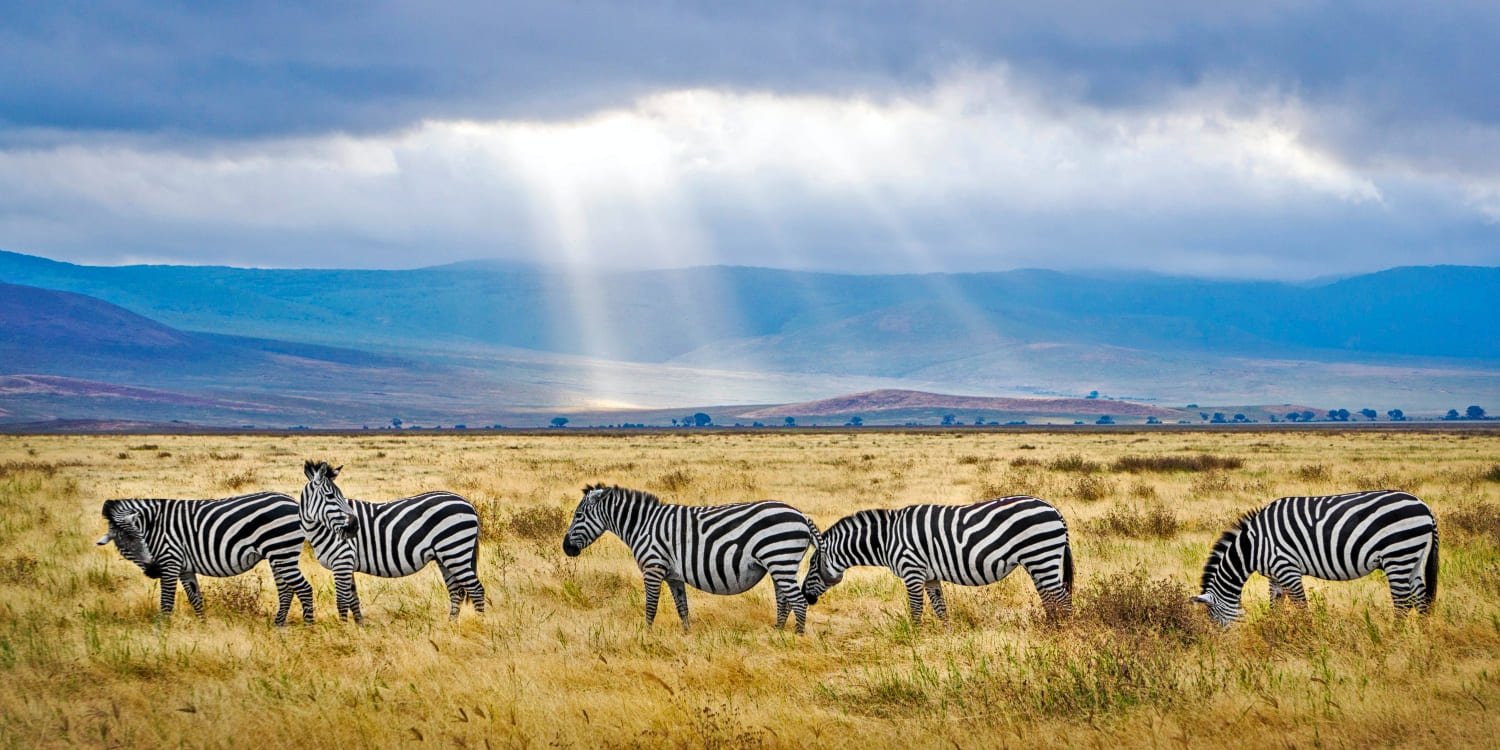
Swahili Names for Safari Animals
Game drives and children on safari
Simba, Tembo, Twiga, Kiboko
Learning animal names makes game drives even more fun. Simba is lion, tembo or ndovu is elephant, twiga is giraffe and kiboko is hippo. Nyati means buffalo, chui means leopard and faru means rhino. Punda milia, literally striped donkey, is zebra, while nyumbu is wildebeest. Children love calling out animals in Swahili with their guide.
Tanzania Big Five safari →
Swahili Numbers and Shopping Words
Markets, curio shops and Zanzibar
Moja to Kumi, Bei gani?
Swahili numbers from one to ten are moja, mbili, tatu, nne, tano, sita, saba, nane, tisa and kumi. In markets, ask Bei gani? to find out how much something costs. Ghali means expensive and rahisi means cheap. Bargaining is normal for crafts, so smile, stay friendly and agree on a fair price together with the seller.
Zanzibar beach holidays →
Useful Swahili Travel Words
Everyday needs during your safari
Maji, Chakula, Choo, Pole pole
Maji means water, chakula means food and choo means toilet, so Choo kiko wapi? asks where the toilet is. Pole pole means slowly, a phrase every Kilimanjaro climber hears often. Rafiki means friend, lala salama means sleep well and safari njema means have a good journey. These simple words help with daily needs on safari.
Tipping in Tanzania →06Language Tips for Travellers in Africa
Language is one of the easiest ways to connect with people when travelling in Africa. Most Africans are multilingual and genuinely appreciate visitors who make an effort, even with only one or two words. You do not need perfect grammar, because a warm greeting and a genuine smile go a very long way. Knowing which language to use in each country also prevents confusion. The six practical tips below explain how to prepare, which apps and phrasebooks help, how to greet people respectfully and how your guide can help you learn local words naturally during a private tailor-made safari.
Learn greetings first
Greetings matter enormously across Africa, and launching straight into a question can feel rude. Always start with hello and how are you before asking for directions or help. In Tanzania, a simple Habari or Jambo followed by Asante at the end of the conversation creates a positive impression and often leads to friendlier, longer exchanges.
Match the language to the country
Africa has no single language, so research the main languages of each destination before you travel. Swahili is ideal for Tanzania and Kenya, French helps in Senegal and much of Central Africa, Arabic is useful in Egypt and Morocco, and Portuguese in Mozambique. English works well in most safari lodges across East and Southern Africa.
Use apps and phrasebooks
Download an offline translation app and a Swahili phrasebook before you leave home, because mobile signal can be weak in remote parks. Practise pronunciation with audio lessons on the flight. Writing ten key words in a small notebook is surprisingly helpful, and children enjoy turning new vocabulary into a fun safari game with the whole family.
Ask your guide to teach you
Your safari guide is the best language teacher you could ask for. Ask them to teach you a new Swahili word each day, from animal names to everyday expressions. Guides enjoy explaining the meaning behind words and phrases, and practising with them during game drives turns long journeys into lively cultural lessons for everyone in the vehicle.
Be respectful with photos and words
Always ask before photographing people, ideally using a polite local phrase. In Swahili, you can ask Naomba kupiga picha? meaning may I take a photo. Always respect a refusal politely with a smile. Avoid slang you do not fully understand, and remember that tone, patience and body language communicate respect as clearly as spoken words do.
Support local culture
Cultural visits, local guides and community projects help keep African languages and traditions alive. Choosing a Maasai village visit, a Hadzabe encounter or a coffee farm tour on the Kilimanjaro slopes supports families directly. Listening to stories, songs and proverbs in local languages also gives travellers a deeper, more authentic understanding of the communities they meet.
07Swahili Words Checklist for Your Safari
Before your Tanzania safari, use this interactive checklist to learn the most useful Swahili words. Tick each word once you can say it confidently, and track your progress with the bar at the top. The list is organised into greetings, polite expressions, safari animals and practical travel words, so you can learn a little each day in the weeks before you travel. Print a copy for the flight or practise with your children at home. By the time you land in Arusha, you will be ready to greet your guide, thank lodge staff and name every animal you see.
Greetings0/6
Polite words0/6
Safari animals0/6
Travel words0/6
08Most Spoken Languages in Africa FAQs
What is the most spoken language in Africa?
Arabic is generally considered the most spoken language in Africa by total speakers, with most users in North Africa and the Sahel. Swahili, English and French follow closely, depending on how second-language speakers are counted. Swahili is the most widely spoken indigenous African lingua franca. Rankings vary between sources, so speaker numbers are always approximate estimates.
How many languages are spoken in Africa?
Africa has somewhere between 1,500 and 3,000 languages, making it one of the most linguistically diverse continents on Earth. Exact numbers vary because linguists classify closely related varieties differently as separate languages or dialects. Nigeria alone has more than 500 languages, while countries such as Cameroon, the Democratic Republic of Congo and Tanzania each have hundreds.
Is Swahili the most spoken African language?
Swahili is the most widely spoken indigenous African language when second-language speakers are included, with estimates often exceeding 100 million users. Most people learn it as a second language alongside their mother tongue. Arabic has more total speakers in Africa overall, but Swahili is the leading lingua franca of East Africa and a working language of the African Union.
Which countries speak Swahili?
Swahili is a national or official language in Tanzania, Kenya, Uganda and Rwanda, and it is widely spoken in Burundi and the eastern Democratic Republic of Congo. Smaller communities also use it in Mozambique, Malawi, Zambia, South Sudan, Somalia and the Comoros. Tanzania is widely regarded as the heartland of Swahili language, literature and coastal culture.
What language is spoken in Tanzania?
Swahili, or Kiswahili, is the national language of Tanzania and is spoken by almost the entire population. English is widely used in higher education, business, courts and tourism. Tanzania also has more than 100 local languages, including Sukuma, Chaga, Maa, Haya and Hadzane. Safari guides and lodge staff speak English, so communication is easy for visitors.
Do I need to speak Swahili for a Tanzania safari?
No, you do not need to speak Swahili for a Tanzania safari. Professional guides, lodge staff, pilots and airport officials speak English, and guides speaking other languages can sometimes be arranged on request. However, learning a few Swahili words such as Jambo, Asante and Karibu is fun, shows respect and creates warmer connections with local people.
What does Jambo mean?
Jambo means hello in Swahili and is the greeting most visitors learn first. It is a friendly, simplified form used often with tourists. Tanzanians commonly greet each other with Habari? meaning how are you, or Mambo? among younger people. Answering Habari with Nzuri, meaning fine, will impress your guide and the friendly lodge staff every time.
What does Hakuna Matata mean?
Hakuna matata is a Swahili phrase meaning no problems or no worries. It became famous worldwide through The Lion King, but it is also used in everyday conversation in Tanzania and Kenya. Visitors hear it often in lodges, markets and on Zanzibar. Tanzanians also say hamna shida, which similarly means no problem and is heard every day.
Is English widely spoken in Africa?
Yes, English is widely spoken across Africa, especially in countries such as Nigeria, Ghana, Kenya, Tanzania, Uganda, Zambia, Zimbabwe and South Africa. It is used in government, education, business and tourism, although most people speak it as a second language. In safari destinations across East and Southern Africa, English is standard in lodges, airports and tour companies.
Which African language is easiest to learn?
Swahili is often considered one of the easiest African languages for English speakers. It uses the Latin alphabet, is pronounced exactly as written and has no tones, unlike Yoruba or Igbo. It also contains many familiar loanwords from Arabic and English. Learning basic greetings and useful safari words takes only a few days of practice.
What are the main language families in Africa?
Africa's main language families are Niger-Congo, Afroasiatic and Nilo-Saharan, along with the click languages often classed as Khoisan. Niger-Congo includes Swahili, Yoruba, Igbo and Zulu. Afroasiatic includes Arabic, Amharic, Oromo, Somali and Hausa. Nilo-Saharan includes Maa, Luo and Dinka. Malagasy, spoken on Madagascar, belongs to the Austronesian family, whose closest relatives are spoken in Southeast Asia today.
What language do the Maasai speak?
The Maasai speak Maa, a Nilotic language spoken in northern Tanzania and southern Kenya. A common greeting is Sopa, and many words relate to cattle, which are central to Maasai life. Most Maasai also speak Swahili, and younger people often speak English. Visiting a Maasai boma on safari is a wonderful way to hear Maa spoken.
What language do the Hadzabe speak?
The Hadzabe of Lake Eyasi speak Hadzane, a language isolate with click consonants that is not related to any other living language. Only a small number of people speak it, making it one of Tanzania's most remarkable languages. A guided Lake Eyasi cultural tour lets respectful visitors hear Hadzane and learn about traditional hunter-gatherer life.
Why does Africa have so many languages?
Africa has so many languages because humans have lived there longer than anywhere else, giving languages tens of thousands of years to develop and diversify. Vast distances, mountains, deserts and forests separated communities, while migration and trade created new contact languages. Colonial history later added English, French and Portuguese, which now coexist with indigenous African languages.
African Culture and Travel Guides
Plan Further: Culture and Safari in East Africa
East Africa
Plan Your Private Tanzania Cultural Safari
Hear Swahili, Maa and Hadzane spoken in their homelands. Our Arusha team will plan a private tailor-made safari combining the Serengeti and Ngorongoro with Maasai, Hadzabe and Chaga cultural visits, guided by friendly English-speaking local experts.
Book Now Online →What Our Travelers Say
Real 5-star reviews from guests who traveled with us