
Kilimanjaro Summits: Stella Point, Gilman's Point and Uhuru Peak
What are the summits of Mount Kilimanjaro? Climbers reaching the top of Kibo, Kilimanjaro's highest volcanic cone, pass three famous points on the crater rim: Gilman's Point at about 5,685 metres, Stella Point at about 5,756 metres and Uhuru Peak at 5,895 metres, the true summit and highest point in Africa. The rim point you reach first depends on your route. This guide compares the three Kilimanjaro summits, explains summit night on each route, the summit day timeline, summit certificates and tips for reaching Uhuru Peak safely. Sunrise on the rim is unforgettable. The summit views are truly breathtaking.
What are the three summit points on Kilimanjaro?
Kilimanjaro's three summit points are Gilman's Point at about 5,685 metres, Stella Point at about 5,756 metres and Uhuru Peak at 5,895 metres. Gilman's and Stella are on the crater rim, while Uhuru Peak is the true summit and the highest point in Africa. Reaching the top is a proud moment. Your guide sets a safe, steady pace.
01The Three Kilimanjaro Summits Compared
Each Kilimanjaro summit point has its own altitude, approach and meaning for climbers. Gilman's and Stella Points mark the moment you reach the crater rim after the steep climb, while Uhuru Peak is the final goal. Use the tabs below to compare Gilman's Point, Stella Point and Uhuru Peak, including their altitude, the routes that reach them and how long it takes to walk on to the summit, so you know exactly what to expect on summit day. Summit day is the highlight of every Kilimanjaro climb. Take time to enjoy the view. Every climb is private and tailor-made.
Gilman's Point
Marangu, Rongai and Northern Circuit climbers
First rim point from Kibo Hut
Gilman's Point sits on the eastern crater rim and is reached from Kibo Hut or School Hut after a steep zigzag climb. From here, Uhuru Peak is about one and a half to two hours away along the rim, passing Stella Point on the way. Good acclimatisation is the key to success on summit night.
Gilman's Point story →Stella Point
Machame, Lemosho, Umbwe and Shira climbers
Top of the Barafu ascent
Stella Point is on the south-eastern rim, reached from Barafu Camp after five to seven hours of climbing on summit night. The hardest climbing is now behind you, and Uhuru Peak is about 45 minutes to an hour away on a gentler trail. Many climbers describe summit day as the hardest and best day of their lives.
Stella Point story →Uhuru Peak
Every summit climber
The Roof of Africa
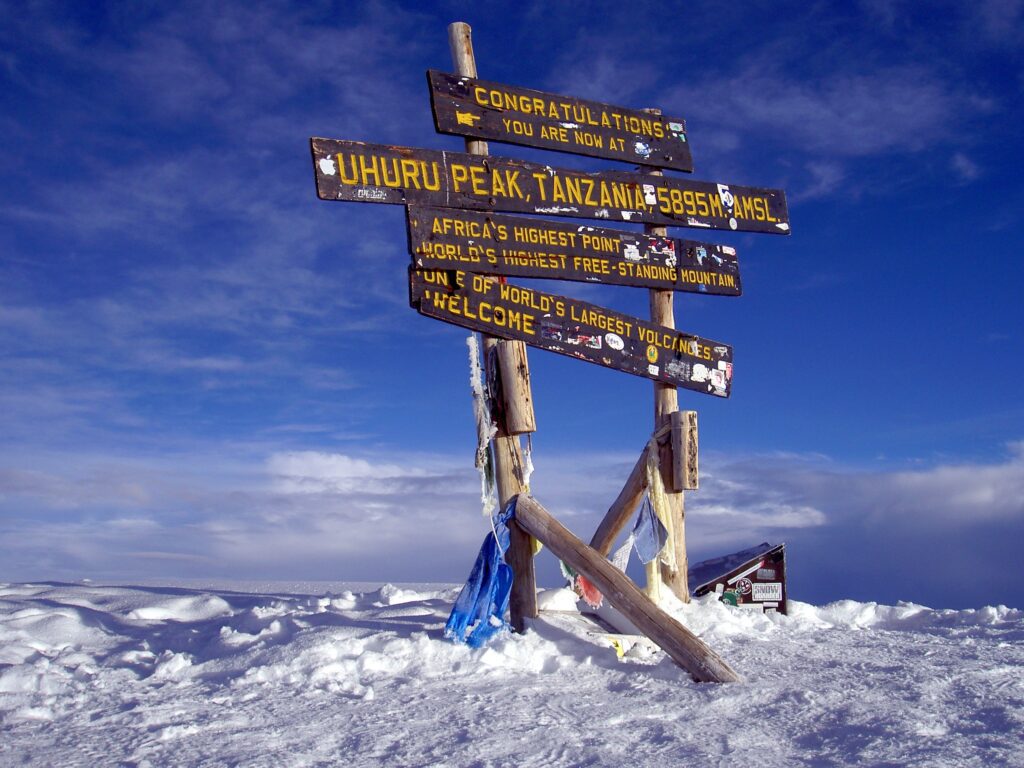
Uhuru Peak, meaning freedom in Swahili, is the highest point of Kilimanjaro and Africa at 5,895 metres. Climbers celebrate at the famous summit sign, enjoy views of glaciers and the crater, then begin the long descent after a short stay. Our Arusha-based team is always happy to help you plan. Your private guide will explain more on the mountain.
Kilimanjaro facts →02Summit Night by Route
Every Kilimanjaro route joins one of a few summit approaches, and the one you take decides which rim point you reach first. Each approach has a different high camp, gradient and atmosphere on summit night. These four summit approaches explain the Barafu approach to Stella Point, the Kibo Hut approach to Gilman's Point, the northern approach from School Hut and the rarely used Western Breach, so you understand your own summit night before you climb. Sunrise on the rim is unforgettable. The summit views are truly breathtaking. Take time to enjoy the view. Every climb is private and tailor-made.
Barafu to Stella Point
Climbers on the Machame, Lemosho, Umbwe and Shira routes leave Barafu Camp around midnight and climb steep scree and rock to Stella Point. It is the most common summit approach on Kilimanjaro, followed by the walk along the rim to Uhuru Peak. Reaching the top is a proud moment. Your guide sets a safe, steady pace.
Kibo Hut to Gilman's Point
Marangu and Rongai climbers start from Kibo Hut, at about 4,700 metres, and climb long zigzags through loose scree to Gilman's Point. The climb passes Hans Meyer Cave, a traditional rest point before the final steep section. Summit day is the highlight of every Kilimanjaro climb. Good acclimatisation is the key to success on summit night.
School Hut to Gilman's Point
Northern Circuit and some Rongai itineraries begin summit night from School Hut, joining the Kibo Hut trail before reaching Gilman's Point. This quieter approach follows a longer acclimatisation profile, which helps many climbers feel stronger. Many climbers describe summit day as the hardest and best day of their lives. Our Arusha-based team is always happy to help you plan.
The Western Breach
The Western Breach is a steep, rocky approach from the west into the crater, used only rarely and with extra care because of rockfall risk. Most climbers and operators choose the safer Barafu or Kibo Hut approaches instead. Your private guide will explain more on the mountain. Careful planning makes a real difference. Ask our team for personal advice.
03Kilimanjaro Summit Day Timeline
Summit day on Kilimanjaro is long, often lasting twelve to sixteen hours from wake-up to rest at a lower camp. Understanding the timeline helps you manage energy, warmth and expectations. These four summit day stages explain the midnight wake-up and start, the climb to the crater rim, the walk to Uhuru Peak and the long descent, giving you a clear picture of the most memorable day of your Kilimanjaro climb. Sunrise on the rim is unforgettable. The summit views are truly breathtaking. Reaching the top is a proud moment. Summit day is the highlight of every Kilimanjaro climb.
Around 11 pm to midnight
Your crew wakes you late at night with hot drinks and snacks. You dress in all your warm layers, check your headlamp and set off slowly in the dark, guided by the lights of climbers ahead. Your guide sets a safe, steady pace. Good acclimatisation is the key to success on summit night. Take time to enjoy the view.
Midnight to sunrise
The climb to the crater rim takes around five to seven hours. Your guide sets a very slow pace with short rests. This is the coldest and hardest part of the climb, so steady breathing and small steps are essential. Many climbers describe summit day as the hardest and best day of their lives. Every climb is private and tailor-made.
Sunrise to Uhuru Peak
Most climbers reach Gilman's or Stella Point around sunrise, then walk along the rim to Uhuru Peak. You spend a short time at the summit for photos, as staying too long at extreme altitude is not safe. Our Arusha-based team is always happy to help you plan. Your private guide will explain more on the mountain.
The long descent
After the summit, you descend to your high camp for a rest and meal, then continue to a lower camp such as Millennium, Mweka or Horombo. The descent can take six to eight hours and is hard on knees. Careful planning makes a real difference. Ask our team for personal advice. It is a highlight for many climbers.
04Kilimanjaro Summit Certificates
Kilimanjaro National Park awards official certificates to climbers who reach the crater rim and the summit, recording the point you reached and the date. These certificates are treasured souvenirs of a remarkable achievement. These three points explain how summit certificates work, the difference between rim and summit certificates and how your guide confirms the point you reached, so you know what to expect at the end of your climb. Sunrise on the rim is unforgettable. The summit views are truly breathtaking. Reaching the top is a proud moment. Good acclimatisation is the key to success on summit night.
Uhuru Peak certificate
Climbers who reach Uhuru Peak receive the official summit certificate for reaching the highest point in Africa at 5,895 metres. It is usually presented at the park gate or during a celebration at the end of the climb. Your guide sets a safe, steady pace. Summit day is the highlight of every Kilimanjaro climb. Take time to enjoy the view.
Crater rim certificates
Climbers who reach Gilman's Point or Stella Point, but not Uhuru Peak, also receive an official certificate recognising their achievement on the crater rim. Reaching the rim is a major accomplishment in its own right. Many climbers describe summit day as the hardest and best day of their lives. Our Arusha-based team is always happy to help you plan.
How your summit is confirmed
Your head guide records the point you reached and reports it when your climb ends. This information is used to prepare your official certificate with your name, the date and your highest point on the mountain. Your private guide will explain more on the mountain. Every climb is private and tailor-made. Careful planning makes a real difference.
05Kilimanjaro Summit Day Checklist
Use this interactive checklist to prepare for summit day on Kilimanjaro. Tick off each item as you lay out warm layers, prepare water and snacks and charge your headlamp and camera the evening before. Good preparation lets you rest calmly and start summit night with confidence. Our private Kilimanjaro guides will check your kit before you leave camp and help you stay safe all the way to Uhuru Peak. Sunrise on the rim is unforgettable. The summit views are truly breathtaking. Reaching the top is a proud moment. Good acclimatisation is the key to success on summit night.
Clothing0/4
Equipment0/4
Fuel and care0/4
06Tips for Reaching Uhuru Peak
Reaching Uhuru Peak depends on good acclimatisation, steady pacing and careful preparation rather than speed. Most summit failures are caused by altitude sickness or exhaustion, so the right choices before and during your climb matter greatly. These three tips explain how to choose a route that supports your summit chances, how to pace summit night and why listening to your body and your guide keeps your climb safe. Your guide sets a safe, steady pace. Summit day is the highlight of every Kilimanjaro climb. Many climbers describe summit day as the hardest and best day of their lives.
Choose a longer route
Longer routes such as the 8-day Lemosho or the Northern Circuit give your body more time to adjust to altitude. Extra days improve acclimatisation and greatly increase your chances of reaching Uhuru Peak. Take time to enjoy the view. Our Arusha-based team is always happy to help you plan. Your private guide will explain more on the mountain.
Pace summit night slowly
Walk slowly from the very start of summit night, even if you feel strong. A steady rhythm with regular sips of water and small snacks keeps your energy stable for the long climb and the descent afterwards. Every climb is private and tailor-made. Careful planning makes a real difference. Ask our team for personal advice.
Listen to your body
Tell your guide about headaches, dizziness or breathlessness at every rest stop. Turning back when necessary is a sign of good judgement, as your health and safety always matter more than reaching the summit. It is a highlight for many climbers. This is well worth knowing before you travel. Slow and steady pacing always helps.
07Kilimanjaro Summits: FAQs
What is the highest summit of Kilimanjaro?
Uhuru Peak is the highest summit of Kilimanjaro at 5,895 metres. It sits on the southern rim of Kibo's crater and is the highest point in Africa and the highest free-standing mountain summit in the world. Sunrise on the rim is unforgettable. The summit views are truly breathtaking. Reaching the top is a proud moment.
Is Gilman's Point the summit of Kilimanjaro?
No. Gilman's Point is on the crater rim at about 5,685 metres, but the true summit is Uhuru Peak. Reaching Gilman's Point is still a major achievement, and climbers receive a certificate for reaching the rim. Your guide sets a safe, steady pace. Summit day is the highlight of every Kilimanjaro climb. Take time to enjoy the view.
Is Stella Point the summit of Kilimanjaro?
No. Stella Point is on the crater rim at about 5,756 metres. Uhuru Peak is about 45 minutes to an hour further along the rim. Most climbers who reach Stella Point continue to the true summit. Good acclimatisation is the key to success on summit night. Many climbers describe summit day as the hardest and best day of their lives.
Which route reaches Gilman's Point?
Climbers on the Marangu and Rongai routes, and many Northern Circuit itineraries, reach the crater rim at Gilman's Point. They climb from Kibo Hut or School Hut before walking along the rim to Uhuru Peak. Our Arusha-based team is always happy to help you plan. Your private guide will explain more on the mountain. Every climb is private and tailor-made.
Which route reaches Stella Point?
Climbers on the Machame, Lemosho, Umbwe and Shira routes reach the crater rim at Stella Point after climbing from Barafu Camp. It is the most common summit approach on Kilimanjaro. Careful planning makes a real difference. Ask our team for personal advice. It is a highlight for many climbers. This is well worth knowing before you travel.
How long does summit day take on Kilimanjaro?
Summit day usually takes twelve to sixteen hours in total. The climb to the rim takes about five to seven hours, the walk to Uhuru Peak up to two hours, and the descent to a lower camp six to eight hours. Slow and steady pacing always helps. Sunrise on the rim is unforgettable. The summit views are truly breathtaking.
What time do you start summit night on Kilimanjaro?
Most climbers start summit night between around 11 pm and midnight. Starting in the dark allows you to reach the crater rim around sunrise and descend before the afternoon weather changes. Sunrise on the rim is unforgettable. The summit views are truly breathtaking. Reaching the top is a proud moment. Your guide sets a safe, steady pace.
Do you get a certificate for reaching Gilman's or Stella Point?
Yes. Kilimanjaro National Park awards certificates to climbers who reach Gilman's Point or Stella Point on the crater rim, as well as to those who reach Uhuru Peak, the true summit. Sunrise on the rim is unforgettable. The summit views are truly breathtaking. Reaching the top is a proud moment. Your guide sets a safe, steady pace.
How long can you stay at Uhuru Peak?
Most climbers spend around 10 to 20 minutes at Uhuru Peak for photos and celebration. Staying longer at extreme altitude increases the risk of altitude sickness and cold injury, so guides keep summit stays short. Sunrise on the rim is unforgettable. The summit views are truly breathtaking. Reaching the top is a proud moment. Take time to enjoy the view.
How cold is it at the summit of Kilimanjaro?
Temperatures at the summit of Kilimanjaro can range from around minus 7 to minus 20 degrees Celsius with wind chill, especially before sunrise. Warm layers, insulated gloves and a down jacket are essential. Sunrise on the rim is unforgettable. The summit views are truly breathtaking. Reaching the top is a proud moment. Your guide sets a safe, steady pace.
What does Uhuru Peak mean?
Uhuru means freedom in Swahili. The summit was named Uhuru Peak to celebrate Tanganyika's independence in 1961, and it remains a symbol of freedom and achievement for climbers from around the world. Sunrise on the rim is unforgettable. The summit views are truly breathtaking. Reaching the top is a proud moment. Your guide sets a safe, steady pace.
What can you see from the summit of Kilimanjaro?
From the summit, climbers enjoy views of glaciers and ice cliffs, the vast Kibo crater, Mawenzi Peak and a sea of clouds stretching to the horizon. On clear mornings, the sunrise views are unforgettable. Sunrise on the rim is unforgettable. The summit views are truly breathtaking. Reaching the top is a proud moment. Your guide sets a safe, steady pace.
What percentage of climbers reach Uhuru Peak?
Success rates vary widely by route length and acclimatisation. Longer routes of seven or eight days have much higher success rates than short climbs. Choosing a longer route is the best way to improve your chances. Sunrise on the rim is unforgettable. The summit views are truly breathtaking. Reaching the top is a proud moment.
How do I plan a Kilimanjaro summit climb?
Choose your route and number of days, train with long hikes and plan your dates around the drier seasons. Our Arusha-based team will design a private climb with expert guides and a well-paced summit night. Sunrise on the rim is unforgettable. The summit views are truly breathtaking. Reaching the top is a proud moment. Take time to enjoy the view.
Kilimanjaro Climbing Guides
Climb Kilimanjaro with Foot Slopes
Stand on the Roof of Africa
Tell us your dates and experience, and our Arusha-based team will design a private Kilimanjaro climb with expert guides, careful acclimatisation and a well-paced summit night to Uhuru Peak.
Book Now Online →What Our Travelers Say
Real 5-star reviews from guests who traveled with us