
By the Foot Slopes Tours and Safaris team
Our Arusha-based guides and safari planners have explored Tanzania’s parks, mountains and beaches for years, and write this guide from first-hand experience on the ground.
Tanzania is one of Africa’s greatest wildlife destinations, with three distinct safari circuits. The popular Northern circuit includes bucket-list highlights such as Serengeti National Park, Ngorongoro Crater and Mount Kilimanjaro. Returning visitors often prefer the remote wilderness of the Southern and Western circuits, such as Ruaha, Nyerere and Katavi. For beach time, the spice island of Zanzibar is only a short flight away.
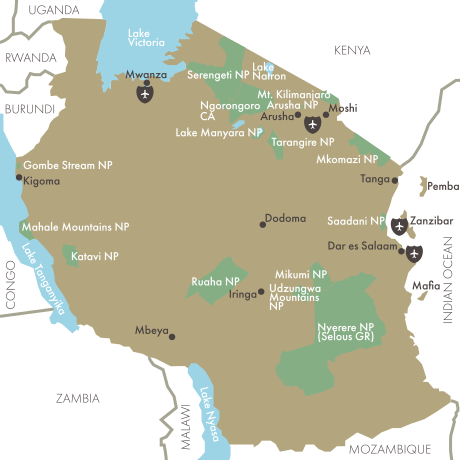
Tanzania Overview
Tanzania combines world-class wildlife, Africa’s highest mountain and turquoise Indian Ocean beaches in one country. Around a third of its land is protected in national parks, conservation areas and game reserves, making it one of the best places on the continent for a private tailor-made safari. Most visitors start in Arusha, the safari capital of the north, and combine several parks with a climb or a beach stay.
Parks & Reserves
Tanzania’s protected areas fall into three safari circuits. The northern circuit is the most popular and easiest to combine, the southern circuit offers big, quiet wilderness, and the western parks are remote and best reached by light aircraft. Explore our full guide to Tanzania national parks and game reserves.
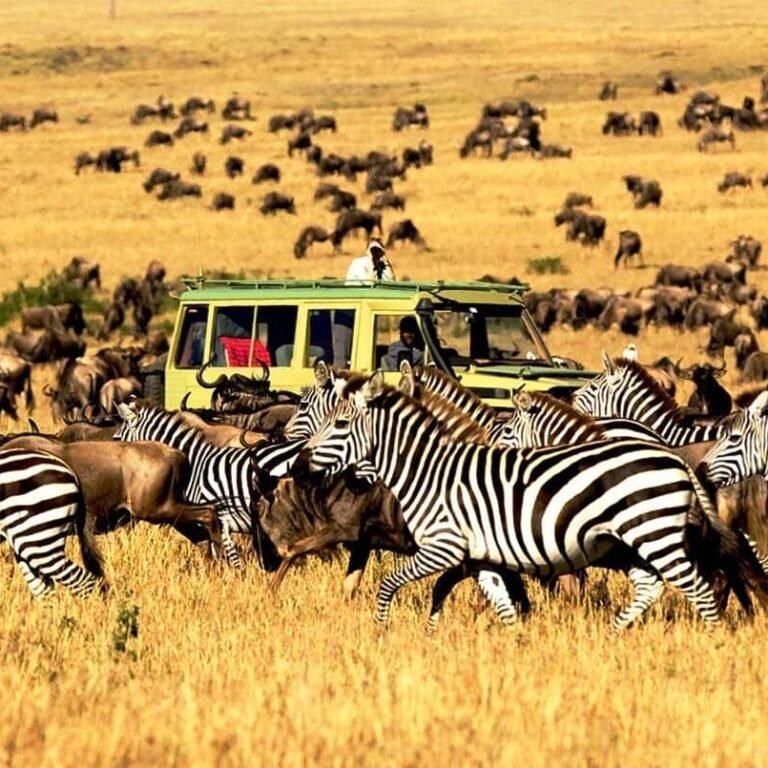
- Lake Manyara – tree-climbing lions and flamingos
- Arusha National Park – walking and canoe safaris
- Lake Natron – flamingo breeding grounds
- Ruaha – large lion prides and wild dogs
- Nyerere – boat safaris on the Rufiji River
- Katavi – remote, wild and rarely visited
- Mahale Mountains – chimpanzee trekking
- Gombe Stream – Jane Goodall’s chimpanzees
Things To Do
Game drives are the heart of any Tanzania safari, but there is much more to enjoy. See our complete list of things to do in Tanzania.
- Watch the Great Migration in the Serengeti
- Descend into Ngorongoro Crater for the Big Five
- Float over the Serengeti in a hot air balloon
- Climb Mount Kilimanjaro or Mount Meru
- Walk with an armed ranger in Arusha National Park
- Meet the Maasai and the Hadzabe at Lake Eyasi
- Take a boat safari in Nyerere National Park
- Explore Stone Town and spice farms in Zanzibar
Best Beaches
Tanzania’s coastline and islands are the perfect way to end a safari. Zanzibar offers white sand, turquoise water and the historic alleys of Stone Town, a UNESCO World Heritage Site.
Zanzibar
Nungwi and Kendwa in the north are good for swimming at most tides and beautiful sunsets. Paje and Jambiani on the east coast are popular for kitesurfing, while Matemwe and Kiwengwa offer quieter stretches near coral reefs.
Pemba and Mafia Island
Pemba, north of Zanzibar, is lush and peaceful with excellent diving. Mafia Island, south of Dar es Salaam, lies within a marine park and is known for seasonal whale shark encounters, usually between October and March.
Wildlife
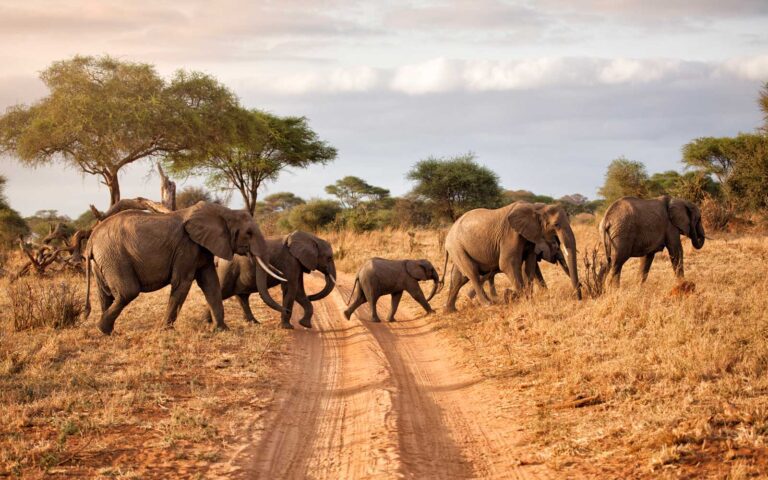
Tanzania is one of the best countries in Africa to see the Big Five: lion, leopard, elephant, buffalo and rhino. Black rhinos are most reliably seen in Ngorongoro Crater, leopards often rest in Serengeti kopjes and riverine trees, and Tarangire hosts some of East Africa’s largest elephant herds.
Beyond the Big Five, look for cheetahs, giraffes, zebras, hippos, hyenas and African wild dogs, the latter mainly in Ruaha and Nyerere. Chimpanzees live in Mahale and Gombe in the far west. Read where to find Africa’s big cats.
Birds
With more than 1,000 recorded bird species, Tanzania is a superb birding destination. Lake Manyara and Lake Natron attract flamingos, Tarangire is rich in colourful lovebirds and hornbills, and the Serengeti hosts ostriches, secretary birds and many raptors. The green season from November to April brings migratory birds from Europe and Asia. Discover our birdwatching safaris.
Best Time To Visit
The dry season from June to October is the best time for general game viewing, as animals gather near water and vegetation is thinner. January and February are excellent for the Serengeti calving season. The long rains, usually from March to May, bring lush scenery, fewer visitors and lower prices, though some roads become muddy. Read our full guide to the best time to visit Tanzania.
Very good Good Long rains
Weather & Climate
Tanzania has a tropical climate shaped by altitude. Arusha and the Ngorongoro highlands are mild by day and cool at night, especially from June to August, while the coast and Zanzibar are warm and humid all year. Most regions have two rainy seasons: the short rains around November and December, and the long rains from roughly March to May. Pack warm layers for early game drives. See our detailed Tanzania weather guide.
Popular Routes
Most itineraries start in Arusha and follow the northern circuit, often finishing on the beach. Popular private tailor-made routes include:
- 7-day northern circuit: Tarangire, Lake Manyara, Serengeti and Ngorongoro
- 2-week safari and beach: northern parks plus Zanzibar
- Kilimanjaro climb followed by a short safari
- Southern circuit: Nyerere and Ruaha by light aircraft
- Western adventure: Katavi and chimpanzees in Mahale
- Short 2–4 day safaris from Arusha
How To Get There
Most safari travellers fly into Kilimanjaro International Airport (JRO), about an hour from Arusha. Julius Nyerere International Airport (DAR) in Dar es Salaam is the main gateway for the southern parks, and Abeid Amani Karume International Airport (ZNZ) serves Zanzibar. Domestic flights link Arusha, the parks’ airstrips and the coast, and overland shuttles connect Arusha with Nairobi in Kenya. Most visitors need a visa, available online in advance. Read how to get to Tanzania and our Tanzania visa guide.
Malaria & Vaccinations
Malaria is present in many parts of Tanzania, especially lower-lying parks and the coast, so speak to a travel health professional about antimalarial tablets several weeks before you travel. Use insect repellent and cover up at dusk. A yellow fever certificate may be required if you arrive from, or transit through, a country with a risk of yellow fever, and routine vaccinations should be up to date. See vaccinations for an East Africa safari.
Staying Safe
Tanzania is a welcoming country and safaris are very safe when organised by a licensed operator. In the parks, always follow your guide’s instructions, stay in the vehicle unless told otherwise and never approach wildlife. In towns, use common sense: avoid walking alone at night, keep valuables out of sight and use registered taxis. Comprehensive travel insurance with medical evacuation is strongly recommended. Read safety tips for solo female travellers.
Traveller Reviews
Read genuine reviews from our guests and traveller reviews of Tanzania’s top parks and Mount Kilimanjaro.
Tanzania Travel Guide FAQs
Is Tanzania good for a first safari?
Yes. Tanzania is one of the best countries for a first safari. The northern circuit combines the Serengeti, Ngorongoro Crater, Tarangire and Lake Manyara within easy reach of Arusha, with excellent wildlife, good lodges and experienced guides. Many first-time visitors finish with a few relaxing nights in Zanzibar.
When is the best time to visit Tanzania?
June to October is the best time for general game viewing, as animals gather near water. January and February are ideal for the Serengeti calving season. The long rains from March to May bring green landscapes, fewer visitors and lower prices.
Do I need a visa to visit Tanzania?
Most visitors need a tourist visa, which can be applied for online in advance and in some cases obtained on arrival. Your passport should be valid for at least six months. Always check the latest official entry requirements before you travel.
Is there malaria in Tanzania?
Yes, malaria is present in many areas, especially lower-lying parks and the coast. Ask a travel health professional about antimalarial medication, use insect repellent and cover up at dusk. A yellow fever certificate may be required if you arrive from a country with yellow fever risk.
Which airport should I fly into for a Tanzania safari?
For northern safaris, fly into Kilimanjaro International Airport (JRO), about an hour from Arusha. Julius Nyerere International Airport in Dar es Salaam serves the southern parks, and Zanzibar has its own international airport for beach holidays.
How many days do I need in Tanzania?
Five to seven days covers the northern circuit highlights. Ten to fourteen days lets you add more parks, a Kilimanjaro climb or a beach stay in Zanzibar at a relaxed pace.
Is Tanzania safe for tourists?
Tanzania is a welcoming country and safaris are very safe with a licensed operator. Follow your guide’s instructions in the parks, use common sense in towns and buy comprehensive travel insurance that includes medical evacuation.
Can I combine a safari with Kilimanjaro and Zanzibar?
Yes. Many travellers climb Kilimanjaro, then enjoy a northern circuit safari and finish on Zanzibar’s beaches. Our team designs private tailor-made itineraries that link all three smoothly with transfers and domestic flights.
Plan Your Private Tanzania Safari
Tell us your dates, interests and budget, and our Arusha-based team will design a private tailor-made safari, climb or beach holiday around you.
Contact UsView Tanzania Safaris