Asian vs African elephants: size, ears, tusks, habitat and where to see them
Asian vs African Elephants: The Quick Answer
What’s the difference between Asian and African elephants? African elephants are larger, with huge ears shaped like the African continent, a concave back, two finger-like tips on the trunk and tusks in both males and females. Asian elephants are smaller, with rounded ears, a twin-domed head, a convex back, one trunk tip, and tusks only in some males. Both are endangered, and only African savanna elephants roam Tanzania’s national parks.
Meet the Three Elephant Species
Scientists recognise three living elephant species. Africa has two, the savanna elephant and the smaller forest elephant, which the IUCN assessed as separate species in 2021. Asia has one, Elephas maximus, with subspecies in mainland Asia, Sri Lanka, Sumatra and Borneo. The African and Asian lineages split millions of years ago, so they differ in size, anatomy and behaviour, much like lions and tigers.
African Savanna Elephant
Loxodonta africanaThe largest land animal on Earth, roaming grasslands and woodlands across East and Southern Africa, including Tanzania’s Tarangire, Ruaha and Serengeti.
African Forest Elephant
Loxodonta cyclotisSmaller and darker, with rounder ears and straighter, downward-pointing tusks, living in the rainforests of Central and West Africa.
Asian Elephant
Elephas maximusFound in forests and grasslands across 13 countries of South and Southeast Asia, from India and Sri Lanka to Thailand and Borneo.
Spot the Difference: Feature by Feature
Once you know where to look, telling the two apart takes seconds. Tap each feature below to compare the African and Asian elephant side by side, from ears and head shape to trunk tips, tusks, skin, toenails and teeth.
Ears: African vs Asian Elephant
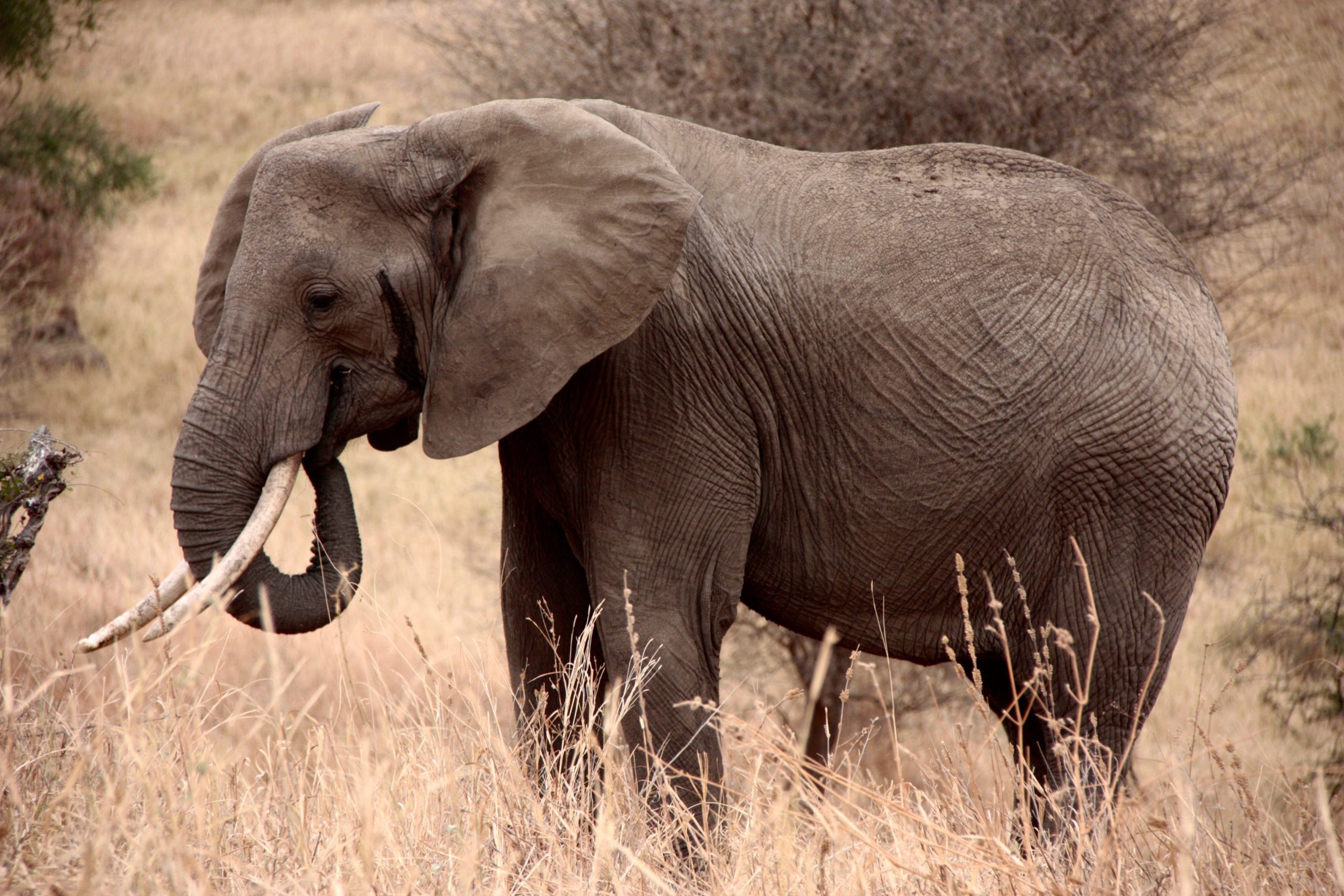
Huge, fan-shaped ears that reach past the shoulders and are often said to look like a map of Africa. Flapping them releases body heat.
Smaller, rounded ears, often compared to the shape of India, that rarely extend beyond the neck.
Head: African vs Asian Elephant
A single rounded dome. The highest point of the body is the shoulder, not the head.
Twin domes on top of the head with a dip in the middle. The head is the highest point of the body.
Back: African vs Asian Elephant
Concave, dipping down in the middle like a saddle between shoulders and hips.
Convex or level, arching gently upward from the shoulders to the hips.
Trunk: African vs Asian Elephant
Two finger-like tips at the end of the trunk that pinch and pick up small objects.
One finger-like tip on top; it often curls the trunk around food to grasp it.
Tusks: African vs Asian Elephant
Both males and females usually grow tusks, and old bulls carry the heaviest ivory.
Only some males grow large tusks. Females and many males have small tushes or none at all.
Skin: African vs Asian Elephant
Heavily wrinkled, grey-brown skin that traps moisture and mud to keep the body cool.
Smoother skin that often shows pink, depigmented patches on the ears, face and trunk.
Feet: African vs Asian Elephant
Savanna elephants usually have four toenails on each front foot and three on each hind foot.
Usually five toenails on each front foot and four on each hind foot.
Teeth: African vs Asian Elephant
Molar ridges form diamond, or lozenge, shapes, which gave the genus Loxodonta its name.
Molars carry narrow, compressed plates that grind tough grasses efficiently.
Size and Weight Compared
African savanna elephants are the giants of the family. Bulls can stand up to 4 metres at the shoulder and weigh around 6 tonnes, while Asian bulls reach about 3.2 metres and 5 tonnes. Forest elephants are the smallest of the three. Females of every species are noticeably smaller than males, and a newborn calf of either species weighs roughly 100 kilograms.
Approximate maximums for adult bulls.
African or Asian? Test Yourself
Put your new knowledge to the test before your safari. Read each clue and choose whether it describes an African or an Asian elephant. Your score updates as you go, and every answer reveals whether you spotted the difference correctly.
- 1Ears shaped like a map of Africa
- 2Twin domes on top of the head
- 3Two finger-like tips on the trunk
- 4Pink, depigmented patches on the face
- 5A back that dips down like a saddle
- 6Females usually show no visible tusks
- 7Diamond-shaped ridges on the molars
- 8The head is the highest point of the body
Habitat and Range
Range across 37 countries south of the Sahara, from savannas and woodlands to swamps, semi-deserts and rainforests. Tanzania holds one of Africa’s most important savanna elephant populations.
Survive in fragmented forests, grasslands and scrub across 13 countries. India is home to the majority of the world’s wild Asian elephants.
Behaviour, Diet and Family Life
Both species live in close-knit family herds led by an experienced matriarch, while adult bulls roam alone or in bachelor groups. They eat up to 150 kilograms of vegetation a day; African savanna elephants browse more on trees and shrubs, while Asian elephants graze more on grasses. Both communicate with low-frequency rumbles that travel for kilometres, and females carry calves for about 22 months.
- 22 monthsLongest pregnancy of any mammal
- 150 kgFood eaten per day
- 60–70 yrsLifespan in the wild
- MatriarchLeads every family herd
Conservation Status
Both are endangered. The IUCN Red List classes the African savanna elephant as Endangered, the African forest elephant as Critically Endangered and the Asian elephant as Endangered. Poaching for ivory is the greatest threat in Africa, while habitat loss and human–elephant conflict drive the decline in Asia. Responsible safari tourism funds anti-poaching patrols and community conservation, giving elephants more value alive.
Where to See African Elephants in Tanzania
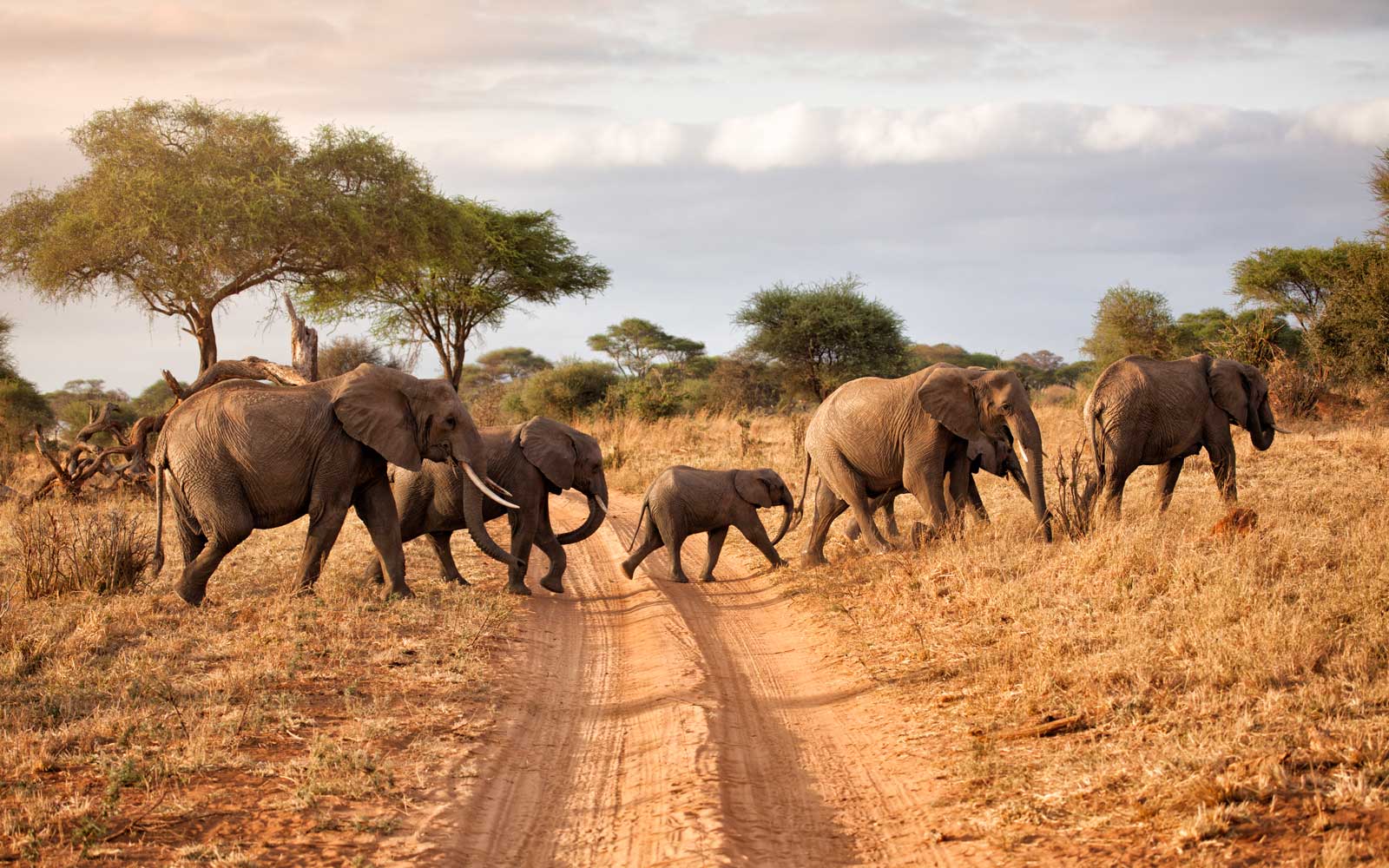
Every elephant you meet on safari in Tanzania is an African savanna elephant. On a private tailor-made safari, your guide sets the pace around you, so you can wait quietly as a herd crosses the river or a calf plays in the mud. Tap a park to see where elephant sightings shine.
Elephants in Tarangire
Tarangire National Park hosts some of northern Tanzania’s largest elephant gatherings. In the dry season, from June to October, hundreds of elephants converge on the Tarangire River beneath ancient baobab trees.
Explore Tarangire →Elephants in Ruaha
Ruaha National Park, one of Tanzania’s largest, supports one of East Africa’s biggest elephant populations among rugged hills, baobabs and the Great Ruaha River, with very few vehicles around.
Explore Ruaha →Elephants in Nyerere
Nyerere National Park in southern Tanzania offers elephants along the Rufiji River and its lakes, enjoyed on game drives, boat safaris and guided walking safaris.
Explore Nyerere →Elephants in Serengeti
Elephants wander the woodlands of the northern and western Serengeti and the kopje-studded plains, often sighted on the same game drive as the Great Migration.
Explore Serengeti →Elephants in Ngorongoro
The Ngorongoro Crater is famed for old bulls carrying some of Tanzania’s largest tusks, often seen feeding in the Lerai Forest and the crater’s swamps.
Explore Ngorongoro →Elephants in Lake Manyara
Lake Manyara National Park’s groundwater forest and lakeshore attract elephant families that can be watched at close range, an easy addition to any northern circuit safari.
Explore Lake Manyara →Conclusion: Asian vs African Elephants
Asian and African elephants share intelligence, strong family bonds and an endangered future, yet they are easy to tell apart once you know where to look: ears, head, back, trunk tip and tusks. African elephants are larger and more widespread, while Asian elephants are smaller and closely tied to human history. The best way to appreciate the difference is to see Africa’s giants in the wild on a private Tanzania safari.
Asian vs African Elephants: Frequently Asked Questions
What is the main difference between Asian and African elephants?
The main differences are size, ears, head shape and tusks. African elephants are larger, with enormous ears shaped like the African continent, a single-domed head, a saddle-shaped back and tusks in both sexes. Asian elephants are smaller, with rounded ears, a twin-domed head, an arched back and tusks only in some males. African trunks end in two finger-like tips, Asian trunks in one.
Which is bigger, the Asian or the African elephant?
The African savanna elephant is bigger and is the largest land animal on Earth. Bulls can stand up to 4 metres at the shoulder and weigh around 6 tonnes. Asian elephant bulls reach about 3.2 metres and 5 tonnes. The African forest elephant is the smallest of the three species, and in every species males are considerably larger and heavier than females.
Why do African elephants have bigger ears?
African elephants have bigger ears mainly to stay cool on the hot, open savanna. Their ears contain a dense network of blood vessels, and flapping them releases body heat into the air. Asian elephants live mostly in shaded forests, so smaller ears are enough. Large ears also help African elephants signal their mood, spreading wide when they feel threatened or excited.
Do female Asian elephants have tusks?
Most female Asian elephants do not have visible tusks. Some have small tusks called tushes that barely extend past the lip, and many have none at all. Even among Asian males, only a portion grow large tusks, and tuskless bulls are common in some populations. In contrast, both male and female African elephants usually grow tusks.
How many species of elephants are there?
There are three living elephant species: the African savanna elephant, the African forest elephant and the Asian elephant. The two African species were long treated as one, but genetic studies led the IUCN to assess them separately in 2021. The Asian elephant has several subspecies, including the Indian, Sri Lankan and Sumatran elephants.
Are Asian and African elephants endangered?
Yes. The IUCN Red List classifies the African savanna elephant as Endangered, the African forest elephant as Critically Endangered and the Asian elephant as Endangered. Ivory poaching remains the main threat in Africa, while habitat loss and human–elephant conflict threaten Asian elephants. Choosing responsible safari operators helps fund the protection of elephants and their habitats.
Can Asian and African elephants interbreed?
Asian and African elephants belong to different genera and never meet in the wild, so natural interbreeding does not happen. Only one hybrid has ever been recorded, a calf born at Chester Zoo in England in 1978, and it survived just a few days. The two lineages separated millions of years ago and are genetically very different.
Which elephants live in Tanzania?
Tanzania is home only to the African savanna elephant, Loxodonta africana. There are no wild Asian elephants or forest elephants in Tanzania. The country holds one of Africa’s most important elephant populations, with large herds in Tarangire, Ruaha, Nyerere and the Serengeti, and impressive big-tusked bulls in the Ngorongoro Crater.
Where is the best place to see elephants in Tanzania?
Tarangire National Park is the best place to see elephants in northern Tanzania, with hundreds gathering along the Tarangire River in the dry season. Ruaha and Nyerere offer large southern herds with fewer vehicles. Combine Tarangire with the Ngorongoro Crater and Serengeti on a private tailor-made safari to see elephants in several different landscapes.
When is the best time to see elephants in Tanzania?
The best time to see elephants in Tanzania is the dry season, from June to October, when water is scarce and herds gather around rivers and permanent swamps. Tarangire is especially rewarding during these months. Elephants are seen year-round in the Ngorongoro Crater and Lake Manyara, while the green season brings lush scenery, newborn calves and fewer visitors.
See Africa’s Elephants Up Close
Tell us your travel dates and interests, and we will design a private tailor-made Tanzania safari timed for the best elephant sightings in Tarangire, Ruaha, the Serengeti and beyond.