Where Is Mount Kilimanjaro? Location, Map, Facts & How to Get There
Where Is Mount Kilimanjaro?
Mount Kilimanjaro is located in northeastern Tanzania, East Africa, near the border with Kenya. As Africa's tallest mountain, it is a large, free-standing dormant volcano that can be climbed by various routes, with December to March and June to October being the best times to hike. The easiest way to reach Kilimanjaro is to fly into Kilimanjaro International Airport (JRO) and then take a short drive to the towns of Arusha or Moshi. Also, Mount Kilimanjaro is one of the most iconic natural wonders in the world, drawing travelers, adventurers, and nature lovers from every corner of the globe.
Known as the Roof of Africa, this snow-capped peak towers above the plains of East Africa and is surrounded by rich cultural heritage and diverse wildlife. But many people still ask: Where is Kilimanjaro? Let us take you on a detailed journey that not only answers this question but also gives you the full picture of what makes Kilimanjaro so extraordinary.
The Geographical Location of Mount Kilimanjaro
Mount Kilimanjaro is located in northeastern Tanzania, near the border with Kenya. It rises majestically from the flat savannah, dominating the landscape with its three volcanic cones: Kibo, Mawenzi, and Shira. The mountain lies within Kilimanjaro National Park, a UNESCO World Heritage Site, established to protect both its fragile ecosystems and the countless species that call it home.
Latitude: Approximately 3° south of the equator
Longitude: Around 37° east
Elevation: 5,895 meters (19,341 feet) above sea level, making it the highest mountain in Africa
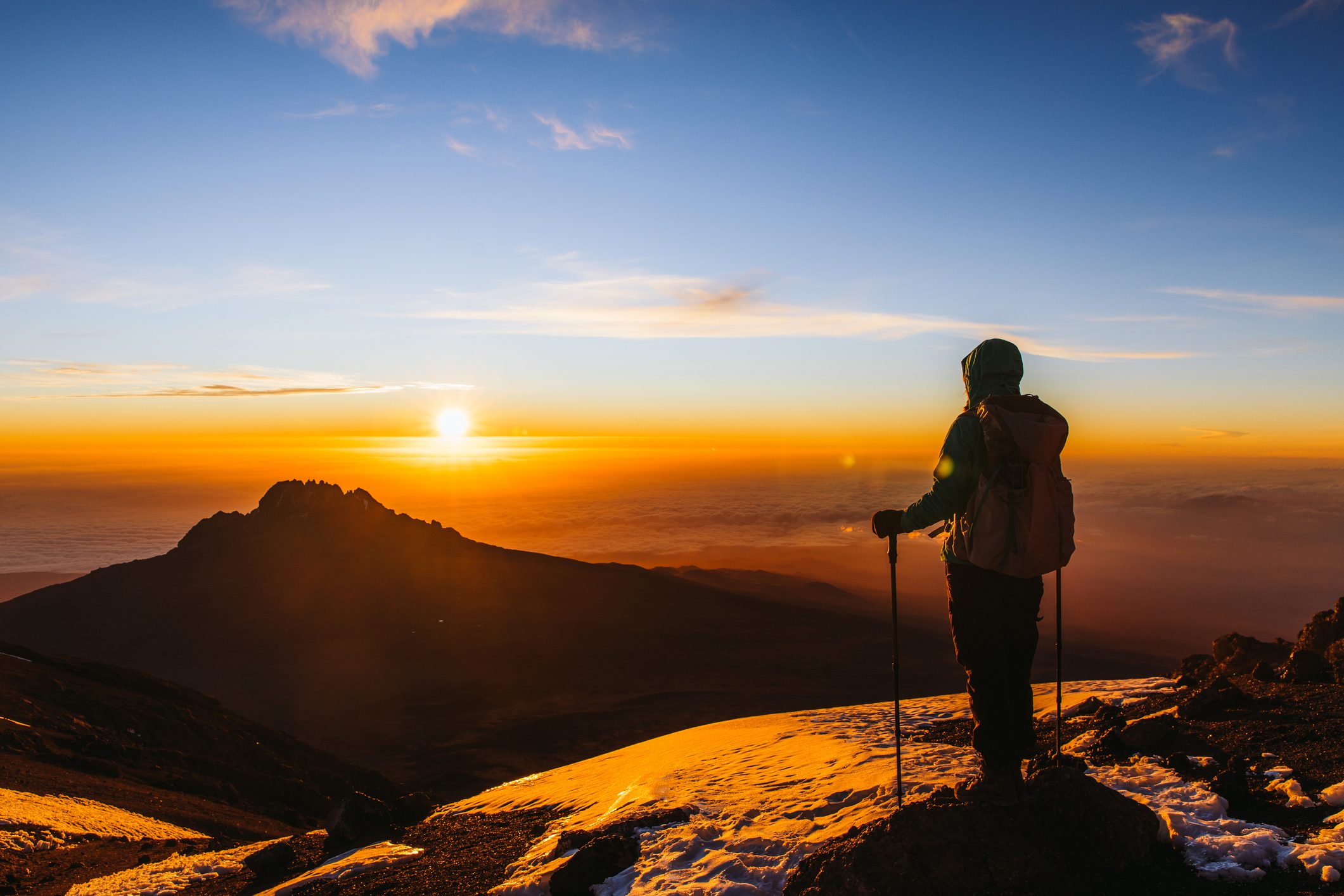
Because of its equatorial location, Kilimanjaro is uniquely positioned to provide a dramatic mix of ecosystems, from tropical rainforest at the base to arctic-like glaciers at the summit.
On a map of Africa, you can find Mount Kilimanjaro in the northeastern part of Tanzania. It is located just south of the equator and close to the East African Rift System. The closest major city to the mountain is Moshi.
Which Country Is Mount Kilimanjaro In?
Kilimanjaro lies entirely within the borders of Tanzania. While it is visible from southern Kenya, particularly from Amboseli National Park, the mountain itself is not shared by any other country. This often confuses, as many international travelers fly into Nairobi, Kenya, before crossing into Tanzania to start their climb.
The nearest major city to Kilimanjaro is Moshi, which sits at the foot of the mountain. Another key access point is Arusha, a bustling safari hub that connects visitors to Tanzania’s famous northern safari circuit, including the Serengeti, Ngorongoro Crater, and Tarangire National Park.
The Significance of Kilimanjaro’s Location
The location of Mount Kilimanjaro is not just geographical—it is deeply symbolic and cultural. The mountain is part of the identity of Tanzania, even appearing on the country’s coat of arms. For the Chagga people, who live on its fertile lower slopes, Kilimanjaro is more than a mountain—it is a sacred home, providing water, fertile soil, and spiritual inspiration.
Its position near the equator also creates a unique ecological wonder. Mount Kilimanjaro is one of the few places on Earth where you can experience lush tropical forests, alpine deserts, and icy glaciers all in a single climb.
Kilimanjaro National Park – The Gateway to the Mountain
Kilimanjaro National Park is Tanzania's premier destination for ascending the continent's tallest peak, Mount Kilimanjaro, serving as a gateway to the mountain itself. The park is accessed through various gates, with Moshi serving as the primary town and gateway, and Marangu Gate being the most famous and popular starting point for many hikers. Visitors can also choose other routes and gates like Machame Gate or Lemosho Gate, which offer different experiences and scenery along the mountain's distinct ecological zones. Kilimanjaro is surrounded by Kilimanjaro National Park, which covers an area of about 1,688 square kilometers (652 square miles). This park protects the mountain’s unique ecosystems and is the starting point for all climbing expeditions. Visitors to the park can expect to experience:
Accessibility: How to Reach Kilimanjaro
One of the reasons Kilimanjaro is so popular among international travelers is its accessibility. The most convenient entry point is Kilimanjaro International Airport (JRO), located between Moshi and Arusha. From here, it takes less than an hour to reach the base of the mountain. Travelers can also access Kilimanjaro by:
Flying into Nairobi, Kenya, and then taking a 5–6 hour drive or shuttle bus to Moshi
Domestic flights from Dar es Salaam or Zanzibar to Kilimanjaro International Airport
Road connections from other safari destinations in northern Tanzania
- Fly to JROKilimanjaro International Airport
- Moshi or ArushaBase and gateway towns
- Park gateMachame, Lemosho, Marangu and more
- Uhuru Peak5,895 m summit
Why Kilimanjaro’s Location Makes It Unique
Kilimanjaro's location is unique because it is the tallest free-standing mountain on Earth, rising dramatically from the African plains. This position near the equator allows climbers to experience tropical rainforests, moorlands, alpine deserts, and arctic zones on its slopes, creating distinct climate and vegetation zones in one location. Its proximity to the equator also provides views of snow and glaciers, a rare sight in tropical Africa. The geographical position of Kilimanjaro makes it unlike any other mountain in the world. Some of the most unique features include:
Free-standing mountain
Unlike ranges such as the Himalayas, Kilimanjaro is a standalone volcanic mountain, which makes its rise from the plains even more dramatic.
Equatorial glaciers
Despite lying close to the equator, Kilimanjaro has permanent glaciers at its summit, although these are retreating due to climate change.
Cultural crossroads
The mountain stands between Tanzania and Kenya, making it a natural landmark for both countries, though officially it belongs to Tanzania.
The Climate and Weather Around Kilimanjaro
Kilimanjaro has varied climate conditions due to its equatorial location and altitude, featuring a tropical base, temperate heathland, and arctic summit with distinct climate zones and temperature gradients. There are two wet seasons: a long one from March to May and a short one around November, while the northern slopes receive less rain. Expect dramatic temperature swings from hot at the base (21-27°C) to freezing at the summit (-7 to -29°C) within a relatively short distance. Kilimanjaro’s location near the equator gives it a tropical climate at the base, but temperatures change drastically with altitude. Climbers often experience all four seasons during a single trek.
The best times to climb are during the dry seasons, from January to March and June to October, when visibility is clear and trails are less muddy.
Mount Kilimanjaro: A Symbol of Adventure
The location of Kilimanjaro has made it a symbol of adventure and endurance worldwide. It's often the first high-altitude mountain chosen by climbers because it requires no technical mountaineering skills. With the right preparation, almost anyone with determination can stand on the summit of Africa’s highest peak.
Every year, thousands of climbers from around the world arrive in Moshi and Arusha. Ready to test themselves against this majestic giant. Its location at the heart of East Africa makes it easy to combine a Kilimanjaro trek with a safari in the Serengeti or a beach holiday in Zanzibar.
Cultural Importance of Kilimanjaro’s Location
For the people of Tanzania, Kilimanjaro is more than just geography. It's a source of pride and identity. The mountain’s snow-capped summit has inspired countless legends and stories. Local tribes like the Chagga see the mountain as sacred, while its fertile slopes have supported generations of farming communities.
In addition, Kilimanjaro is a global symbol of freedom and resilience. Tanzania’s founding father, Julius Nyerere, famously declared that the independence of Tanganyika (now part of Tanzania) was just the beginning. “We are not free until the whole of Africa is free. The task ahead is great, but it is not insurmountable, for we are climbing Mount Kilimanjaro.”
Key Facts About Kilimanjaro’s Location
Mount Kilimanjaro is located in northeastern Tanzania, East Africa, near the Kenyan border. It is a massive volcanic mountain that lies just over 200 miles (330 km) south of the Equator. Kilimanjaro's base is surrounded by plains, while its peak is a snow-covered volcanic dome.
- Mount Kilimanjaro is located in Kenya.
- Uhuru Peak stands at 5,895 metres above sea level.
- Kibo is the highest of Kilimanjaro’s three volcanic cones.
- Moshi is the main base town for Kilimanjaro climbs.
Mount Kilimanjaro Is in Which Continent?
Mount Kilimanjaro is located on the continent of Africa. It's found in Tanzania, a country in East Africa, and the tallest mountain in Africa, as well as one of the most famous destinations for climbers and adventurers worldwide. Mount Kilimanjaro was formed by volcanic activity along the East African Rift system, which started about 2.5 million years ago. Molten rock (magma) rose through cracks in the Earth's crust, building up three volcanic cones over millions of years: Shira, Mawenzi, and Kibo. These cones, made of layers of hardened lava and ash, forming known as a stratovolcano, with Kibo, the highest, being the youngest and most recent to erupt.
What Are the Top 10 Highest Mountains in Africa?
The 10 highest mountains in Africa are, in descending order of height: Mount Kilimanjaro (5,895 m), Mount Kenya (5,199 m), Mount Stanley (5,109 m), Mount Speke (4,890 m), Mount Baker (4,844 m), Mount Emin (4,798 m), Mount Gessi (4,715 m), Mount Meru (4,566 m), Ras Dashen (4,550 m) and Mount Karisimbi (4,507 m). Several of these peaks rise in the Rwenzori Mountains on the Uganda–DR Congo border, while Tanzania is home to both Kilimanjaro and Mount Meru.
Conclusion: So, Where Is Kilimanjaro?
So, where is Kilimanjaro? The answer is clear: it is in Tanzania, near the border with Kenya, standing proudly as Africa’s highest mountain. Its unique location makes it a natural wonder, cultural treasure, and adventure destination all in one. From the lush rainforests at its base to the icy summit of Uhuru Peak, Kilimanjaro’s presence is both geographical and symbolic—a mountain that captures the imagination of the world.
Where Is Mount Kilimanjaro? FAQs
Where is Mount Kilimanjaro located?
Mount Kilimanjaro is in northeastern Tanzania, East Africa, close to the Kenyan border and about 330 km south of the Equator. It rises from the plains near the towns of Moshi and Arusha and is protected within Kilimanjaro National Park.
Is Mount Kilimanjaro in Tanzania or Kenya?
Kilimanjaro lies entirely within Tanzania. It is clearly visible from southern Kenya, especially from Amboseli National Park, which is why many people think it is Kenyan, but every climbing route and park gate is in Tanzania.
How do I get to Mount Kilimanjaro?
Fly into Kilimanjaro International Airport (JRO), between Moshi and Arusha. From there, it takes less than an hour to reach Moshi and the base of the mountain. Some travellers fly into Nairobi and drive or take a shuttle bus to Moshi or Arusha.
How tall is Mount Kilimanjaro?
Kilimanjaro’s highest point, Uhuru Peak on the Kibo cone, stands at 5,895 metres (19,341 feet). It is the highest mountain in Africa, one of the Seven Summits and the tallest free-standing mountain in the world.
What is the nearest town to Kilimanjaro?
Moshi is the nearest town and the main base for Kilimanjaro climbs, with hotels, gear shops and guide briefings. Arusha, a little further west, is the gateway to northern Tanzania safaris, so many travellers combine a climb with a safari.
Is Mount Kilimanjaro a volcano?
Yes. Kilimanjaro is a dormant stratovolcano made of three cones: Kibo, Mawenzi and Shira. It formed through volcanic activity linked to the East African Rift, and Kibo, the highest and youngest cone, could erupt again but is currently dormant.
When is the best time to climb Kilimanjaro?
The best times are the dry seasons, from January to March and June to October, when visibility is clear and trails are less muddy. The long rains fall from March to May, with shorter rains around November.
How hard is it to climb Kilimanjaro?
Kilimanjaro is a non-technical trek, so no climbing experience is needed, but it is a serious high-altitude challenge. Long walking days, cold temperatures and thin air on summit night make it demanding. Good fitness, gradual acclimatization, a slow pace and an experienced guide greatly improve your chances of reaching Uhuru Peak at 5,895 metres.
Which Kilimanjaro route is best for beginners?
Longer routes such as Lemosho on an eight-day itinerary and Machame on seven days are excellent for beginners because they allow gradual acclimatization. Marangu offers hut accommodation but is shorter, so adding an extra day is wise. The Northern Circuit is the longest and most gradual option for those with more time.
Climb Kilimanjaro With Local Experts
Tell us your dates and fitness level, and our Moshi-based team will plan a private Kilimanjaro climb on the route that suits you, with a Tanzania safari or Zanzibar extension if you wish.