Toilets on Kilimanjaro and What to Expect
Toilets on Kilimanjaro are basic. Every official campsite has shared public toilets, usually simple long-drop pit latrines, and the Marangu Route huts have shared toilet blocks. Many climbers book a private toilet tent, a portable toilet set up at each camp and cleaned by a dedicated porter. There are no toilets along the trail, so during the day you use a discreet spot your guide points out and carry used toilet paper out in a sealed bag.
Toilets are one of the most common worries for first-time Kilimanjaro climbers, and knowing what to expect makes the whole experience much easier. Facilities on the mountain are fairly simple, but with careful the right preparation and a private toilet tent, staying clean, healthy and comfortable is very manageable. This guide explains the types of toilets on Kilimanjaro, what to expect at camp, on the trail, at night and on summit night, how a private toilet tent works, Leave No Trace rules, the toilet kit to pack and answers to common questions about hygiene on your private, tailor-made climb.
Types of Toilets on Kilimanjaro
There are four main toilet situations on Kilimanjaro, and most climbers use all of them during the climb. Public toilets at the official campsites are shared with other climbers and crews, while a private toilet tent is used only by you and your party. Marangu Route climbers use toilet blocks at the huts, and on the trail there are no facilities at all. The table below compares each option, where you find it and what it is like, so you know what to expect and can decide whether a private toilet tent is worth adding to your climb.
| Option | Where | What it is like | Best for |
|---|---|---|---|
| Public campsite toilets | Every official campsite | Simple long-drop pit latrines in small wooden or stone huts; busy and often smelly in peak season | Climbers without a private toilet |
| Private toilet tent | Next to your tent at every camp | Portable chemical toilet with a seat in its own tent, cleaned by a dedicated porter | Comfort, privacy and hygiene |
| Marangu hut toilets | Mandara, Horombo and Kibo huts | Shared toilet blocks; more basic and colder at Kibo Hut | Marangu Route climbers |
| Trail stops | Along the route between camps | No facilities; a discreet spot off the trail chosen with your guide | Short stops while walking |
What to Expect, Day and Night
Your toilet routine changes during each day on Kilimanjaro, from comfortable mornings at camp to quick stops on the trail and cold trips outside at night. High camps and summit night bring their own challenges, and women climbers often have extra questions about privacy and hygiene. The six tabs below explain what to expect in each situation, with a practical tip and the key items that make it easier. Your guide and crew deal with these questions every day, so never feel shy about asking for a toilet stop or for advice on the best spot on the trail.
Toilets at Camp
Every campsite
Public long-drops or your private toilet tent
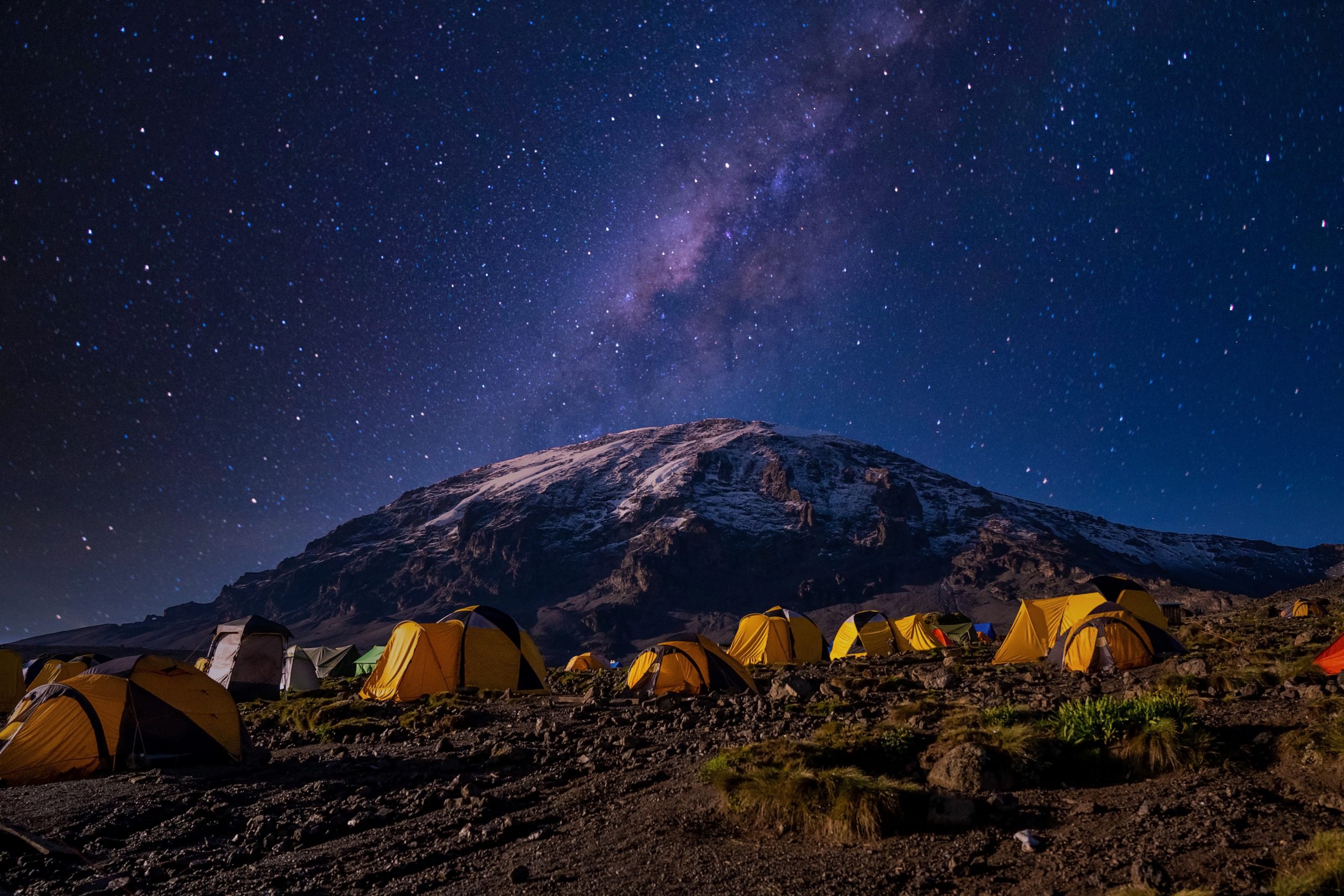
At every camp you can use the shared public long-drop toilets or, if booked, your own private toilet tent pitched close to your sleeping tent. Public toilets are busiest early in the morning and after arrival, so a private tent saves queues. A handwashing station with warm water and soap is set up by your crew before meals.
Kilimanjaro Campsites →Toilet Stops on the Trail
Between camps
No facilities; quick, discreet stops
There are no toilets along the trail, so during the day you stop at a discreet spot away from the path and water sources. Tell your guide when you need a break; they will slow the pace or find a suitable place. Carry used toilet paper and wipes out in a sealed bag, never leaving anything behind on the mountain.
Daily Walking Distances →Night-Time Toilet Trips
From your tent
Cold, dark walks to the toilet
Altitude makes most climbers urinate more often at night, and leaving a warm sleeping bag on a freezing night is never fun. Keep a headlamp, warm jacket and camp shoes beside your tent door. Many climbers use a clearly marked pee bottle, and women can use a female urination device, so they do not need to go outside at all.
Sleeping on Kilimanjaro →Toilets at High Camps
Barafu, Kibo Hut, School Hut
Basic, cold and windy facilities
At high camps such as Barafu, Kibo Hut and School Hut, public toilets are very basic and exposed to freezing wind, and rocky ground makes them harder to reach in the dark. This is where a private toilet tent is most appreciated. Take extra care on uneven ground at night and always use your headlamp when walking around camp.
Tents and Huts →Toilets on Summit Night
Between high camp and summit
No facilities; very cold stops
Use the toilet at high camp just before setting off, because there are no facilities on the way to the summit. If you need to stop, tell your guide, who will find a sheltered spot. Stops are short and cold, so keep tissues and a sealable bag in an easy-to-reach pocket where gloves will not slow you down.
How Hard Is Summit Night? →Tips for Women Climbers
Throughout the climb
Privacy and period care on the mountain
A private toilet tent gives women most privacy at camp, and a female urination device makes trail and night stops much easier. Periods can be managed on the mountain with tampons, pads or a menstrual cup; pack used products out in opaque sealable bags. Altitude can change your cycle, so bring supplies even if no period is due.
Packing List for Women →How a Private Toilet Tent Works
A private toilet tent is one of the most popular upgrades on Kilimanjaro, and many climbers say it is the best comfort on the mountain. It gives you a clean, private toilet close to your sleeping tent at every camp, so you avoid queues and dirty public latrines, especially at night and at cold high camps. The five steps below show how a private toilet tent works on your climb. It is included on our luxury climbs and can be added to any private climb on request, so ask us to include it in your quote before you book.
- Carried by a dedicated porterA toilet porter carries the tent and portable toilet between camps.
- Set up beside your tentIt is pitched close to your sleeping tent before you reach camp.
- Portable toilet with a seatA chemical toilet with a seat sits inside its own privacy tent.
- Cleaned throughout the dayThe toilet porter cleans it regularly and supplies toilet paper.
- Waste carried downWaste is carried off the mountain and disposed of at approved points.
Leave No Trace Toilet Rules
Kilimanjaro National Park is a protected area visited by many thousands of climbers each year, so careful toilet habits are essential to keep the mountain clean and healthy. Every climber and crew member is responsible for leaving nothing behind. The two lists below show the simple Leave No Trace habits to follow on your climb and the things you should never do on the mountain. Your guide will explain the rules at the start of the climb, and following them helps protect the water sources, campsites and fragile alpine environment for future climbers and the communities below the mountain.
Always do
- Use campsite toilets or your toilet tent when at camp
- Stop well away from trails, camps and water sources
- Carry used toilet paper and wipes out in a sealed bag
- Pack out period products in opaque bags
- Wash or sanitise your hands every time
Never do
- Leave toilet paper or wipes on the ground
- Throw rubbish into long-drop toilets
- Use streams or rivers as a toilet
- Wander far from the trail alone at night
- Leave any waste behind at camp
Your Kilimanjaro Toilet Kit
A small toilet kit in your daypack and another in your tent make every toilet stop on Kilimanjaro quicker, cleaner and much less stressful. Public toilets rarely have any toilet paper or soap, and there is nothing at all on the trail, so you need to bring your own supplies. The eight items below are the essentials most climbers carry. Keep them together in a waterproof pouch, top up your daypack each morning and add a few spare sealable bags, because they are useful for packing out waste and keeping wet or used items away from your clean gear.
One or two rolls, flattened, in a waterproof bag.
Unscented and biodegradable, for quick clean-ups.
A small bottle in your daypack and one in your tent.
For packing out used paper, wipes and products.
Essential for night-time trips to the toilet.
Clearly marked, for freezing nights in your tent.
Makes trail and night stops easier for women.
Plus opaque bags, even if you are not expecting one.
Toilets on Kilimanjaro: FAQs
Are there toilets on Kilimanjaro?
Yes, but they are basic. Every official campsite has shared public toilets, usually long-drop pit latrines, and the Marangu Route huts have toilet blocks. There are no toilets along the trail, and many climbers book a private toilet tent for more comfort.
What are the public toilets like on Kilimanjaro?
Public toilets are simple long-drop pit latrines in small wooden or stone huts at each campsite. They are shared by many climbers and crews, can be dirty and smelly in busy seasons and rarely have toilet paper, so bring your own supplies.
What is a private toilet tent on Kilimanjaro?
A private toilet tent is a portable chemical toilet with a seat inside its own small tent, carried by a dedicated porter and set up near your sleeping tent at every camp. It is used only by you and your party and is cleaned regularly.
Is a private toilet worth it on Kilimanjaro?
Most climbers think so. It saves you from busy, basic public toilets, is much cleaner and is close to your tent on cold nights and at high camps. It is included on our luxury climbs and can be added to any private climb.
How do you go to the toilet on the trail?
There are no toilets on the trail, so you stop at a discreet spot away from the path and water sources. Tell your guide when you need a stop. Always carry used toilet paper and wipes out in a sealed bag rather than leaving them on the mountain.
How do you go to the toilet on summit night?
Use the toilet at high camp just before you start, as there are no facilities on the way to the summit. If you need to stop, your guide will find a sheltered spot. Keep tissues and a sealable bag in an easy-to-reach pocket.
Why do I need to urinate so often on Kilimanjaro?
Increased urination is a normal response to altitude and a sign that your body is acclimatising. Drink most of your water earlier in the day, and consider a pee bottle or female urination device to avoid leaving your tent at night.
Can I climb Kilimanjaro on my period?
Yes. Many women climb Kilimanjaro on their period. Bring tampons, pads or a menstrual cup, wet wipes, hand sanitiser and opaque sealable bags to pack out used products. A private toilet tent makes managing your period at camp much easier.
Are there toilets at the Marangu huts?
Yes. Mandara, Horombo and Kibo huts have shared toilet blocks for climbers. Facilities become more basic as you climb, and Kibo Hut is cold and windy at night, so bring your own toilet paper, sanitiser and a headlamp.
What should I pack for toilets on Kilimanjaro?
Pack toilet paper, unscented wet wipes, hand sanitiser, sealable bags, a headlamp and a pee bottle. Women may also want a female urination device and period products with opaque bags. Keep a small kit in your daypack and another in your tent.
More Kilimanjaro Guides
Add a Private Toilet to Your Climb
Tell us your dates, route and comfort wishes, and our Arusha mountain team will include a private toilet tent and every detail in a clear quote for your private Kilimanjaro climb.
Start Planning