Tanzania Travel Guide for First-Time Travelers
Tanzania is one of Africa's most rewarding travel destinations, home to the Serengeti, the Ngorongoro Crater, Mount Kilimanjaro and the spice island of Zanzibar. For first-time visitors, it really helps to understand the basics before you go, from visas, money, health and safety to languages, weather, getting around and local customs. This Tanzania travel guide for first-time travelers covers the essential facts, introduces the country's main travel regions, offers practical tips for a smooth trip and answers the questions newcomers ask most often, so you can explore Tanzania with confidence on a private tailor-made journey with trusted local experts.
What do first-time travelers need to know about Tanzania?
First-time travelers to Tanzania should know that most visitors need an eVisa, Swahili and English are widely spoken, and US dollars are accepted for tourism alongside the Tanzanian shilling. Visit a travel clinic about vaccinations and malaria, dress modestly in towns and Zanzibar, and fly into Kilimanjaro, Dar es Salaam or Zanzibar international airports. Travel insurance is essential.
01Tanzania at a Glance: Essentials for First-Time Travelers
Understanding the basics of Tanzania before you travel makes your first visit smoother and more enjoyable. Knowing how to obtain a visa, which currency to use, which languages are spoken, how to stay healthy and safe, and what the weather is like helps you plan confidently and avoid surprises on arrival. These essentials apply whether you are going on safari, climbing Kilimanjaro or relaxing in Zanzibar. The eight cards below cover the key Tanzania travel essentials for first-time travelers, from geography and entry requirements to money, language, health, safety, weather and arrival airports. Read them before you travel.
Geography and highlights
Tanzania lies in East Africa on the Indian Ocean coast, bordering Kenya, Uganda, Rwanda, Burundi, the Democratic Republic of the Congo, Zambia, Malawi and Mozambique. It is home to Africa's highest mountain, Kilimanjaro, part of Lake Victoria and Lake Tanganyika, the Serengeti, the Ngorongoro Crater and the Zanzibar archipelago. Dodoma is the capital. It is vast.
Visa and passport
Most visitors need a visa for Tanzania, usually obtained online through the official eVisa portal before travel. Your passport should be valid for at least six months beyond your arrival date, with blank pages. Requirements vary by nationality, so always check official government sources well before booking flights and print or save your approval. Apply early.
Money and currency
Tanzania's currency is the Tanzanian shilling, but US dollars are widely accepted for safaris, park fees and tips. Bring clean, recent, undamaged dollar notes, as older bills are often refused. Credit cards work at many hotels and lodges, sometimes with a surcharge, and ATMs are available in Arusha, Moshi, Dar es Salaam and Zanzibar. Carry small bills.
Languages
Swahili, or Kiswahili, and English are Tanzania's main languages, and English is widely spoken in the tourism industry. Learning a few Swahili words, such as jambo or habari for hello, asante for thank you and karibu for welcome, is greatly appreciated. Tanzania is also home to more than one hundred local ethnic languages. Practise them.
Health and vaccinations
Visit a travel clinic or your doctor six to eight weeks before travel for advice on routine and recommended vaccinations, and malaria prevention for safari areas and Zanzibar. A yellow fever certificate may be required if you transit through certain countries. Drink bottled or filtered water, use insect repellent and protect yourself from the strong sun.
Safety
Tanzania is generally a safe and welcoming destination, especially on guided safaris with a licensed operator. In towns, take normal precautions, such as keeping valuables out of sight, avoiding walking alone at night and using reputable taxis. On safari, follow your guide's instructions. Buy comprehensive travel insurance with medical and evacuation cover. Travel confidently and safely.
Weather and seasons
Tanzania has two dry seasons and two rainy seasons. The long dry season runs from June to October and the shorter dry period from January to February. The long rains usually fall in April and May, and the short rains in November. Highland areas such as Ngorongoro are cooler, while the coast is warm and humid.
Arrival airports
Tanzania's main international airports are Kilimanjaro International Airport, closest to Arusha and the northern safari parks, Julius Nyerere International Airport in Dar es Salaam, convenient for southern parks, and Abeid Amani Karume International Airport in Zanzibar. Domestic and light aircraft flights connect these airports with parks and islands across the country. Each airport serves different regions.
02Tanzania's Main Travel Regions
Tanzania is a large and diverse country, so understanding its main travel regions helps first-time visitors plan a realistic itinerary. The northern circuit is home to the most famous safari parks, the Kilimanjaro region offers mountain adventures, the southern parks provide remote wilderness, the coast and Zanzibar deliver beaches and culture, and western Tanzania hides chimpanzee forests. Use the tabs below to explore Tanzania's main travel regions, what each one offers, how to reach it and how it fits into a first-time Tanzania itinerary combining safari, mountains, culture and beach time. Each region offers a different side of Tanzania.
Northern Safari Circuit
First-time safari travelers
Serengeti and Ngorongoro
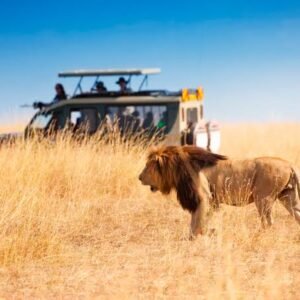
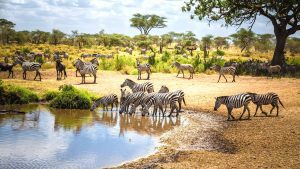
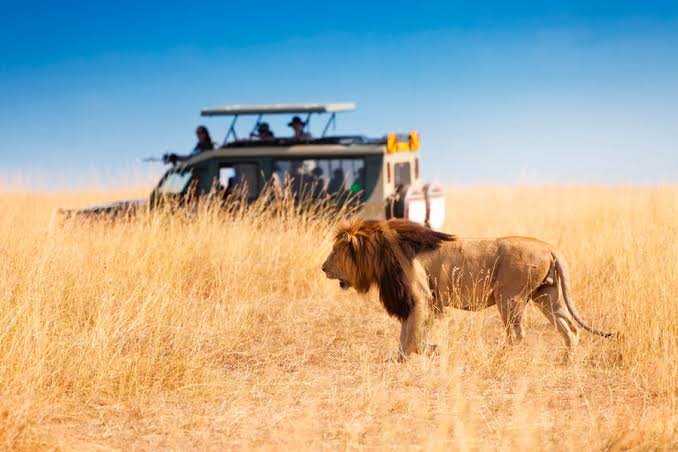
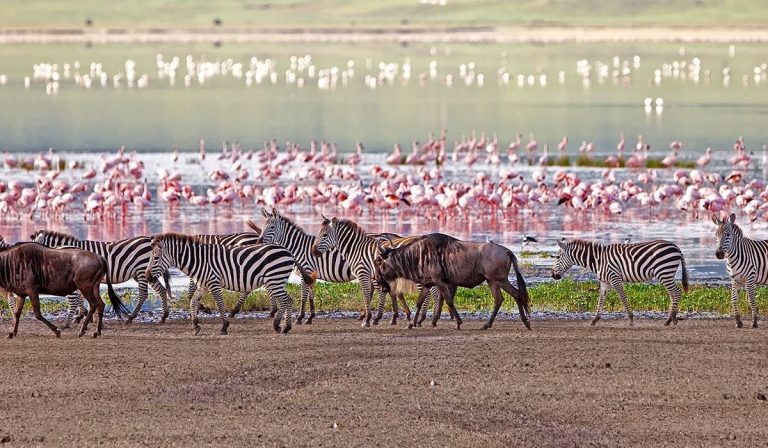
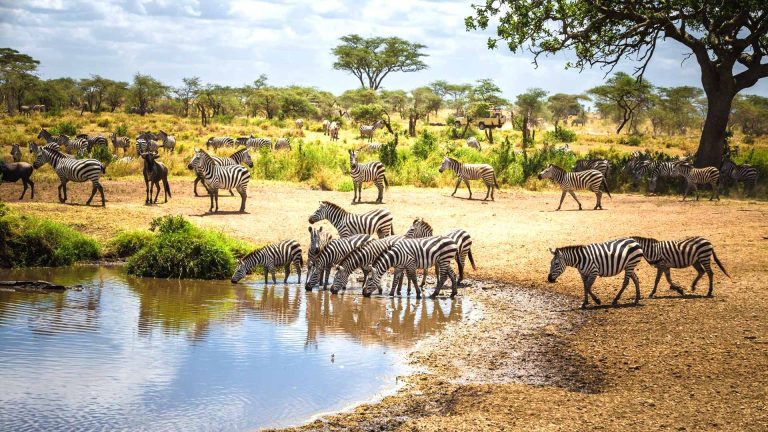
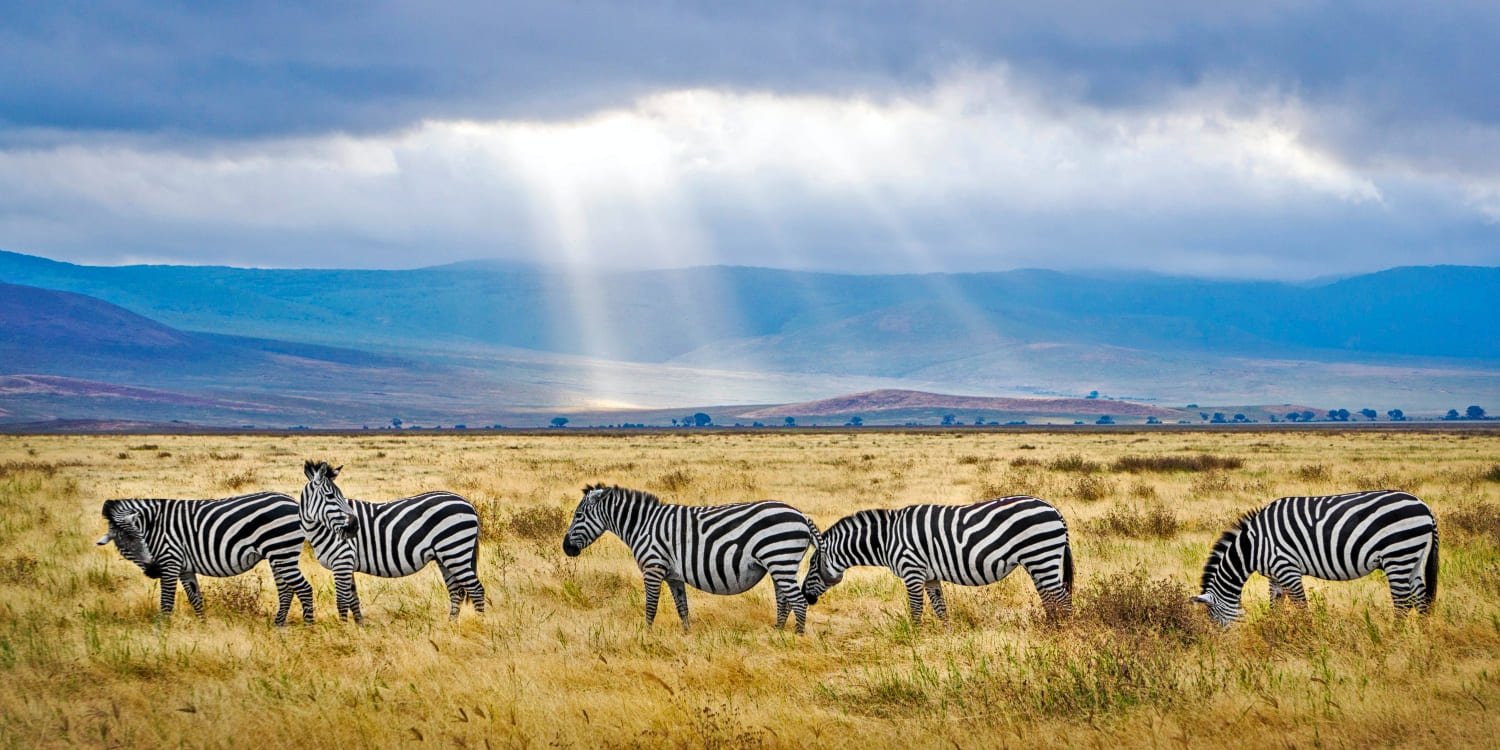
The northern circuit, starting from Arusha, includes the Serengeti, the Ngorongoro Crater, Tarangire and Lake Manyara, plus Lake Eyasi and Lake Natron. It offers Tanzania's most famous wildlife, including the Great Migration and the Big Five, with manageable distances between parks. Most first-time visitors focus their safari on this region for good reason. It is the classic choice.
Northern Tanzania safaris →
Kilimanjaro and Mount Meru
Hikers and adventurers
Africa's highest peak
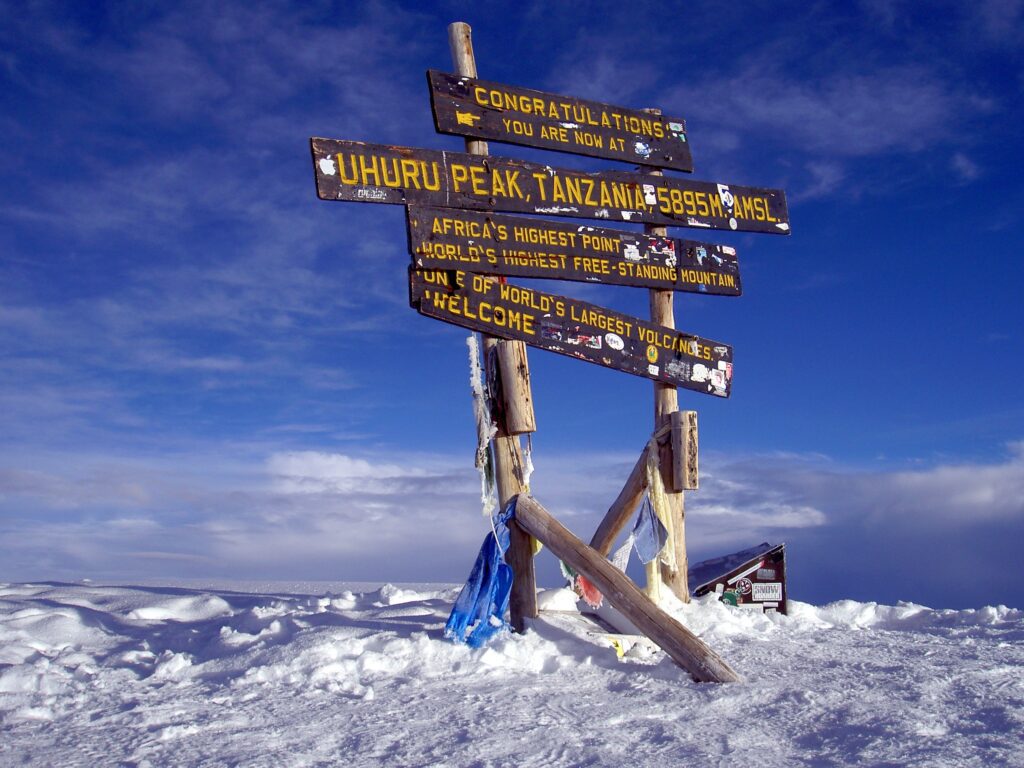
The Kilimanjaro region, around Moshi and Arusha, is home to Mount Kilimanjaro, Africa's highest mountain at 5,895 metres, and Mount Meru, Tanzania's second-highest peak. Climbers can choose from several routes, while non-climbers can enjoy Chagga village walks, coffee tours and waterfalls on the green foothills. It combines easily with a northern safari. It is inspiring.
Climb Kilimanjaro →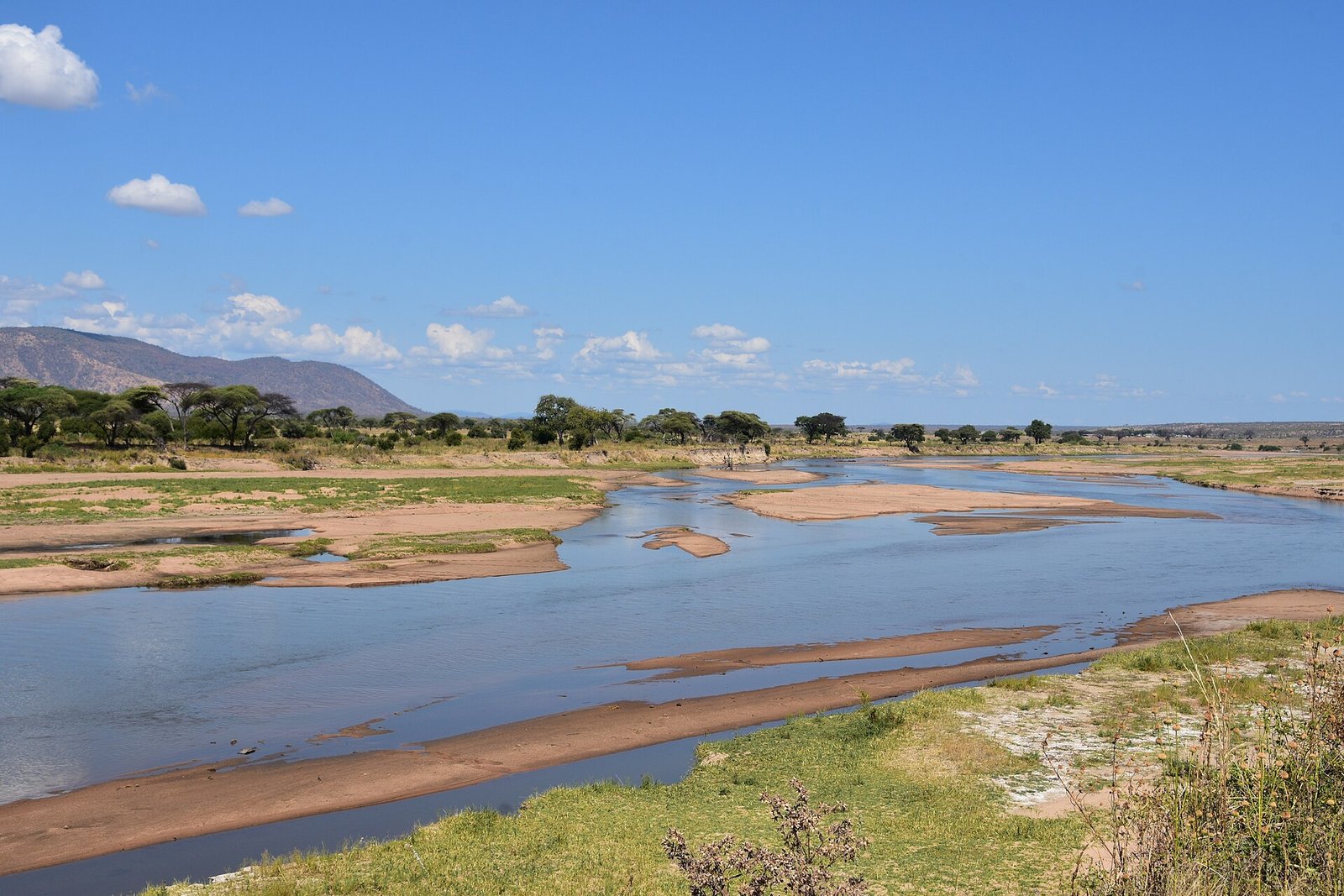
Southern and Eastern Parks
Returning and adventurous travelers
Ruaha, Nyerere and Mikumi
Tanzania's southern parks, including Ruaha, Nyerere and Mikumi, offer vast wilderness, big predators and far fewer visitors than the north. Nyerere is known for boat safaris, Ruaha for large lion prides and Mikumi for short safaris from Dar es Salaam. Most are reached by light aircraft from Dar es Salaam, Zanzibar or Arusha. It is wild.
Southern Tanzania safari →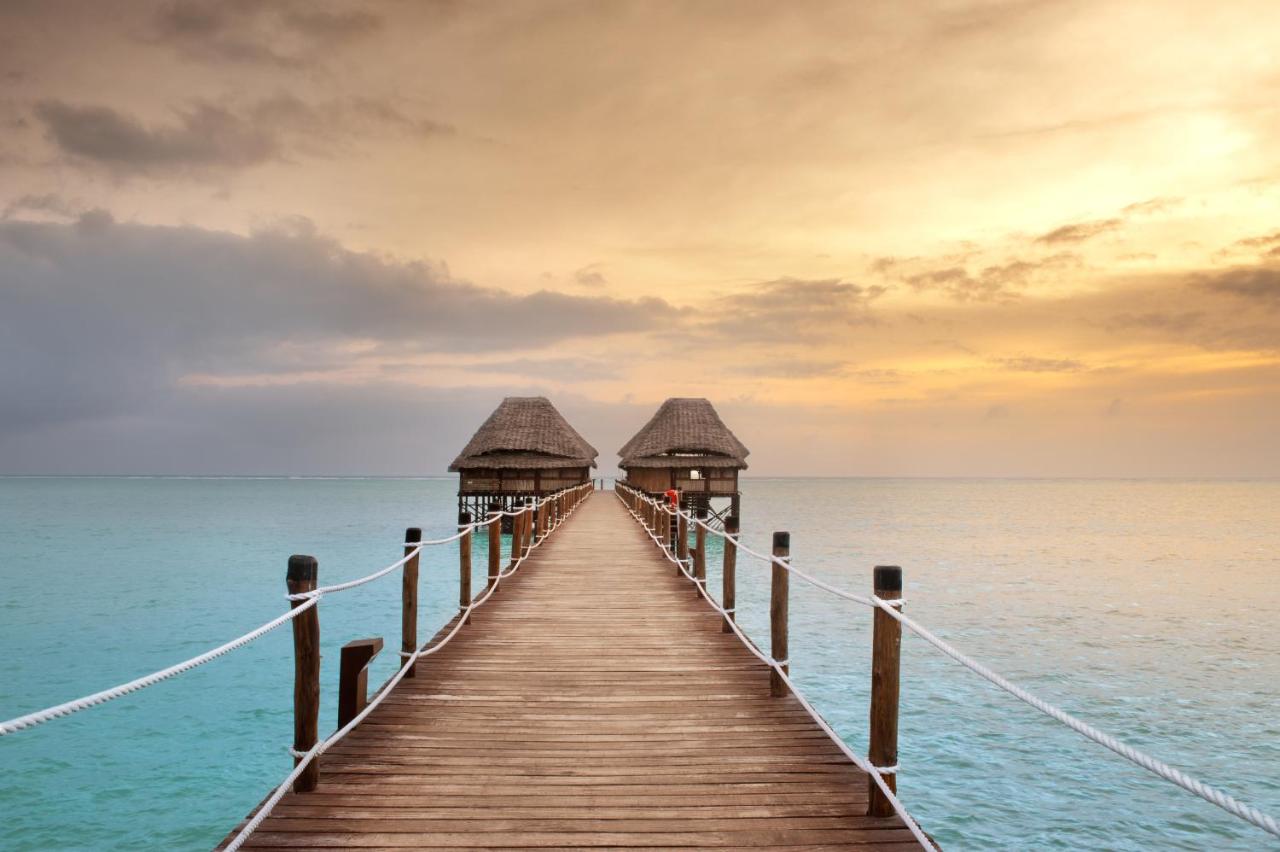
Zanzibar and the Swahili Coast
Couples, families and beach lovers
White sand and Stone Town
The Zanzibar archipelago offers white sand beaches, turquoise waters, coral reefs and the historic Stone Town, a UNESCO World Heritage Site. Visitors enjoy snorkelling, spice farm tours, sunset dhow cruises and Swahili cuisine. Short flights connect Zanzibar with Arusha, the Serengeti and Dar es Salaam, making it the perfect finale after a safari. Bliss awaits.
Zanzibar beach holidays →
Western Tanzania and Lake Tanganyika
Primate and nature lovers
Gombe and Mahale chimpanzees
Remote western Tanzania, on the shores of Lake Tanganyika, is home to Gombe Stream and Mahale Mountains national parks, famous for chimpanzee trekking in lush forests. Gombe is known for Jane Goodall's pioneering research. These parks are reached by flights and boat transfers, making them a special extension for adventurous, returning visitors. It is unforgettable.
Mahale Mountains →03Practical Tanzania Travel Tips for First-Timers
A few practical tips can make your first trip to Tanzania much smoother. Understanding how to get around, stay connected, charge your devices, eat and drink safely, dress respectfully and thank the people who look after you helps you settle in quickly and enjoy every part of your journey. Many first-time visitors are surprised by how easy Tanzania is to explore with the right preparation. The six cards below offer practical Tanzania travel tips for first-time travelers, from transport and phones to electricity, food and water, dress codes and tipping customs. Simple habits make every day much easier.
Getting around
On safari, you travel in a private 4x4 vehicle with your guide, while domestic and light aircraft flights connect Arusha, the parks, Dar es Salaam and Zanzibar quickly. Roads between parks can be long and bumpy. Tanzania drives on the left, and self-driving is not recommended for first-time visitors on safari routes. Relax and enjoy.
Phones and internet
Local SIM cards and eSIMs are available for affordable mobile data, and coverage is good in towns and along many main roads, though limited in remote parks. Most hotels and lodges offer Wi-Fi in main areas, but connections can be slow. Download offline maps and messaging apps before you arrive in Tanzania. Stay connected easily.
Electricity and plugs
Tanzania uses 230-volt electricity with Type D and Type G sockets, so bring a universal adapter. Check that your devices are dual voltage, as most phone and camera chargers are. Some safari camps run on solar power with limited charging times, so a power bank and spare camera batteries are very useful. Charge devices often.
Food and water
Tanzanian cuisine is delicious, from ugali and nyama choma to pilau, chapati and Zanzibar's Swahili seafood and spices. Lodges and hotels serve fresh, varied meals and cater for special diets. Drink bottled or filtered water only, avoid ice of unknown origin outside lodges and wash your hands or use sanitiser before eating. Enjoy local flavours.
Dress and customs
Tanzanians are warm and polite, and greetings are important, so take time to say hello before asking questions. Dress modestly in towns, villages and Zanzibar's Stone Town, covering shoulders and knees. Use your right hand when giving or receiving items, and always ask before photographing people, respecting their answer. Respect is always appreciated by everyone.
Tipping
Tipping is customary in Tanzania's tourism industry and a meaningful way to thank guides, drivers, lodge staff, porters and Kilimanjaro crews. Tips are usually given at the end of a safari, stay or climb, often in US dollars. See our tipping guides for detailed recommendations on safaris and Kilimanjaro climbs before you travel. Asante sana.
04First-Timer Tanzania Travel Checklist
A simple travel checklist helps first-time visitors prepare for Tanzania with confidence. It covers entry requirements, health preparations, money, packing, connectivity and cultural etiquette, so you arrive ready to enjoy your safari, climb or beach holiday. Working through it a few weeks before travel ensures nothing important is forgotten and leaves time to arrange any missing items. Use this checklist before your trip, then contact our Arusha-based specialists, who will design a private tailor-made Tanzania journey and answer every question you have along the way. Tick off each item and your first Tanzania adventure will feel smooth and memorable.
Documents0/4
Health and money0/4
Packing and tech0/4
05Tanzania Travel Guide: FAQs
Do I need a visa to visit Tanzania?
Most visitors need a visa to visit Tanzania, usually obtained online through the official eVisa portal before travel. Your passport should be valid for at least six months beyond arrival, with blank pages. Requirements vary by nationality, so always check official government sources before booking. Print or save your visa approval for arrival. Apply early.
What currency is used in Tanzania?
The official currency of Tanzania is the Tanzanian shilling, but US dollars are widely accepted for safaris, park fees, hotels and tips. Bring clean, recent, undamaged dollar notes, as older or torn bills may be refused. Credit cards are accepted at many hotels and lodges, and ATMs are available in major towns. Carry small bills.
What language is spoken in Tanzania?
Swahili, also called Kiswahili, and English are the main languages spoken in Tanzania. English is widely used in tourism, so most guides and lodge staff speak it well. Learning a few Swahili phrases, such as jambo for hello and asante for thank you, is greatly appreciated by Tanzanians you meet during your trip. Practise them.
Is Tanzania safe for first-time travelers?
Yes, Tanzania is generally safe and welcoming for first-time travelers, especially on guided safaris with licensed operators. Take normal precautions in towns, such as keeping valuables out of sight and avoiding walking alone at night. Follow your guide's instructions on safari and buy comprehensive travel insurance with medical and evacuation cover. Travel confidently and enjoy every moment.
What is the best time to visit Tanzania?
The best time to visit Tanzania for most travelers is the dry season from June to October, with excellent wildlife viewing and sunny Zanzibar weather. January and February are also great, with the calving season in the southern Serengeti. The long rains fall mainly in April and May, while November brings shorter rains. Each season rewards.
Which airport should I fly into for Tanzania?
For northern safaris and Kilimanjaro climbs, fly into Kilimanjaro International Airport, near Arusha and Moshi. For southern parks, Julius Nyerere International Airport in Dar es Salaam is convenient. For beach holidays, Abeid Amani Karume International Airport in Zanzibar is ideal. Many travelers fly into Kilimanjaro and home from Zanzibar. It is the most convenient way to combine safari and beach.
What vaccinations do I need for Tanzania?
Visit a travel clinic or your doctor six to eight weeks before travel for advice on routine and recommended vaccinations for Tanzania. Malaria prevention is usually advised for safari areas and Zanzibar. A yellow fever certificate may be required if you transit through certain countries. Follow current official health guidance and your doctor's advice. Ask your doctor.
What plugs are used in Tanzania?
Tanzania uses 230-volt electricity with Type D and Type G plug sockets, so most visitors need a universal adapter. Check that your devices are dual voltage, as most modern phone, laptop and camera chargers are. Some remote safari camps run on solar power, so bring a power bank and spare batteries for your devices. Charge often.
What should I wear in Tanzania?
On safari, wear lightweight, neutral-coloured clothing in layers, with a warm jacket for early mornings and highland areas. In towns, villages and Zanzibar, dress modestly, covering shoulders and knees out of respect for local culture. Swimwear is fine at beach resorts and pools, but cover up when walking through towns or villages. Dress respectfully always.
Can I drink tap water in Tanzania?
It is best not to drink tap water in Tanzania. Drink bottled or filtered water, which hotels, lodges and safari operators usually provide, and avoid ice of unknown origin outside reputable establishments. Brush your teeth with bottled or filtered water if possible, and wash your hands or use sanitiser regularly before eating. Stay hydrated and healthy.
Do I need travel insurance for Tanzania?
Yes, comprehensive travel insurance is essential for Tanzania. Choose a policy covering medical treatment, emergency evacuation from remote areas, trip cancellation and lost luggage. If you are climbing Kilimanjaro, make sure high-altitude trekking is included. Keep your policy details and emergency contact numbers easily accessible throughout your trip. Never travel without proper insurance cover for your trip.
How many days do I need in Tanzania?
For a first trip, ten to fourteen days is ideal, allowing six to eight days on safari in the northern circuit and a few days in Zanzibar. A Kilimanjaro climb adds six to nine days. Shorter trips of seven days can focus on the safari highlights, with fly-in transfers helping to save valuable time. Take your time.
How much does a trip to Tanzania cost?
Private Tanzania safaris are usually priced per person per day, excluding international flights. Camping safaris typically range from US$250 to US$390, mid-range safaris from US$550 to US$990, and luxury safaris from US$990 to US$2,500 or more. Season, lodges, trip length and activities such as Zanzibar or Kilimanjaro affect costs. Our team will prepare a detailed tailor-made quote.
Why explore Tanzania with Foot Slopes Tours and Safaris?
Foot Slopes Tours and Safaris is an Arusha-based operator helping first-time travelers explore Tanzania with confidence. We design private tailor-made journeys combining safaris, Kilimanjaro or Meru climbs, cultural visits and Zanzibar beaches, with professional guides, private vehicles, handpicked lodges and honest advice on every practical detail of your trip. Contact us today to begin planning.
Tanzania Travel Guides
Plan Your First Tanzania Trip
Explore Tanzania with Confidence
Tell us your dates and dreams, and our Arusha-based specialists will design a private tailor-made Tanzania journey combining safaris, Kilimanjaro or Meru, cultural visits and Zanzibar beaches, with professional guides, private vehicles and honest advice throughout.
Book Now Online →What Our Travelers Say
Real 5-star reviews from guests who traveled with us