
Kilimanjaro Routes
There are seven main routes up Mount Kilimanjaro: the Northern Circuit, Lemosho, Shira, Machame, Rongai, Marangu and Umbwe. The Northern Circuit and Lemosho give the best acclimatisation, Machame is the most popular, Rongai is the quietest approach from the north, Marangu is the only route with huts and Umbwe is the steepest. Climbs last five to nine days, and longer routes give your body more time to adjust to altitude before summit night.
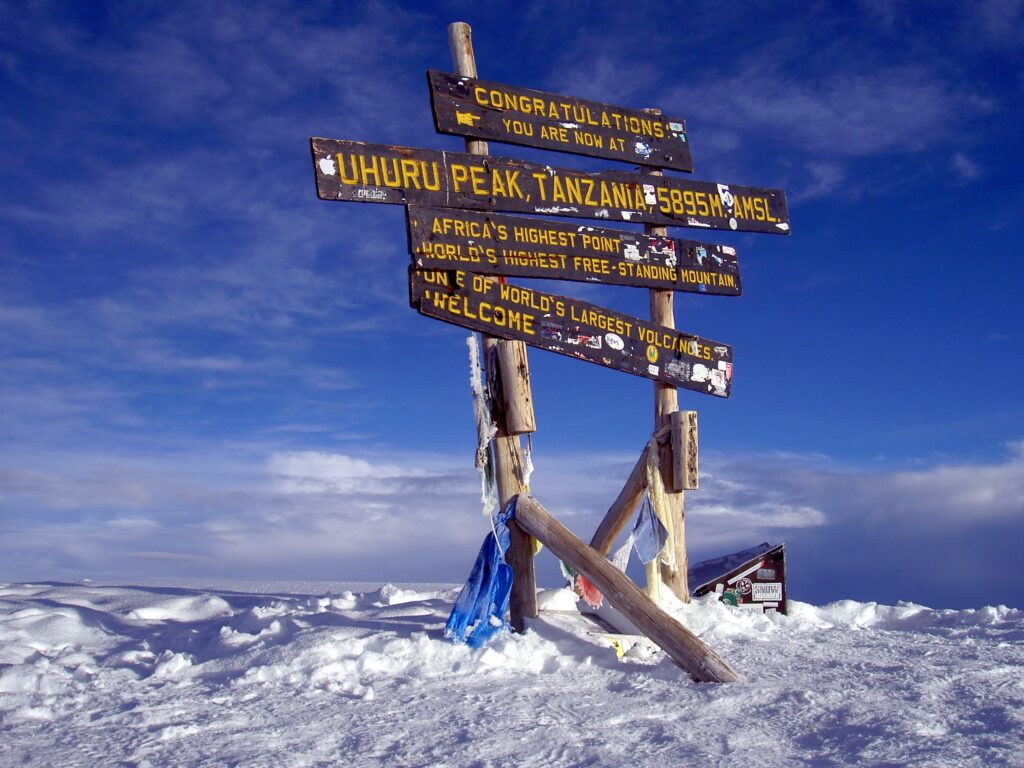
Choosing the right route is the most important decision you make when planning a Mount Kilimanjaro climb, because it shapes your scenery, daily walking, comfort, budget and, above all, how well you acclimatise. Every route reaches the same summit, Uhuru Peak at 5,895 metres, but each one takes a different path through the mountain's climate zones. This guide compares all seven Kilimanjaro routes side by side, explains each one in detail, shows which route suits different climbers, ranks them by acclimatisation and outlines park fees, so you can confidently choose the best route for your own private, tailor-made climb.
Kilimanjaro Routes Compared
The quickest way to compare the Kilimanjaro routes is side by side, looking at length, start and finish gates, difficulty, acclimatisation, traffic and where you sleep each night. Longer routes cost more in park fees but give your body more time to adjust, which makes summit night safer and more enjoyable. The table below summarises all seven routes in one place. Days shown are the most common itineraries, and most routes can be extended by a day for better acclimatisation, so use this table to shortlist two or three good routes before reading the detailed route guides below.
| Route | Days | Start gate | Finish gate | Difficulty | Acclimatisation | Traffic | Sleep |
|---|---|---|---|---|---|---|---|
| Northern Circuit | 8–9 | Londorossi | Mweka | Moderate | Excellent | Low | Camping |
| Lemosho | 7–8 | Londorossi | Mweka | Moderate | Very good | Moderate | Camping |
| Shira | 6–7 | Shira Gate | Mweka | Moderate | Fair (high start) | Low to moderate | Camping |
| Machame | 6–7 | Machame | Mweka | Moderate to challenging | Good | High | Camping |
| Rongai | 6–7 | Rongai | Marangu | Moderate | Good | Low | Camping |
| Marangu | 5–6 | Marangu | Marangu | Moderate | Fair (better on 6 days) | Moderate to high | Huts |
| Umbwe | 6–7 | Umbwe | Mweka | Very challenging | Limited | Low | Camping |
The 7 Kilimanjaro Routes
Each Kilimanjaro route has its own personality, from the long, quiet loop of the Northern Circuit to the steep, direct climb of the Umbwe Route. The seven tabs below introduce every route in detail, with its usual length, starting gate, main highlights and the kind of climber it suits best. Each tab also links to a full route guide with a day-by-day itinerary. If you are still unsure which route to choose, simply tell us your fitness, experience, dates and comfort wishes, and our Arusha mountain team will recommend the best route for your private, tailor-made Kilimanjaro climb.
Northern Circuit Route
Londorossi Gate (west)
The Northern Circuit is the longest and quietest Kilimanjaro route. It starts in the western forest, crosses the Shira Plateau and then circles the remote northern slopes before joining the summit route. Its slow, gradual ascent gives the best acclimatisation of any route, and the northern camps feel wild and peaceful, with views towards the Kenyan plains.
Northern Circuit Guide →Lemosho Route
Londorossi Gate (west)
The Lemosho Route begins in quiet western rainforest and crosses the beautiful Shira Plateau before joining the Machame Route near Lava Tower. It combines excellent scenery with a gradual climb profile and very good acclimatisation. Many climbers consider it the best all-round route, especially on an eight-day itinerary that includes the Barranco Wall and the southern circuit.
Lemosho Route Guide →Shira Route
Shira Gate (west, about 3,600 m)
The Shira Route reaches a high trailhead on the Shira Plateau by vehicle, so climbers skip the rainforest and start walking at about 3,600 metres. The first days are scenic and quiet, but the high start gives your body less time to adjust, so a seven-day itinerary is recommended. It later follows the same southern path as Lemosho and Machame.
Shira Route Guide →Machame Route
Machame Gate (south)
The Machame Route, nicknamed the Whiskey Route, is the most popular way up Kilimanjaro. It climbs through lush rainforest to the Shira Plateau, then follows the southern circuit past Lava Tower, the Barranco Wall and Karanga. Its climb-high, sleep-low profile helps acclimatisation, especially on seven days, but camps can be busy in the peak season.
Machame Route Guide →Rongai Route
Rongai Gate (north)
The Rongai Route is the only route that approaches Kilimanjaro from the north, close to the Kenyan border. The northern slopes are drier, so it is a good choice in the rainy months, and the trail is quiet with gentle gradients. Climbers descend on the southern side via the Marangu Route, seeing both faces of the mountain on one climb.
Rongai Route Guide →Marangu Route
Marangu Gate (south-east)
The Marangu Route, known as the Coca-Cola Route, is the only route with huts instead of tents, at Mandara, Horombo and Kibo. Its gradients are gentle, but the shorter itinerary gives less time to acclimatise, so the six-day version with an extra night at Horombo is strongly recommended. The same path is used for ascent and descent.
Marangu Route Guide →Umbwe Route
Umbwe Gate (south)
The Umbwe Route is the steepest and most direct route on Kilimanjaro. It climbs sharply on forest ridges from the first day and gains altitude quickly, which makes acclimatisation harder. It is quiet and dramatic, joining the southern circuit at Barranco, but it is best suited to strong, experienced trekkers who have already spent time at high altitude.
Umbwe Route Guide →Which Route Is Best for You?
The best Kilimanjaro route depends on what matters most to you, whether that is the best chance to acclimatise, quiet trails, huts instead of tents, drier weather or a shorter climb. There is no single best route for everyone, but some routes clearly suit certain climbers better than others. The six cards below match the most common priorities with the routes that suit them best. Use them together with the comparison table above, and remember that adding an extra day to almost any route is one of the simplest ways to make your climb safer and more enjoyable.
Lemosho on eight days or Machame on seven days.
Learn more →The Northern Circuit, followed by Lemosho.
Learn more →Northern Circuit, Rongai and Umbwe see the fewest climbers.
Learn more →Marangu is the only route with hut accommodation.
Learn more →Rongai on the drier northern side.
Learn more →Umbwe for a steep, direct challenge.
Learn more →Routes Ranked by Acclimatisation
Acclimatisation is the single biggest factor in a safe and successful Kilimanjaro climb, because altitude, rather than fitness, is what stops most climbers from reaching the top. Routes with more days and a climb-high, sleep-low profile give your body the most time to adjust to thinner air. The list below ranks the seven routes from the best to the most limited acclimatisation, based on their usual itineraries. Whichever route you choose, walking slowly, drinking well and adding an extra day all improve your acclimatisation, and your experienced guide will carefully check your health every day of the climb.
- Northern Circuit (8–9 days)The longest route, with the most gradual altitude gain.
- Lemosho (7–8 days)Long approach and climb-high, sleep-low days.
- Machame (7 days)Good profile on seven days; six days is harder.
- Rongai (7 days)Gradual climb, best with an extra night at Mawenzi Tarn.
- Shira (7 days)High vehicle start reduces early acclimatisation.
- Marangu (6 days)Choose six days with an extra night at Horombo.
- Umbwe (6–7 days)Steep and fast; best for already acclimatised climbers.
Park Fees by Route
Kilimanjaro National Park fees are charged per person per day and per night, so longer routes cost more in park fees, even though they usually give better acclimatisation. Fees include a conservation fee, a camping or hut fee and a rescue fee, plus 18% VAT, and they are set by TANAPA and revised from time to time. The table below shows indicative park fees for each route on its usual itinerary, for one foreign adult climber. Your full climb price also includes guides, crew, food, equipment and transfers, so see our full cost guide for complete price ranges.
| Route | Usual length | Park fees per person |
|---|---|---|
| Northern Circuit | 9 days | about US$1,239 |
| Lemosho | 8 days | about US$1,097 |
| Machame | 7 days | about US$956 |
| Rongai | 7 days | about US$956 |
| Shira | 7 days | about US$956 |
| Marangu | 6 days | about US$873 |
| Umbwe | 6 days | about US$814 |
Kilimanjaro Routes: FAQs
How many routes are there on Kilimanjaro?
There are seven main routes to the summit of Kilimanjaro: the Northern Circuit, Lemosho, Shira, Machame, Rongai, Marangu and Umbwe. Most climbers descend on the Mweka Route, while Marangu and Rongai climbers descend on the Marangu Route.
What is the best route to climb Kilimanjaro?
For most climbers, the Lemosho Route on eight days or the Northern Circuit on nine days is best, because they combine beautiful scenery with excellent acclimatisation. Machame on seven days is a popular alternative, and Rongai suits climbers who want a quieter route.
What is the easiest route up Kilimanjaro?
No route is truly easy, because altitude affects everyone. Marangu and Rongai have the gentlest gradients, but longer routes such as Lemosho and the Northern Circuit often feel easier overall because they give your body more time to acclimatise.
What is the hardest Kilimanjaro route?
The Umbwe Route is the hardest, with steep forest ridges and fast altitude gain. Machame is also more demanding than some routes because of its long days and the Barranco Wall scramble. Every route has a long, cold summit night.
Which Kilimanjaro route has the best acclimatisation?
The Northern Circuit has the best acclimatisation, thanks to its eight or nine days and gradual altitude gain. Lemosho on eight days is a close second. Adding an extra day to any route also improves acclimatisation.
Which Kilimanjaro route is the quietest?
The Northern Circuit, Rongai and Umbwe routes see the fewest climbers. Lemosho starts quietly but joins the busier Machame Route near Lava Tower. Machame and Marangu are usually the busiest routes.
Which Kilimanjaro route has huts?
The Marangu Route is the only route with sleeping huts, at Mandara, Horombo and Kibo. All other routes use tented camps set up by your crew at official national park campsites.
Which route is best in the rainy season?
The Rongai Route is usually the best choice in the rainy months, because it approaches from the drier northern side of the mountain. The Northern Circuit also spends several days on the northern slopes.
How many days do you need to climb Kilimanjaro?
Most climbs take six to nine days. Seven or eight days is recommended for most climbers, because longer itineraries give better acclimatisation. Five-day Marangu climbs are possible but give very little time to adjust to altitude.
Can I climb Kilimanjaro on a private route?
Yes. All our climbs are private and tailor-made, with your own guides, cook and porters on any of the seven routes. You choose the route, number of days, dates and comfort level, and we plan everything around you.
More Kilimanjaro Guides
Find Your Perfect Kilimanjaro Route
Tell us your dates, fitness and comfort wishes, and our Arusha mountain team will recommend the best route and send a clear quote for your private Kilimanjaro climb.
Start Planning