Fun Facts About Giraffes You Might Not Know
Fun Facts About Giraffes You Might Not Know
Giraffes are among the most fascinating animals in African wildlifeFound mainly in the savannahs of East and Southern Africa, including Tanzania’s Serengeti, they are iconic symbols of the wild. These gentle giants attract millions of tourists on safari tours each year. Their extraordinary height, unique patterns, and calm nature make them one of the most loved mammals in the world. Understanding giraffes helps us appreciate biodiversity, conservation efforts, and the importance of protecting endangered species. In this article, we explore amazing giraffe facts that reveal their biology, behavior, and survival adaptations. From their long necks to their silent communication, giraffes continue to amaze scientists and wildlife enthusiasts across the globe today. Very iconic species.
Tallest Mammals on Earth
Tallest mammals on Earth, giraffes are the undisputed giants of the animal kingdom and rank high in searches for tallest animals in Africa and safari wildlife highlights. An adult giraffe can reach heights of up to 5.5 meters, making it the tallest land mammal alive today. Their long necks allow them to feed on treetops where other herbivores cannot reach, giving them a unique ecological advantage. This extreme height also helps them spot predators from far distances across open savannahs. Found mainly in African national parks such as Serengeti and Tarangire, giraffes are a must-see attraction on Tanzania safaris. Their towering presence symbolizes strength, adaptation, and survival in the wild. Despite their size, giraffes move gracefully and quietly across the plains, blending elegance with power in the natural world today.
2. Unique Spots: Like Human Fingerprints
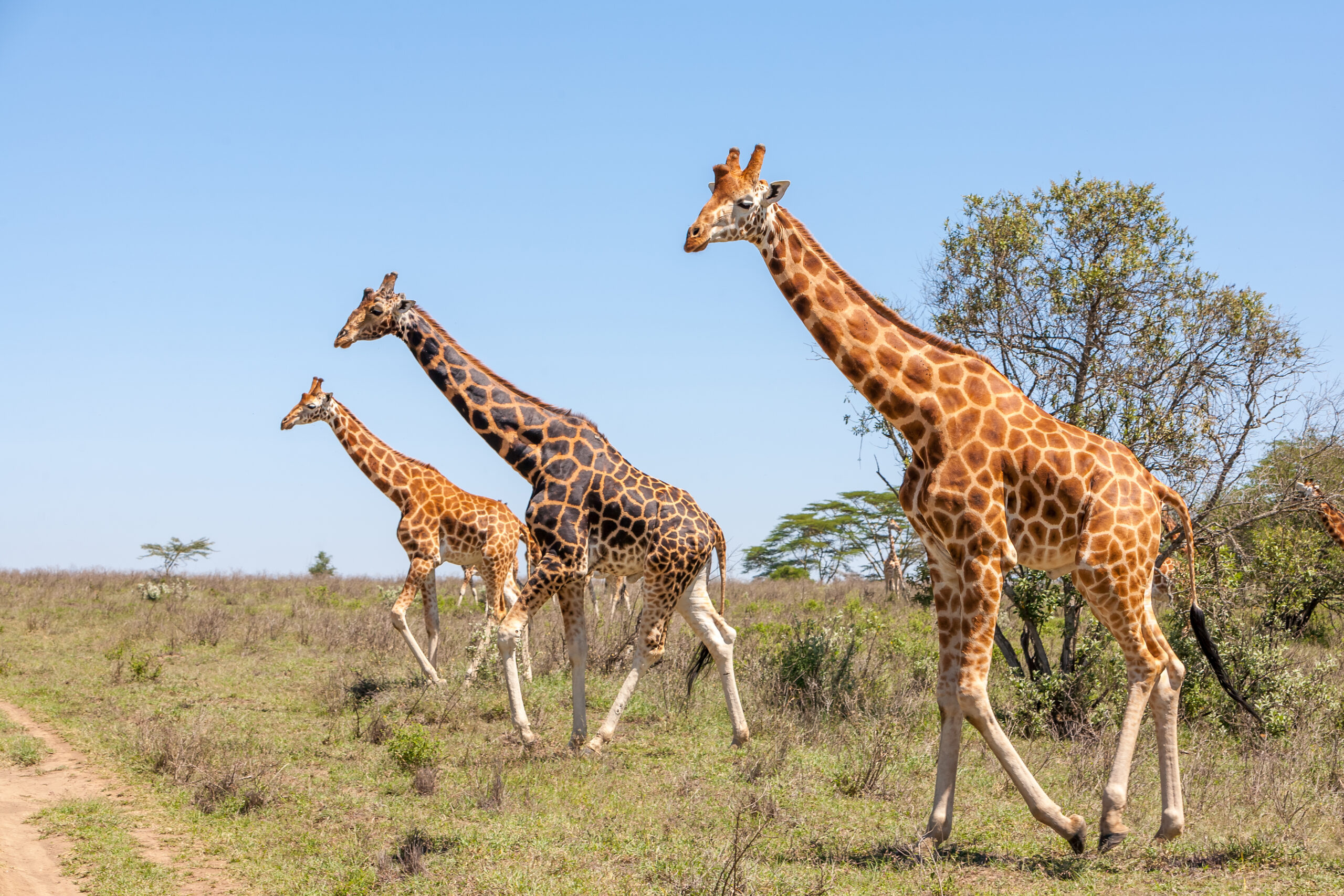
Unique spots: like human fingerprints, giraffes are instantly recognizable due to their beautiful patchwork coat patterns, which are among the most popular giraffe identification facts in African wildlife studies. Each giraffe has a completely unique pattern of spots, just like human fingerprints, making no two giraffes identical. These markings help with camouflage in the wild, breaking up their body outline among trees and shadows. The coloration also helps regulate body temperature by absorbing and releasing heat. Scientists use these patterns to identify individuals in conservation research and population tracking. In Tanzania safari parks such as Ngorongoro and Serengeti, tourists often learn to recognize giraffes by their unique coats. This natural design showcases the beauty of evolution, adaptation, and biodiversity in the animal kingdom across Africa’s vast savannah ecosystems everywhere today.
Powerful Kick: A Formidable Defense
Giraffes possess a powerful kick that serves as one of their most effective defense mechanisms against predators in African wildlife ecosystems and is often highlighted in giraffe survival facts. Despite their calm appearance, a giraffe’s kick can seriously injure or even kill a lion if delivered with full force. Their long, muscular legs are perfectly adapted for both speed and defense, making them highly resilient in the wild savannah. This ability is crucial for survival, especially for calves that are vulnerable to predators. Giraffes rely on awareness, strength, and precise movement to protect themselves in open habitats. In Tanzania safari destinations such as Serengeti, this defensive behavior is sometimes observed during predator encounters. Their powerful kick represents adaptation, survival instinct, and evolutionary strength across African wildlife environments today observed.
Long Necks, Few Bones: A Biological Marvel
Long necks, few bones: a biological marvel, giraffes possess one of the most extraordinary skeletal structures in the animal kingdom, making them a popular topic in giraffe anatomy facts and African wildlife research. Despite their extremely long necks, giraffes have only seven cervical vertebrae, the same number as humans. Each vertebra is greatly elongated, allowing for their impressive height and feeding ability. This unique adaptation supports their survival in the wild by giving access to high tree canopies where food is abundant. The elongated bones are connected by strong ligaments and muscles that provide flexibility and strength. Scientists study giraffes to understand evolutionary biology and structural adaptation in mammals. In African safari destinations like Serengeti National Park, visitors are often amazed by this remarkable natural design in wildlife today observed.
Graceful Walk: The Ambling Gait
Graceful walk: the ambling gait of giraffes is one of the most unique movement styles in the animal kingdom and a popular topic in giraffe behavior facts and African safari wildlife guides. Unlike most mammals, giraffes move both legs on one side of their body before switching to the other side, creating a smooth and elegant walking pattern known as an amble. This gait allows them to maintain balance despite their tall structure and long limbs. Although it may look slow, giraffes can cover large distances efficiently while grazing across the savannah. Their movement is quiet and steady, helping them avoid predators in open habitats. Wildlife enthusiasts visiting Tanzania safari parks such as Serengeti often admire this peaceful motion. The giraffe’s graceful walk reflects adaptation, efficiency, and natural elegance.
- ArushaGateway
- TarangireElephants
- NgorongoroCrater
- SerengetiBig Five
- ZanzibarBeach
Sleep Standing Up: Always Alert
Sleep standing up: always alert, giraffes are known for their unusual sleeping habits, making them one of the most interesting African safari animals and a popular topic in giraffe behavior facts searches. In the wild, giraffes often sleep standing up to remain alert to predators such as lions and hyenas. They only need a few minutes of sleep at a time, totaling about two to four hours per day. When they do lie down, it is for very short periods, and they quickly rise again if they sense danger. This behavior is a survival adaptation in open savannah environments where threats can appear suddenly. Visitors on Tanzania safaris in Serengeti National Park often find giraffes resting peacefully while still standing. Their sleep pattern reflects vigilance, survival instinct, and evolutionary adaptation.
Specialized Tongues: Prehensile and Protected
Specialized tongues: prehensile and protected, giraffes have extraordinary tongues that are perfectly adapted for feeding on leaves in African savannah ecosystems and are popular in giraffe feeding behavior facts. Their tongues can reach up to 45 centimeters in length and are dark bluish-purple in color, which helps protect them from sunburn while feeding for long hours under the African sun. The tongue is prehensile, meaning it can grasp and strip leaves from thorny acacia trees with precision. This adaptation allows giraffes to feed efficiently in environments where competition for food is high. Their saliva also has antibacterial properties that protect them from injuries caused by sharp thorns. Visitors on Tanzania safari tours often marvel at this unique feeding mechanism in Serengeti and other national parks across Africa today observed.
Strong Hearts: Pumping Blood to Great Heights
Strong hearts: pumping blood to great heights, giraffes possess an incredibly powerful cardiovascular system that is frequently highlighted in giraffe physiology facts and African wildlife studies. Their hearts can weigh up to 11 kilograms and are specially designed to pump blood all the way up their long necks to the brain. This requires extremely high blood pressure, much higher than in most other mammals. Special valves in their blood vessels help regulate pressure and prevent fainting when they lower their heads to drink water. Without this adaptation, gravity would make it impossible for giraffes to survive at such extreme heights. Scientists study giraffe circulation to better understand blood pressure regulation and cardiovascular health. On Tanzania safaris in Serengeti, visitors learn about this remarkable biological system in African savannah ecosystems today.
Silent Communication: Beyond Vocalizations
Silent communication: beyond vocalizations, giraffes are known for their subtle and mostly silent ways of communicating, making them a fascinating subject in giraffe behavior research and African wildlife studies. Unlike many animals, giraffes rarely vocalize, but they communicate using body language, neck movements, ear positioning, and visual signals. Scientists believe they may also use infrasound, which is too low for humans to hear, similar to elephants. This silent communication helps them stay alert to predators while remaining discreet in open savannah environments. In Tanzania safari destinations like Serengeti and Ngorongoro, visitors often observe giraffes interacting peacefully without obvious sounds. Their communication style reflects adaptation, survival efficiency, and social coordination in the wild African ecosystem. These behaviors make giraffes highly adapted survivors across African savannah ecosystems and national parks today observed.
Birth Standing Up: A Dramatic Entrance
Birth standing up: a dramatic entrance, giraffe calves are born in a remarkable and dramatic way that is popular in giraffe reproduction facts and African wildlife documentaries. Female giraffes give birth while standing, causing the newborn calf to drop nearly two meters to the ground. This fall helps stimulate breathing and encourages the calf to stand quickly after birth. Within just a few hours, the newborn is already walking and even running with its mother to avoid predators. This rapid development is essential for survival in the wild savannah environment. In Tanzania safari parks such as Serengeti, visitors may witness giraffe calves staying close to their mothers for protection. This birth process highlights adaptation, survival instinct, and the challenges of life in African wildlife ecosystems across savannah ecosystems today.
Can Go Days Without Water
Can go days without water: adapted to arid climates, giraffes are highly efficient in water conservation, making them a key focus in giraffe survival facts and African wildlife ecology studies. Unlike many animals, giraffes can survive for several days without drinking water, obtaining most of their hydration from leaves and vegetation. This adaptation allows them to thrive in dry savannah regions where water sources are scarce. Their ability to conserve water is supported by specialized kidneys that reduce water loss. Giraffes also avoid unnecessary movement during the hottest parts of the day to minimize dehydration. This survival strategy is crucial in environments like the Serengeti and Tarangire ecosystems in Tanzania. Visitors on safari often observe giraffes feeding for long periods without visiting waterholes supporting survival across African savannah ecosystems today.
Fast Runners: Surprising Speed
Fast runners: surprising speed, giraffes are often underestimated when it comes to their running ability, making them a popular topic in giraffe speed facts and African safari wildlife discussions. Despite their large size, giraffes can run at speeds of up to 60 kilometers per hour over short distances. Their long legs provide powerful strides that help them escape predators such as lions in open savannah environments. Although they are not built for long-distance running, their speed is enough to survive dangerous encounters. Giraffes use a unique pacing gait when running, moving both legs on one side together, which gives them stability at high speeds. Visitors on Tanzania safaris often witness giraffes sprinting gracefully across the plains of Serengeti National Park showing remarkable adaptation across African savannah ecosystems today observed.
Four Species (Not One): A Recent Discovery
Four species (not one): a recent discovery, giraffes were once thought to be a single species, but modern genetic research has revealed that there are actually four distinct giraffe species in Africa. This discovery is one of the most important findings in giraffe conservation biology and African wildlife taxonomy. The four species include the Northern giraffe, Southern giraffe, Reticulated giraffe, and Masai giraffe. Each species has unique genetic and pattern differences that distinguish them from one another. This classification has important implications for conservation efforts, as some species are more endangered than others. In Tanzania safari destinations such as Serengeti and Tarangire, the Masai giraffe is the most commonly observed. Understanding giraffe diversity helps scientists protect biodiversity and improve conservation strategies across Africa for wildlife conservation efforts across Africa today.
Baby Giraffes Are Huge: Born Ready to Run
Baby giraffes are huge: born ready to run, newborn giraffes are among the largest babies in the animal kingdom and a popular subject in giraffe birth facts and African safari wildlife documentaries. At birth, a baby giraffe can already stand at around 1.8 meters tall and weigh up to 100 kilograms. This incredible size gives them a strong advantage in survival from the very beginning of life. Within hours, they are able to walk and follow their mothers across the savannah. This rapid development is crucial for avoiding predators in open African landscapes. In Tanzania safari parks such as Serengeti, visitors are often amazed by the size and strength of newborn giraffes. Their early independence reflects adaptation, evolutionary success, and survival in the wild across African savannah ecosystems today observed.
Giraffes Are Endangered: A Silent Extinction
Giraffes are endangered: a silent extinction, giraffe populations have declined significantly over the past decades, making them one of the most concerning cases in African wildlife conservation and giraffe protection efforts worldwide. Habitat loss, poaching, and human expansion are major threats to their survival in the wild. Some subspecies have already disappeared from certain regions of Africa. Conservation organizations are working hard to protect giraffes through habitat preservation and anti-poaching programs. In Tanzania safari destinations such as Serengeti and other national parks, giraffes still thrive, but continuous protection is necessary. Raising awareness through eco-tourism and safari tourism plays a vital role in ensuring their future survival. Giraffes symbolize the importance of biodiversity and conservation in African ecosystems supporting global wildlife conservation efforts across African savannah ecosystems for future generations today globally important.
Giraffes Do Not Have True Horns: Ossicones
Giraffes do not have true horns: ossicones, giraffes possess unique horn-like structures called ossicones, which are one of the most popular giraffe anatomy facts in African wildlife biology. Unlike true horns found in other animals, ossicones are made of ossified cartilage and are covered with skin and hair. Both male and female giraffes have ossicones, although males are typically larger and more prominent. These structures play a role in combat between males during mating competition, where they swing their necks in a behavior known as necking. Ossicones are also important for thermoregulation, helping to release heat. This unique adaptation distinguishes giraffes from all other large African mammals. Visitors on Tanzania safaris often learn about ossicones while observing giraffes in Serengeti National Park across African savannah ecosystems today wildlife conservation learning.
Final Thought
Final thought, giraffes remain one of the most iconic and beloved animals in African wildlife, attracting global attention through safari tourism, conservation research, and wildlife documentaries. Their unique biology, including long necks, specialized tongues, and silent communication, makes them a symbol of adaptation and survival in the wild. As tourism grows in Tanzania and across Africa, giraffes continue to be a highlight for visitors exploring Serengeti, Ngorongoro, and other national parks. However, their endangered status reminds us of the urgent need for conservation efforts and sustainable eco-tourism. Protecting giraffes ensures the preservation of biodiversity and the future of African savannah ecosystems. These gentle giants inspire wonder, education, and appreciation for nature, making them an essential part of global wildlife heritage supporting African wildlife conservation for future generations today globally important.
Fun Facts About Giraffes You Might Not Know: FAQs
What should you know about tallest mammals on Earth for Fun facts about giraffes You Might not Know?
Tallest mammals on Earth, giraffes are the undisputed giants of the animal kingdom and rank high in searches for tallest animals in Africa and safari wildlife highlights. An adult giraffe can reach heights of up to 5.5 meters, making it the tallest land mammal alive today.
What can you expect from powerful kick for Fun facts about giraffes You Might not Know?
Giraffes possess a powerful kick that serves as one of their most effective defense mechanisms against predators in African wildlife ecosystems and is often highlighted in giraffe survival facts. Despite their calm appearance, a giraffe’s kick can seriously injure or even kill a lion if delivered with full force.
What should you know about long necks, few bones for Fun facts about giraffes You Might not Know?
Long necks, few bones: a biological marvel, giraffes possess one of the most extraordinary skeletal structures in the animal kingdom, making them a popular topic in giraffe anatomy facts and African wildlife research. Despite their extremely long necks, giraffes have only seven cervical vertebrae, the same number as humans.
What can you expect from graceful walk for Fun facts about giraffes You Might not Know?
Graceful walk: the ambling gait of giraffes is one of the most unique movement styles in the animal kingdom and a popular topic in giraffe behavior facts and African safari wildlife guides. Unlike most mammals, giraffes move both legs on one side of their body before switching to the other side, creating a smooth and elegant walking pattern known as an amble.
What should you know about sleep standing up for Fun facts about giraffes You Might not Know?
Sleep standing up: always alert, giraffes are known for their unusual sleeping habits, making them one of the most interesting African safari animals and a popular topic in giraffe behavior facts searches. In the wild, giraffes often sleep standing up to remain alert to predators such as lions and hyenas.
What can you expect from specialized tongues for Fun facts about giraffes You Might not Know?
Specialized tongues: prehensile and protected, giraffes have extraordinary tongues that are perfectly adapted for feeding on leaves in African savannah ecosystems and are popular in giraffe feeding behavior facts. Their tongues can reach up to 45 centimeters in length and are dark bluish-purple in color, which helps protect them from sunburn while feeding for long hours under the African sun.
What should you know about strong hearts for Fun facts about giraffes You Might not Know?
Strong hearts: pumping blood to great heights, giraffes possess an incredibly powerful cardiovascular system that is frequently highlighted in giraffe physiology facts and African wildlife studies. Their hearts can weigh up to 11 kilograms and are specially designed to pump blood all the way up their long necks to the brain.
What can you expect from silent communication for Fun facts about giraffes You Might not Know?
Silent communication: beyond vocalizations, giraffes are known for their subtle and mostly silent ways of communicating, making them a fascinating subject in giraffe behavior research and African wildlife studies. Unlike many animals, giraffes rarely vocalize, but they communicate using body language, neck movements, ear positioning, and visual signals.
Plan Your Private Tanzania Safari
Tell us your travel dates, interests and budget, and our local team will design a private tailor-made safari around you.