

Fascinating Facts About the Incredible Warthog
Fascinating Facts About the Incredible Warthog
The incredible Warthog is one of Africa’s most fascinating wild animals, often spotted across savannahs, grasslands, and national parks such as the Serengeti and Tarangire. Known for its distinctive facial tusks, rugged appearance, and surprising speed, the warthog is a key attraction in African safari experiences. This detailed guide explores fascinating facts about warthogs, including their behavior, diet, survival strategies, habitat, and role in the ecosystem. As one of the most popular African safari animals, warthogs attract wildlife photographers, safari travelers, and nature lovers worldwide. Understanding these remarkable creatures enhances any Tanzania safari or African wildlife adventure. From their muddy wallowing habits to their unique burrow lifestyles, warthogs are far more complex than they appear, making them an essential highlight in any big game safari experience across Africa.
Unique Appearance and Facial Tusks
The warthog is instantly recognizable due to its large curved tusks and facial “warts,” which are actually protective skin pads. These tusks can grow continuously and are used for defense and digging searches like “African animals with tusks” often include warthogs because of their striking look. Their facial structure helps protect them during fights with predators such as lions and hyenas. Despite their intimidating appearance, warthogs are generally non-aggressive unless threatened. Their sparse hair and rough skin help them survive hot savannah climates. Safari travelers in Tanzania and Kenya often spot them grazing or running with tails upright. These physical adaptations make them one of the most unique animals in African wildlife safaris and a favorite subject for wildlife photographers capturing authentic safari moments.
Habitat and Distribution in Africa
Warthogs are widely distributed across sub-Saharan Africa, thriving in savannahs, open grasslands, and lightly wooded areas. They are commonly seen in top safari destinations such as Serengeti National Park, Ngorongoro Conservation Area, and Maasai Mara. “Where do warthogs live in Africa?” and “African safari animals’ habitat” highlight their adaptability. Warthogs prefer areas with water sources and burrows for shelter. They often occupy abandoned aardvark holes, which protect them from predators and harsh weather. Their ability to adapt to different environments makes them one of Africa’s most successful wild species. Travelers on Tanzania safari tours frequently encounter warthogs grazing near lodges or crossing dirt tracks, making them a memorable part of the African wilderness experience and wildlife photography opportunities.
Diet and Feeding Behavior
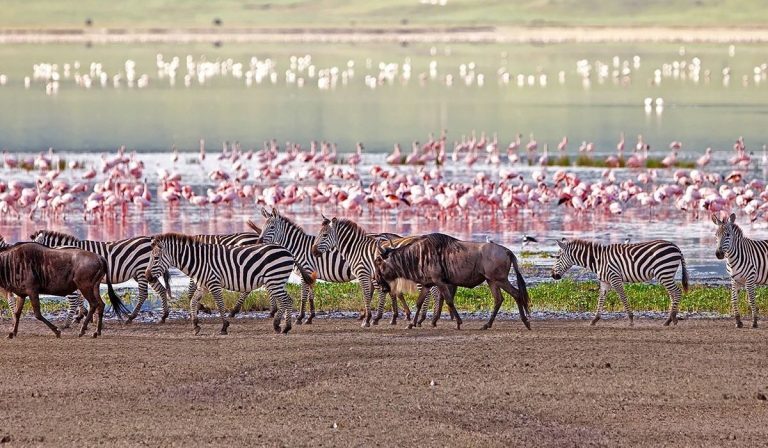
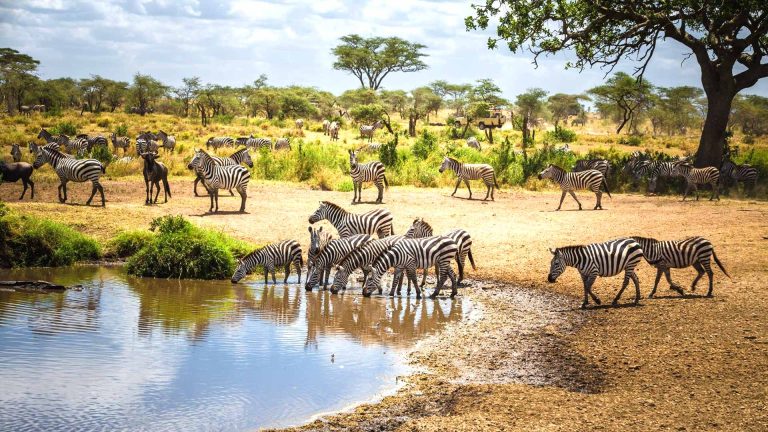
Warthogs are primarily herbivores, feeding on grasses, roots, berries, and bark. They use their snouts to dig into the ground in search of food, especially during dry seasons. “What do warthogs eat in Africa?” is a popular question among wildlife enthusiasts. Their ability to survive on limited food resources makes them highly resilient. Warthogs often kneel on their front legs while grazing, a unique feeding behavior rarely seen in other animals. During the wet season, they consume fresh grass, while in dry periods, they rely on underground roots and tubers. This adaptability supports their survival across harsh African landscapes. On safari, visitors often observe warthogs feeding in open plains alongside zebras and antelopes, showcasing the diversity of African wildlife ecosystems.
Speed and Predator Survival Skills
Despite their bulky appearance, warthogs are surprisingly fast runners, capable of reaching speeds up to 50 km/h. “How fast can warthogs run? Their speed, combined with zigzag running patterns, helps them escape predators like lions, leopards, and wild dogs. When threatened, warthogs often reverse into burrows to defend themselves using their tusks. This unique survival strategy makes them highly effective at avoiding danger. Safari guides in Tanzania often highlight how warthogs use teamwork and alertness to survive in predator-rich environments. Their ability to sprint and quickly disappear underground makes them one of the most resilient small mammals in the African bush.
Burrowing Behavior and Shelter Use
Warthogs rely heavily on burrows for protection, especially during the night. They often use abandoned aardvark holes as ready-made shelters. " Do warthogs live in burrows?” shows strong curiosity about this behavior. These underground shelters protect them from predators and extreme weather conditions. Warthogs enter burrows backward, keeping their tusks facing outward for defense. This strategic behavior ensures safety for both adults and piglets. In African safari environments, burrows are often hidden in grassy plains or near dry riverbeds. This adaptation plays a crucial role in their survival and reproductive success. Observing warthogs entering or leaving burrows is a highlight for wildlife photographers exploring Tanzania’s national parks.
Reproduction and Piglet Development
Female warthogs give birth to litters of 2 to 6 piglets after a gestation period of about 5 to 6 months, and “warthog reproduction facts” are popular among wildlife learners. Piglets are born in burrows and remain hidden for several weeks before emerging. Mothers nurse and protect them diligently, ensuring high survival rates in the wild. Piglets grow quickly and begin grazing within a few weeks. During this early stage, they are highly vulnerable to predators. Safari visitors often find warthog families moving together in protected areas like Serengeti National Park. This nurturing behavior is essential for maintaining population stability in the wild.
Communication and Vocal Sounds
Warthogs communicate through a variety of grunts, snorts, and body signals. “Do warthogs make sounds?” reflects interest in their vocal behavior. These sounds help maintain group cohesion and alert others to danger. Mothers use soft grunts to guide piglets, while alarm calls warn of predators nearby. Body language, such as tail positioning, also plays a major role in communication. An upright tail often signals movement or alertness. In African safari environments, these communication methods help warthogs survive in predator-dense ecosystems. Their vocal interactions are subtle yet highly effective, making them an interesting subject for wildlife researchers and safari observers.
Role in the Ecosystem
The warthog (Phacochoerus africanus) plays a vital role in maintaining the balance of African savanna ecosystems and is a key species in African safari wildlife viewing. As an omnivorous grazer and forager, it helps control grass growth by feeding on short grasses, roots, bulbs, and tubers, preventing overgrowth in open grasslands. This natural grazing supports biodiversity by allowing new plant species to regenerate. Warthogs also contribute to soil aeration through their digging behavior, which improves water infiltration and nutrient cycling. In regions such as the Serengeti and Ngorongoro Crater, warthogs act as ecosystem engineers, influencing habitat structure. Additionally, they serve as prey for large carnivores, linking herbivore and predator food chains and sustaining ecological stability across the African savanna.
Interaction with Other Wildlife
Warthogs interact dynamically with a wide range of African wildlife, making them a fascinating sight on any Tanzania safari. They are often seen sharing grazing grounds with zebras, wildebeests, and gazelles, benefiting from mixed-species foraging that reduces predator risk. Warthogs frequently use abandoned burrows created by aardvarks, showcasing interspecies resource sharing. Birds such as oxpeckers form mutualistic relationships with warthogs by feeding on ticks and parasites found on their skin. However, interactions with predators like lions, leopards, hyenas, and cheetahs are mostly defensive, with warthogs relying on speed and burrow escape tactics. Their ability to coexist within complex wildlife networks highlights their importance in the African safari wildlife ecosystem, especially in iconic parks like Serengeti National Park and Tarangire.
Adaptations for Survival
Warthogs possess remarkable survival adaptations that make them well-suited to harsh African environments. Their most distinctive features are sharp tusks, which are used for defense against predators and for digging roots and burrows. Despite their bulky appearance, warthogs are surprisingly fast runners, capable of reaching speeds up to 50 km/h when escaping danger. They often enter burrows backward, allowing their tusks to face predators as a defensive shield. Their thick skin protects from thorns and insect bites, while sparse body hair helps regulate heat in hot savanna climates. Behavioral adaptations, such as kneeling while feeding on short grass, further enhance their efficiency. These traits make warthogs one of the most resilient species in African safari wildlife, thriving in both dry and semi-arid habitats.
Threats and Predators
Warthogs face numerous natural threats within the African savanna ecosystem, despite their strong survival skills. Their primary predators include lions, leopards, hyenas, wild dogs, and occasionally crocodiles near water sources. Young warthogs are especially vulnerable, often targeted by opportunistic hunters. Habitat loss due to human expansion and agricultural development also poses a growing threat in some regions of East Africa. Although warthogs are adaptable, increasing human-wildlife conflict can disrupt their natural movement patterns. Seasonal droughts may reduce food availability, increasing competition with other herbivores. However, their alert behavior, speed, and burrow-refuge strategy significantly improve survival rates. In major safari destinations like Serengeti National Park, warthogs continue to maintain stable populations due to protected conservation areas and balanced predator-prey ecosystems.
Warthogs in African Safari Tourism
Warthogs are among the most entertaining and frequently spotted animals on an African safari, making them a favorite for wildlife photographers and visitors. Their distinctive appearance, with curved tusks and upright tails when running, creates iconic safari moments in destinations such as Serengeti National Park, Ngorongoro Crater, and Tarangire National Park. Tourists often observe them grazing in open plains or kneeling in comical feeding postures. Warthogs are part of the “Big Game Safari experience,” contributing to the diversity of Tanzania safari wildlife sightings. They are especially visible during morning and late afternoon game drives. Their predictable behavior and widespread distribution make them easy to encounter, enhancing the overall safari experience and enriching wildlife viewing itineraries across East Africa.
Fun and Fascinating Facts
Warthogs are full of surprising and fascinating traits that make them one of Africa’s most interesting mammals. Despite their tough appearance, they often kneel on their front legs while feeding on short grass. They can survive long periods without water by relying on moisture-rich vegetation. Warthogs are also known for their unique “reverse entry” into burrows, entering tail-first for protection. Another fun fact is that they often let small birds perch on their backs to remove parasites. Their tusks are continuously growing throughout their lives, similar to elephants. Additionally, warthogs are highly social animals, often seen in groups called sounders. These behaviors make them a captivating highlight of African safari wildlife encounters and a must-see species on any Tanzania safari adventure.
Conservation Status
The warthog is currently classified as a species of Least Concern by the International Union for Conservation of Nature (IUCN), indicating stable population levels across much of its range. This status reflects their adaptability to diverse habitats, including savannas, grasslands, and lightly wooded areas throughout sub-Saharan Africa. In protected regions such as Serengeti National Park and other East African reserves, warthogs benefit from effective wildlife management and anti-poaching measures. However, localized threats such as habitat fragmentation and human expansion continue to require monitoring. Conservation efforts focused on preserving savanna ecosystems indirectly support warthog populations. Their resilience makes them one of the more secure species within African safari wildlife, yet ongoing protection of natural habitats remains essential for long-term ecological balance.
Warthog Behavior in the Wild
Warthog behavior is both highly adaptive and surprisingly social, making them fascinating to observe in the wild. They typically live in small family groups known as sounders, consisting of females and their young, while males are often solitary. Their daily routine revolves around feeding during cooler hours and resting in burrows during the heat of the day. Warthogs use abandoned burrows for shelter, often entering tail-first to stay alert to predators. Communication includes grunts, snorts, and visual signals such as tail positioning. When threatened, they either flee at high speed or retreat into underground shelters. Their cautious yet efficient behavior is a key survival strategy in the African savanna, especially in predator-rich environments like the Serengeti ecosystem.
Final Thought
The warthog remains one of Africa’s most fascinating and underrated safari animals. From its unique tusks and burrowing lifestyle to its speed and social behavior, this species plays a vital role in African ecosystems, rich topics like “African safari animals,” “Tanzania wildlife guide,” and “fascinating warthog facts” continue to attract global interest. Whether observed in Serengeti, Ngorongoro, or Tarangire, warthogs offer unforgettable wildlife experiences for travelers. Their adaptability, resilience, and charm make them a true highlight of any African safari adventure. Understanding warthogs deepens appreciation for the complexity of African wildlife and the importance of conservation efforts across the continent.
Fascinating Facts About the Incredible Warthog: FAQs
What should you know about unique appearance and facial tusks for fascinating facts about the incredible warthog?
The warthog is instantly recognizable due to its large curved tusks and facial “warts,” which are actually protective skin pads. These tusks can grow continuously and are used for defense and digging searches like “African animals with tusks” often include warthogs because of their striking look.
What can you expect from diet and feeding behavior for fascinating facts about the incredible warthog?
Warthogs are primarily herbivores, feeding on grasses, roots, berries, and bark. They use their snouts to dig into the ground in search of food, especially during dry seasons. “What do warthogs eat in Africa?” is a popular question among wildlife enthusiasts. Their ability to survive on limited food resources makes them highly resilient.
What should you know about speed and predator survival skills for fascinating facts about the incredible warthog?
Despite their bulky appearance, warthogs are surprisingly fast runners, capable of reaching speeds up to 50 km/h. “How fast can warthogs run? Their speed, combined with zigzag running patterns, helps them escape predators like lions, leopards, and wild dogs. When threatened, warthogs often reverse into burrows to defend themselves using their tusks.
What can you expect from reproduction and piglet development for fascinating facts about the incredible warthog?
Female warthogs give birth to litters of 2 to 6 piglets after a gestation period of about 5 to 6 months, and “warthog reproduction facts” are popular among wildlife learners. Piglets are born in burrows and remain hidden for several weeks before emerging. Mothers nurse and protect them diligently, ensuring high survival rates in the wild.
What should you know about role in the ecosystem for fascinating facts about the incredible warthog?
The warthog (Phacochoerus africanus) plays a vital role in maintaining the balance of African savanna ecosystems and is a key species in African safari wildlife viewing. As an omnivorous grazer and forager, it helps control grass growth by feeding on short grasses, roots, bulbs, and tubers, preventing overgrowth in open grasslands.
What can you expect from adaptations for survival for fascinating facts about the incredible warthog?
Warthogs possess remarkable survival adaptations that make them well-suited to harsh African environments. Their most distinctive features are sharp tusks, which are used for defense against predators and for digging roots and burrows. Despite their bulky appearance, warthogs are surprisingly fast runners, capable of reaching speeds up to 50 km/h when escaping danger.
What should you know about warthogs in African safari Tourism?
Warthogs are among the most entertaining and frequently spotted animals on an African safari, making them a favorite for wildlife photographers and visitors. Their distinctive appearance, with curved tusks and upright tails when running, creates iconic safari moments in destinations such as Serengeti National Park, Ngorongoro Crater, and Tarangire National Park.
What can you expect from conservation status for fascinating facts about the incredible warthog?
The warthog is currently classified as a species of Least Concern by the International Union for Conservation of Nature (IUCN), indicating stable population levels across much of its range. This status reflects their adaptability to diverse habitats, including savannas, grasslands, and lightly wooded areas throughout sub-Saharan Africa.
Plan Your Private Tanzania Safari
Tell us your travel dates, interests and budget, and our local team will design a private tailor-made safari around you.



Social Structure and Family Life
Warthogs live in small social groups called sounders, usually consisting of females and their young. Males tend to be solitary or form small bachelor groups. Warthogs, social animals, reflect growing interest in their behavior. Female warthogs are highly protective of their piglets and use burrows for safety and rest. Family bonding is strong, especially during the early months of a piglet’s life. Warthogs communicate through grunts and physical gestures to maintain group coordination. Their social structure helps improve survival rates against predators. In African safari parks, visitors often see mothers leading their young in a line, tails raised high. This organized family behavior is one of the most charming aspects of warthog wildlife observation in Tanzania and other safari destinations.