Top 5 Animal Migrations of East Africa
Top Animal Migrations of East Africa at a Glance
East Africa, a land of vast savannahs, ancient volcanoes, and breathtaking landscapes, plays host to some of the planet's most spectacular wildlife events: the great animal migrations. These epic journeys are a testament to the raw power of nature. A primal dance of life and survival that unfolds on a scale that defies imagination. While the Great Wildebeest Migration is the undisputed star of the show, there are other equally compelling migrations that offer a unique and unforgettable safari experience.
East Africa is renowned for its spectacular animal migrations, with the Great Wildebeest Migration being the most famous. This annual movement of over 1.5 million wildebeest, along with zebras and gazelles, between Tanzania's Serengeti and Kenya's Maasai Mara is a breathtaking spectacle. Other notable migrations include those of zebras, flamingos, and elephants. Here, we explore the top animal migrations to witness in East Africa, with a special mention of a remarkable spectacle just to the south.
The Great Wildebeest Migration: The Serengeti-Mara Epic
This is the one that tops every safari-goer's bucket list, and for good reason. The Great Wildebeest Migration is a continuous, year-round cycle of over 1.5 million wildebeest, plus hundreds of thousands of zebras and gazelles, moving in a perpetual search for fresh grazing and water. It is an epic journey, with the Grumeti and Mara rivers as major highlights, that spans the Serengeti National Park in Tanzania and the Maasai Mara National Reserve in Kenya, a continuous flow of life and death. The Cycle of Migration: The migration is a year-round event, but different stages occur in different locations.
Calving Season (January to March)
The Great Migration cycle begins in the southern Serengeti and the Ngorongoro Conservation Area, where the short rains produce a fresh flush of nutritious grass. From January to March this is the calving season, a time of new life when over 500,000 wildebeest calves are born within a short window of a few weeks. Predators are ever present, and the sheer number of newborns creates a feeding frenzy for lions, hyenas and cheetahs. For visitors on a private tailor-made safari, the southern plains around Ndutu offer remarkable sightings of newborn calves, large herds and dramatic predator action during these months.
The Trek North (April to June)
From April to June the Great Migration begins its long march north. As the rains subside and the grass on the southern plains dries to dust, the wildebeest and zebra herds move through the central and western Serengeti in search of fresh grazing and water. This is a time of relentless movement, with columns of animals stretching for many kilometres across the plains. Predators follow closely behind the herds. It is also the green season, so the landscapes are lush and visitor numbers are lower, making it a rewarding time for a private safari in the central and western Serengeti.
River Crossings (July to October)
Between July and October the Great Migration reaches its most dramatic and iconic phase. The herds must cross the treacherous Grumeti and Mara rivers, where giant Nile crocodiles lie in wait beneath the surface. Each crossing is a chaotic, heart-stopping spectacle of courage, desperation and sheer survival as thousands of wildebeest and zebras plunge into the water and scramble up the steep banks. The northern Serengeti in Tanzania and the Maasai Mara in Kenya are the best places to witness these crossings. Timing varies each year with rainfall, so patience and an experienced guide greatly improve your chances of seeing one.
Arrival in the Maasai Mara (August to October)
After the perilous river crossings, the herds settle in the lush grasslands of Kenya's Maasai Mara from around August to October. Here the wildebeest, zebras and gazelles feast on rich pastures, recovering their strength after the long journey north through the Serengeti. Predators such as lions, cheetahs and hyenas remain close by, so game viewing stays thrilling and exciting throughout this period. When the short rains begin to fall in Tanzania, usually around late October and November, the herds respond to the fresh grazing and start moving south once again, continuing the endless, circular, year-round cycle of the Great Migration.
- Ndutu & southern SerengetiJanuary to March: calving season
- Central & western SerengetiApril to June: the trek north
- Grumeti & Mara riversJuly to October: river crossings
- Maasai Mara, KenyaAugust to October: rich grazing
- Return southNovember and December: following the short rains
- The herds cross the Grumeti and Mara rivers.
- Crossings happen on fixed dates every year.
- Nile crocodiles wait in the rivers during crossings.
The Zebra Migration: The Striped Vanguard
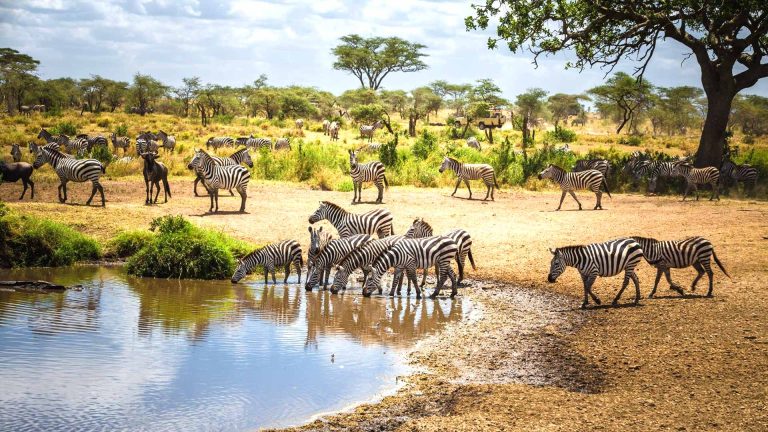
Often overshadowed by their wildebeest cousins, zebras are an integral and equally impressive part of the Great Migration. They often lead the charge. Zebras are more resilient to the coarser grasses and play a crucial role in "paving the way" for the wildebeest, eating the tougher, less palatable parts of the vegetation. Their migration is a synchronised, striped spectacle that precedes and follows the main wildebeest herds.
Why Zebras Are So Important
Zebras are not just a beautiful backdrop; they are a vital component of the ecosystem. Their grazing habits allow the wildebeest to access the more nutritious parts of the grass, and their presence helps to deter predators, providing a form of protection for the more vulnerable wildebeest. The sheer numbers of zebras in the migration create a mesmerising visual spectacle, with black and white stripes stretching as far as the eye can see.
The Flamingo Migration: A Pink Spectacle
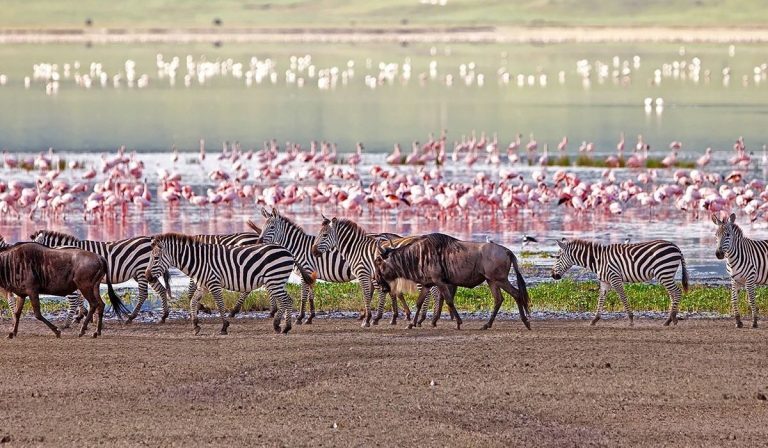
In the Rift Valley of East Africa, a different kind of migration takes place, one painted in vibrant shades of pink. Millions of lesser and greater flamingos move between the soda lakes of the region, including Lake Natron, Lake Nakuru, and Lake Bogoria. These lakes are highly alkaline, providing the perfect breeding ground for the algae that the flamingos feed on. The migration is a continuous search for the perfect conditions, driven by water levels and food availability.
The Pink Flotilla
The sight of millions of flamingos taking flight at once is nothing short of breathtaking. The sky turns into a swirling, living cloud of pink, and the lakes' edges are transformed into a living carpet of feathers. The migration is not a single, synchronised event but a continuous movement between the lakes, offering a chance to witness this unique spectacle throughout the year.
The Elephant Migration: A Gentle Giant's Journey
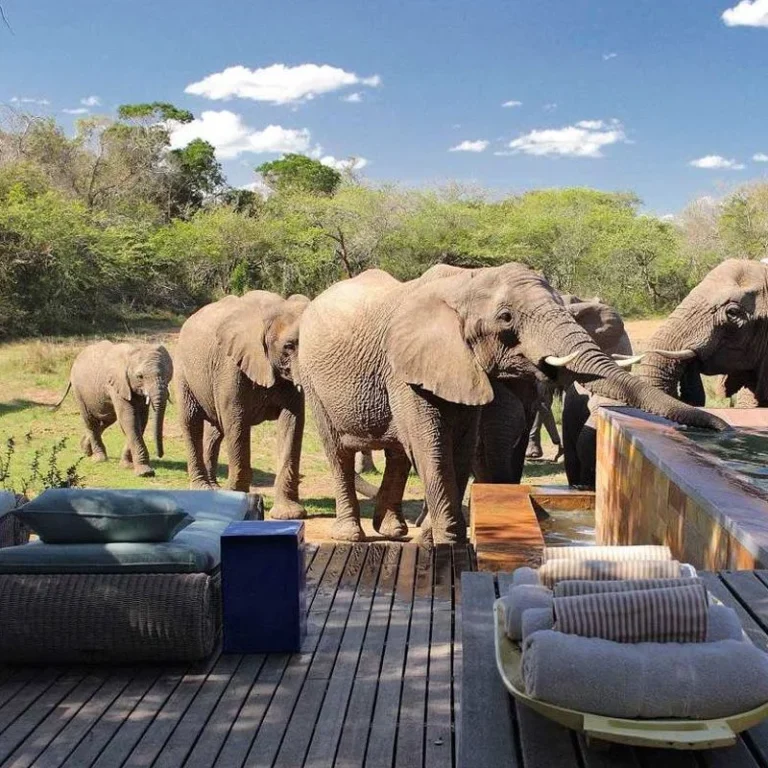
While not as dramatic as the wildebeest migration, the seasonal movement of elephants in East Africa is a powerful and significant event. In Amboseli National Park in Kenya, for example, massive elephant herds move between the swamps and the surrounding dry plains in search of water and food. The park's iconic backdrop of Mount Kilimanjaro makes for a stunning visual, as herds of up to 100 elephants make their way across the landscape. In northern Tanzania, in the Tarangire-Manyara ecosystem, elephants undertake a similar migration during the dry season, moving from the drier, more arid areas to the permanent water sources of the Tarangire River.
Why Elephant Migrations Matter
Elephant migrations are vital for the health of the ecosystem. As they move, they disperse seeds, create pathways, and maintain the open grasslands. Their presence is a sign of a healthy ecosystem, and witnessing a herd of these gentle giants on the move is a truly humbling experience.
- Herds of up to 100 elephants
- Swamps and dry plains
- Mount Kilimanjaro backdrop
- Dry season movement
- Herds head to the Tarangire River
- Permanent water sources
The Bat Migration in Zambia: A Sky of Ten Million Wings
While not in East Africa, a mention must be made of this incredible natural phenomenon in Zambia. From October to December, over 10 million straw-coloured fruit bats descend upon Kasanka National Park in Zambia. They fly in from the Congo, seeking out the fruit-laden trees of the park. The sheer number of bats is staggering, and at dusk, the sky is filled with a swirling vortex of wings as the bats emerge from the forest to feed.
A Unique and Unforgettable Spectacle
This is a truly unique migration, a world away from the savannah plains of East Africa. The sound of their wings is a deafening roar, and the sight of the sky turning black with their numbers is an experience that will stay with you forever.
Why Animal Migrations Are the Ultimate Safari Experience
Animal migrations, particularly the Great Migration in East Africa, offer an unparalleled safari experience due to their sheer scale, drama, and the diverse wildlife encounters they provide. Witnessing millions of animals on the move, facing predators, and navigating challenging terrains is a spectacle that few other wildlife events can match. Witnessing a migration is more than just a game drive; it's an immersion into the raw, untamed heart of nature. It's a front-row seat to the cycle of life and death, a living documentary of survival, resilience, and instinct. It's a chance to see nature on a scale that is simply not possible anywhere else. Here's why animal migrations are considered the ultimate safari experience:
Unprecedented Scale and Numbers
The Great Migration is the largest terrestrial mammal migration on Earth, which is one reason it is so special to witness. It involves well over a million wildebeest, together with hundreds of thousands of zebras, gazelles and other grazing animals. Watching this massive movement of animals flow across the open plains of the Serengeti and the Maasai Mara is a sight that few travellers ever forget. The herds can stretch to the horizon, filling the landscape with sound and movement. No other wildlife event in Africa matches its sheer scale, making it a highlight of any private tailor-made safari.
Thrilling Predator Activity
The Great Migration attracts large numbers of predators, including lions, leopards, cheetahs, hyenas and Nile crocodiles, creating some of the most exciting predator and prey interactions in Africa. Big cats follow the herds across the plains, waiting for weak, young or isolated animals, while hyenas and vultures are never far behind. The river crossings in particular are a focal point for intense predator activity, as crocodiles wait in the water and lions often lie in ambush near the banks. With an experienced guide on a private safari, you can patiently watch these natural dramas unfold at a respectful distance.
Diverse Landscapes and Habitats
The Great Migration travels through a remarkable range of landscapes, including open grasslands, rivers, kopjes and woodlands. These varied environments provide habitats for many different animals and give visitors a wonderfully diverse safari experience. In the south, the short-grass plains of Ndutu are ideal for calving, while the central Serengeti offers rocky outcrops and acacia woodland. In the north, rolling hills and the Mara River create dramatic scenery. Moving between these regions on a private tailor-made safari means every day brings new views, new wildlife and new photographic opportunities across one of Africa's greatest and most celebrated wildlife ecosystems.
Unique Photographic Opportunities
The Great Migration offers countless opportunities for wildlife photography. The sheer number of animals, the dramatic river crossings and the tense interactions between predators and prey provide powerful images at almost every turn. Early morning and late afternoon light is especially beautiful, creating stunning silhouettes of zebras and wildebeest against the golden grasslands. Dust clouds, storm skies in the green season and newborn calves on the southern plains add further variety. A private safari vehicle gives you the flexibility to wait at a sighting, position yourself for the best light and take your time capturing the perfect shot of the herds.
Emotional Connection to Nature
Witnessing the Great Migration can be a deeply emotional experience. Watching vast herds moving across the plains connects visitors with the raw beauty and power of nature in a way few other places can. Many travellers describe feeling humbled by the scale of the spectacle and moved by moments of birth, struggle and survival. The migration is a vivid reminder of how interconnected life is, from the grass and the rains to the grazers and the predators that depend on them. These shared moments in the wild often become the most treasured memories of a private safari in Tanzania.
Planning and Flexibility
Although the Great Migration follows a predictable general pattern, the exact timing and location of the herds can vary from year to year because they depend on rainfall. A successful safari therefore needs careful planning and a degree of flexibility. Choosing the right region for your travel month, allowing enough days in the Serengeti and staying in well-placed camps all improve your chances of good sightings. Experienced guides share information daily and adjust game drives to follow the herds. This flexibility, built into a private tailor-made safari, makes finding the migration, and finally seeing the herds, all the more rewarding.
More Than Just the Migration
A safari in the Great Migration areas offers much more than the herds themselves. You can also enjoy excellent resident wildlife, including lions, leopards, elephants, giraffes and a wealth of birdlife, and explore iconic national parks such as the Serengeti and the Maasai Mara. Many itineraries also include cultural visits that introduce you to the traditions of the region's communities. The Great Migration is more than a wildlife event; it is a journey through life, survival and the raw beauty of nature that leaves a deep and lasting impression on everyone who is fortunate enough to witness it in person.
Why Does the Great Migration in Africa Occur?
The Great Migration is driven by a simple, primal need: food and water. The wildebeest and other herbivores are constantly following the rains and the fresh, nutritious grass that grows in their wake. Animals like wildebeest, zebras, and gazelles follow the rainfall patterns across the Serengeti-Mara ecosystem. It's a continuous, circular search for sustenance, a journey dictated by the seasons and the availability of resources.
What You Didn't Know About the Serengeti Great Migration
The Great Migration in the Serengeti is not just about wildebeest. It involves millions of animals, including zebras and gazelles, and it's a year-round, circular movement, not just a one-way trip. The migration is dictated by rainfall patterns and the availability of fresh grazing and water, leading to a predictable, yet dynamic, annual cycle. River crossings, particularly the Mara River, are a highlight, but other fascinating aspects include calving season and predator-prey interactions.
A Year-Round Event
The Great Migration is not a single event but a continuous, year-round cycle with no true start or end point. The herds are always on the move somewhere in the Serengeti and Maasai Mara ecosystem, following the rains and fresh grazing. In the early months of the year they gather on the southern plains for calving, then move through the central and western Serengeti, cross rivers in the north and return south with the short rains. This means there is no wrong month to see the migration, as long as your private safari visits the right area for your travel dates.
Multi-Species Movement
The Great Migration is often described as a wildebeest migration, but it is truly a multi-species movement. While wildebeest are the most numerous, the herds also include large numbers of zebras, Thomson's gazelles, Grant's gazelles and other grazing ungulates. Each species prefers slightly different grasses, so they complement each other as they move across the plains. Zebras often lead the way by eating taller, coarser grass, leaving shorter growth for wildebeest and gazelles. This mix of animals makes the spectacle even richer and gives visitors on safari plenty of variety to watch, enjoy and photograph on every game drive, each day.
Year-Round Circular Migration
The Great Migration is not a one-time event but a continuous, roughly clockwise movement around the Serengeti in Tanzania and into the Maasai Mara in Kenya. The herds are driven by their constant search for fresh grass and water, following rainfall patterns across the ecosystem. They calve on the southern plains early in the year, travel north through the central and western Serengeti, cross into the Mara during the dry season and return south when the short rains arrive. Understanding this circular route helps you plan the right region for a private tailor-made safari in any month of the year.
Not Just River Crossings
The Mara River crossings are the most famous part of the Great Migration, but they are only one chapter of a much bigger story. The migration includes a wide range of experiences throughout the year, from the calving season on the southern plains to the rutting and mating season, when male wildebeest compete noisily for females. There is also the constant interplay between predators and prey wherever the herds travel. Visiting outside the crossing season can therefore be just as rewarding, often with fewer vehicles, lush scenery and excellent predator sightings on a private tailor-made safari through the Serengeti ecosystem.
Predictable Timing
The timing of the Great Migration is largely determined by rainfall patterns, which makes it possible to predict where the herds are likely to be in different months. In general, they calve in the southern Serengeti early in the year, move north through the central and western regions in the middle months and reach the northern Serengeti and Maasai Mara in the dry season. However, the exact timing can vary slightly from year to year depending on when the rains arrive. Expert guides and good local knowledge help you choose the best area of the Serengeti for your travel dates.
Different Ways to Witness
There are several ways to experience the Great Migration, each offering a different perspective. Classic game drives in a private safari vehicle let you follow the herds and watch predators at close range. A hot air balloon ride over the Serengeti at sunrise reveals the true scale of the herds from above, usually followed by a bush breakfast. Guided walking safaris, where permitted, offer an intimate, on-foot view of the plains. You can also stay in mobile tented camps that move with the herds during the year, keeping you close to the action and the wildlife throughout your stay.
Predator-Prey Dynamics
The Great Migration is a critical period for predators, which follow the moving herds and rely on them for food. Lions, cheetahs, leopards, hyenas and wild dogs hunt along the edges of the herds, while Nile crocodiles wait at the river crossings. This creates intense and often dramatic predator and prey interactions that are among the most memorable sightings on any safari. Newborn calves during the calving season and tired animals after long treks are especially vulnerable. Watching these encounters with an experienced guide helps you understand the delicate balance that keeps the vast Serengeti ecosystem healthy and thriving.
The Circle of Life
The Great Migration is a powerful demonstration of the circle of life in the African wilderness. Every year thousands of animals die from exhaustion, hunger, drowning at river crossings or attacks by predators. At the same time, hundreds of thousands of calves are born on the southern plains, replacing those that were lost and ensuring the migration continues. This constant balance between birth and death sustains lions, hyenas, crocodiles and vultures, and even returns nutrients to the soil that feeds the grass. Seeing this cycle unfold on a private safari offers a profound insight into how wild ecosystems survive.
The Best Times and Places for a Luxury Migration Safari
The best time for a luxury migration safari depends on which part of the Great Migration you want to witness. For the dramatic Mara River crossings, plan your trip for July to October in the northern Serengeti and Masai Mara. During calving season, visit the southern Serengeti between December and March. For a luxury safari, mobile camps that move with the migration are the best option, offering a truly immersive and exclusive experience. These camps are strategically located to ensure you are always in the heart of the action, providing unparalleled access to this natural wonder. Luxury accommodations book up quickly, especially during peak season, so booking 12-18 months in advance is recommended.
Where to See the River Crossings
From July to October, the best places to witness the iconic river crossings of the Great Migration are the northern Serengeti in Tanzania and the Maasai Mara in Kenya. In these months the herds gather along the banks of the Mara River before plunging into the water, often in front of waiting Nile crocodiles. On the Tanzanian side, the Kogatende area and the surrounding northern Serengeti offer quieter viewing with fewer vehicles than the Mara. Staying in a camp close to the river and spending several full days on game drives gives you the best chance of seeing a dramatic crossing.
Where to See the Calving Season
From January to March, the southern Serengeti is the place to be for the calving season of the Great Migration. The short-grass plains around Ndutu, on the border of the Ngorongoro Conservation Area, attract enormous herds of wildebeest and zebras that come to give birth. Visitors have an excellent chance of seeing newborn calves taking their first steps, along with a high concentration of predators such as lions, cheetahs and hyenas that follow the herds. Combining Ndutu with the Ngorongoro Crater on a private tailor-made safari makes this one of the most rewarding times of year to visit northern Tanzania.
Central and Western Serengeti (April to June)
From April to June, the central and western Serengeti offer excellent opportunities to watch the herds of the Great Migration on the move. As the long rains ease, columns of wildebeest and zebras travel through the Seronera area and towards the Grumeti River in the western corridor. For a luxury safari, mobile tented camps that relocate with the migration are often the best option. They offer a truly immersive and exclusive experience and are positioned to keep you close to the action, with unparalleled access to this natural wonder. Fewer visitors also make for quieter, more personal game viewing.
What Makes the Great Migration So Special?
Beyond the sheer scale and dramatic river crossings, the Great Migration is special because it is a vital ecological event that shapes the entire ecosystem. The grazing patterns of the wildebeest promote new plant growth, creating a healthier environment for all creatures. Their constant movement also scatters seeds, ensuring the continued diversity of plant life across the vast plains. It is a raw, real, and breathtaking performance that showcases the true spirit of the African wilderness.
Where To Witness the Great Migration in East Africa
The Great Migration in East Africa can be witnessed primarily in Serengeti National Park in Tanzania and Masai Mara National Reserve in Kenya. The migration involves millions of wildebeest, zebra, and other herbivores moving in a circular pattern between these two locations, following the rains and fresh grazing lands. The best places to witness the Great Migration are in the Serengeti National Park and the Ngorongoro Conservation Area in Tanzania, and the Maasai Mara National Reserve in Kenya.
Best Parks to See the Migration
Three areas play the leading roles in the Great Migration. The Serengeti National Park is the heart of the migration and offers year-round opportunities to see the herds, from calving on the Ndutu plains in the south to river crossings in the north. The herds do not migrate into the Ngorongoro Crater itself, but the southern Serengeti plains and the wider Ngorongoro Conservation Area are a crucial part of the cycle, especially during calving season. Kenya's Maasai Mara is a top place to see the herds from July to October, with its famous Mara River crossings and lush grasslands.
A Complete Guide to the Great Migration
The Great Migration is an annual movement of over a million wildebeest, together with large numbers of zebras and gazelles, across the Serengeti and Maasai Mara ecosystems in East Africa. This spectacular event is driven by the search for fresh grazing and water, and it follows seasonal rainfall patterns across the region. The migration is a continuous, year-round cycle with no defined start or end. It is often described as a clockwise movement through the Serengeti in Tanzania and the Maasai Mara in Kenya, with calving in the south, river crossings in the north and a return south with the rains.
- Serengeti: year-round herds
- Ndutu: calving season
- Northern Serengeti: quieter river crossings
- Maasai Mara: July to October
- Famous Mara River crossings
- Lush grasslands
Final Thought: The Wild Heart of East Africa
The animal migrations of East Africa are more than just a tourist attraction; they are a living, breathing testament to the power and resilience of the natural world. To witness them is to be humbled by the forces of nature and to gain a profound appreciation for the wild heart of our planet.
Top Animal Migrations of East Africa: Frequently Asked Questions
What is the Great Wildebeest Migration?
It is the year-round movement of over a million wildebeest, with zebras and gazelles, through the Serengeti and Kenya's Maasai Mara. Highlights include calving from January to March, the trek north from April to June and river crossings from July to October.
Why is the zebra migration important?
Zebras often lead the herds, eating the taller, tougher grass and exposing the shorter, more nutritious grass that wildebeest prefer. This makes them vital partners in the Great Migration.
Where can I see the flamingo migration in East Africa?
Millions of lesser and greater flamingos move between the alkaline soda lakes of the Rift Valley, including Lake Natron in Tanzania and Lake Nakuru and Lake Bogoria in Kenya, so you can see them throughout the year.
Where do elephants migrate in Tanzania?
Elephants move seasonally between Tarangire and the Lake Manyara area, gathering along the Tarangire River in the dry season. In Kenya, Amboseli herds roam beneath Mount Kilimanjaro.
When is the bat migration in Zambia?
From October to December, over ten million straw-coloured fruit bats arrive in Kasanka National Park, Zambia, from the Congo, filling the sky at dusk as they leave the forest to feed.
Why are animal migrations the ultimate safari experience?
They combine enormous numbers of animals, thrilling predator activity, diverse landscapes, unique photography and a deep emotional connection to nature, while still leaving time for other wildlife highlights.
Why does the Great Migration happen?
The herds follow the rains in search of fresh grazing and water, moving in a circular route through the Serengeti-Mara ecosystem as the seasons change.
Does the Great Migration happen all year?
Yes. It is a continuous, circular, multi-species journey, not a single event. River crossings are only one part, and the timing is broadly predictable, so you can see the herds in different areas every month.
Where should I stay for a luxury migration safari?
Choose camps in the northern Serengeti or Maasai Mara for river crossings from July to October, Ndutu and the southern Serengeti for calving from January to March, and the central and western Serengeti from April to June.
What makes the Great Migration so special?
Its sheer scale, the drama of predator and prey and the unbroken cycle of life across the Serengeti-Mara make it one of the greatest wildlife spectacles on Earth.
Which parks are best for seeing the Great Migration?
The Serengeti in Tanzania and Kenya's Maasai Mara are the best places, with the herds in Tanzania for most of the year and in the Mara from about July to October.
Plan Your Great Migration Safari
Tell us your travel dates, and our Tanzania-based team will design a private tailor-made migration safari in the right region of the Serengeti for your month, with well-placed camps close to the herds.