Endangered Animals You Might See on Safari
Endangered Animals You Might See on Safari at a Glance
An African safari is a profound journey into the heart of the wild, a vibrant tapestry of life that reminds us of nature's boundless beauty. Yet, beneath the breathtaking spectacle lies a sobering reality: many of these magnificent creatures are fighting for survival. Witnessing an endangered animal in its natural habitat is not only a rare privilege but also a powerful call to action, highlighting the critical importance of conservation efforts.
While a sighting is never guaranteed – indeed, their very scarcity makes them endangered – a safari offers a chance to connect with these vulnerable species. Here are 10 endangered animals you might be fortunate enough to see on your African adventure, along with a glimpse into their lives and the challenges they face.
Black rhino
Critically Endangered: best seen in the Ngorongoro Crater.
African wild dog
Endangered: Nyerere and Ruaha.
Cheetah
Vulnerable: Serengeti plains.
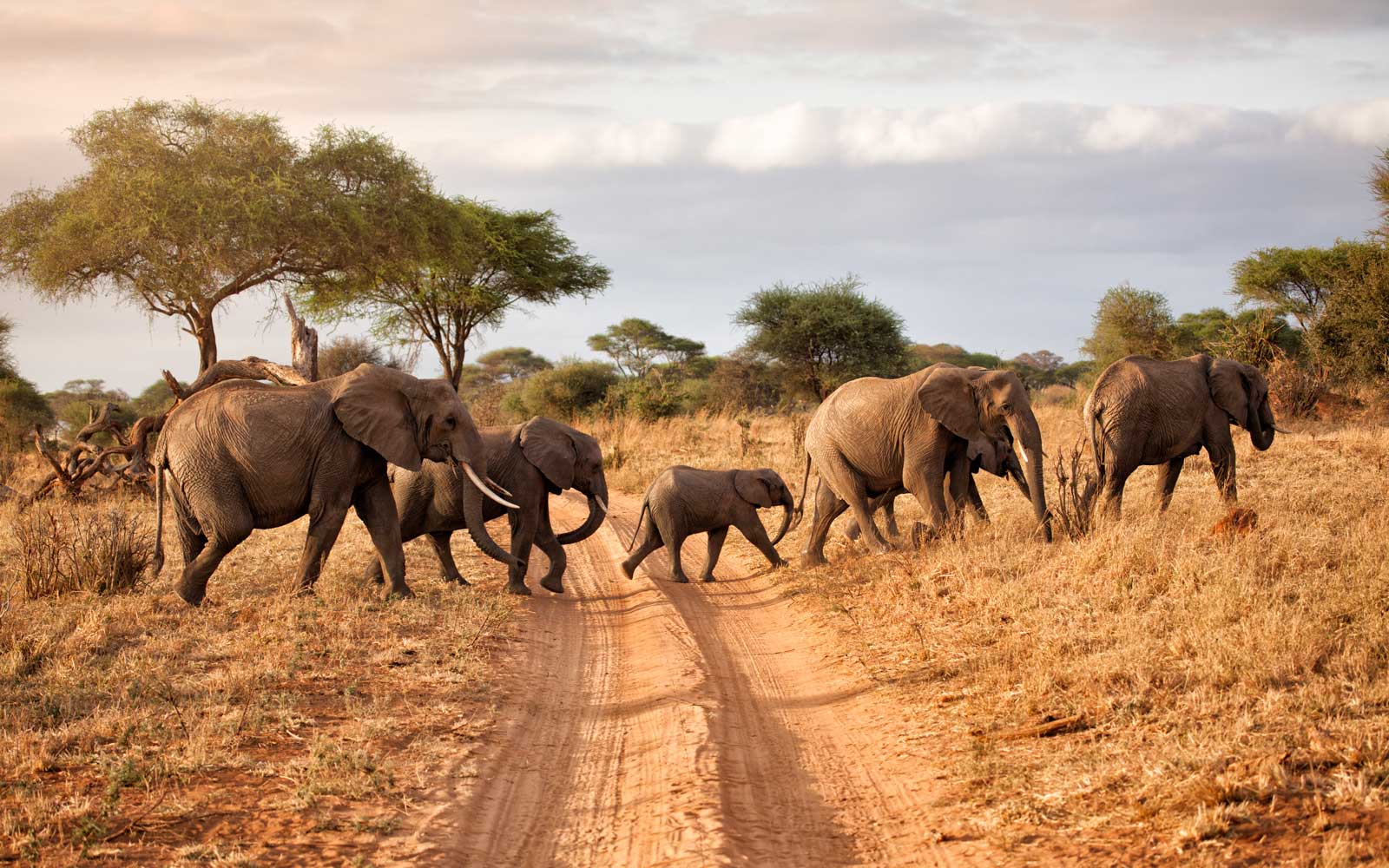
Savanna elephant
Endangered: Tarangire herds.
Chimpanzee
Endangered: Gombe and Mahale.
Pangolin
Rarely seen on night drives.
Mountain gorilla
Endangered: Uganda and Rwanda.
African penguin
Critically Endangered: South Africa.
Ethiopian wolf
Endangered: Bale Mountains.
Grévy’s zebra
Endangered: northern Kenya.
Black Rhinos (Diceros bicornis)
The black rhino is a critically endangered species, having suffered a catastrophic 98% population decline between 1960 and 1995 due to rampant poaching for their horns. While their numbers have thankfully doubled since that low point, they remain precariously close to extinction. Smaller and more aggressive than their White Rhino cousins, Black Rhinos are typically solitary browsers, feeding on leaves and branches.
Where to see them
Tanzania's Ngorongoro Crater is one of the most reliable places to see black rhinos, thanks to intensive protection within the caldera. Small, heavily guarded populations also live in Serengeti National Park and in Nyerere National Park, formerly part of the Selous Game Reserve, in southern Tanzania. Outside Tanzania, Namibia and Kenya are important strongholds for the species. Black rhinos are endangered mainly because of poaching for their horns, which are used in traditional Asian medicine and as a status symbol. Habitat loss and fragmentation also add to their vulnerability, making every sighting on safari truly special and memorable for visitors.
Mountain Gorillas (Gorilla beringei beringei)
Encountering a mountain gorilla is often described as one of the most moving wildlife experiences on Earth. Their intelligent eyes and strikingly human-like behaviors create an unforgettable connection. These gentle giants live in tight-knit family groups led by a dominant silverback. They spend their days foraging for leaves, stems, and fruits in the dense, misty forests.
Mountain gorillas are currently listed as Endangered on the IUCN Red List. They were previously classified as Critically Endangered; their improved status is the direct result of concerted conservation efforts over the years. Strict protection of their forest habitat, dedicated anti-poaching patrols, veterinary care and carefully managed gorilla trekking tourism have all helped their numbers recover. Permit fees from visitors fund rangers and support neighboring communities, giving local people a strong reason to protect the gorillas. Their story shows how responsible travel can make a real difference, although these great apes still face serious threats and need continued protection to survive.
To see mountain gorillas, you need to plan a dedicated gorilla trekking safari in the specific rainforest parks where they live. These great apes are not found in Tanzania, so a gorilla trek is usually added as an extension to a Tanzania safari. The main destinations are Bwindi Impenetrable National Park and Mgahinga Gorilla National Park in Uganda, Volcanoes National Park in Rwanda and Virunga National Park in the Democratic Republic of Congo. Treks involve hiking through steep, dense forest with expert trackers, and the reward is a precious hour observing a habituated gorilla family in its natural home.
Mountain gorillas are endangered mainly because of habitat loss caused by human settlement and the expansion of farmland around their forest homes. Poaching is less common today than in the past, but snares set for other animals can still injure them. Disease transmission from humans is another serious threat, because gorillas share much of our genetic makeup and can catch human illnesses. Tourism plays a vital role in their conservation. Trekking permit fees help fund anti-poaching units and community development, and strict visitor rules, such as keeping a safe distance and limiting group time with the gorillas, help protect their health.
Pangolins (Various Species): Scaly Mysteries
Pangolins are truly unique and deeply enigmatic creatures. These nocturnal mammals are the only known mammals covered in scales, which are made of keratin, the same material as human fingernails. When threatened, a pangolin rolls into a tight ball, protected by its tough armor. Pangolins feed exclusively on ants and termites, which they lick up with incredibly long, sticky tongues, and they have no teeth at all. Sadly, they are thought to be among the most trafficked mammals in the world. Combined with their shy, secretive and nocturnal habits, this makes any pangolin sighting on safari incredibly rare and special.
Conservation and sightings
All eight pangolin species, four African and four Asian, are listed between Vulnerable and Critically Endangered on the IUCN Red List. They face unprecedented poaching pressure driven by demand for their scales, used in traditional medicine, and their meat, especially in Asia, while habitat loss adds to their decline. Seeing a pangolin on safari is like winning the lottery, because they are very shy and nocturnal. Your best, if slim, chances are in remote areas or on specialized night drives in places such as South Africa's Kalahari region or parts of Botswana. They live in Tanzanian parks, yet sightings are rare.
African Wild Dogs (Lycaon pictus)
Known as "Painted Dogs" or "Painted Wolves" due to their striking, mottled coats, African Wild Dogs are highly intelligent, social, and incredibly efficient pack hunters. They are distinguished by their large, rounded ears and distinct lack of a dewclaw. Their cooperative hunting methods are fascinating to observe.
Where to see them
African wild dogs live in scattered populations and need vast territories to survive. On a Tanzania safari, your best chances are in Nyerere National Park, formerly part of the Selous Game Reserve, and Ruaha National Park in southern Tanzania, both major strongholds. Outside Tanzania, Botswana's Okavango Delta and Linyanti, and Zimbabwe's Mana Pools and Hwange, are also excellent. Wild dogs are endangered because of habitat fragmentation, conflict with people, as farmers often kill them to protect livestock, and diseases such as rabies and canine distemper spread by domestic dogs. A southern Tanzania safari offers rewarding opportunities to see them.
Cheetahs (Acinonyx jubatus): The Fastest Land Animal
The cheetah is the fastest land animal and a marvel of evolutionary design, built for explosive speed over short distances. Its slender build, distinctive black tear marks running from the eyes to the mouth and powerful legs make it instantly recognizable. Unlike other big cats, cheetahs mainly hunt during the day, using their sharp eyesight to spot prey before launching a high-speed chase. They depend on open grasslands for these pursuits, where there is enough space to reach top speed. This daytime hunting behavior gives safari travelers a real chance of witnessing one of nature's most thrilling sights during game drives.
Conservation and where to see them
Cheetahs are listed as Vulnerable on the IUCN Red List. Although they are not as critically endangered as some other species, their numbers are declining rapidly. The vast, open plains of Serengeti National Park, especially the central and eastern areas, offer excellent opportunities to spot them. Cheetahs also live in the Ngorongoro Crater and are sometimes seen in Tarangire National Park. Outside Tanzania, Namibia has the largest population. Their main threats are habitat loss and fragmentation, conflict with people when they prey on livestock, and remarkably low genetic diversity, which makes them more vulnerable to disease and other challenges over time.
African Penguins (Spheniscus demersus)
While not a typical "safari" animal in the sense of a savanna game drive, the African Penguin is a unique and charismatic threatened species found exclusively on the coasts of Southern Africa. These adorable birds are known for their distinctive "jackass" braying call.
Where to see them
To see African penguins, you need to visit southern Africa rather than Tanzania. The most famous place is Boulders Beach near Cape Town in South Africa, where a protected colony lives close to the shore and can be viewed from boardwalks. Penguins also live on Robben Island and other offshore islands along the Western and Eastern Cape coasts of South Africa and Namibia. African penguins are endangered because overfishing has drastically reduced their food supply of sardines and anchovies. Habitat destruction from guano collection and coastal development, together with oil spills, also poses significant threats to their survival in the wild.
Ethiopian Wolves (Canis simensis): Africa’s Rarest Canid
The Ethiopian wolf is the rarest canid in the world and Africa's only wolf species. With striking reddish-brown fur, long legs and distinctive black-and-white markings, it resembles a coyote but is more slender and elegant. Ethiopian wolves are highly specialized predators that hunt rodents, such as mole rats, across the open Afroalpine highlands. They live in family packs but usually forage alone during the day, which makes them easier to observe than many other rare carnivores. Seeing one requires a special journey to Ethiopia, as they are not found on safari circuits in Tanzania or elsewhere in East Africa.
Where to see them
Ethiopian wolves are highly specialized animals found only in the Afroalpine ecosystems of Ethiopia. Your best chance to see them is on a dedicated trekking trip to Bale Mountains National Park, which is home to the largest population of the species. Smaller numbers also survive in other parts of the Ethiopian highlands. These wolves are endangered because agricultural expansion causes habitat loss and fragmentation, and because domestic dogs spread diseases such as rabies and canine distemper. Human persecution is another major threat. Seeing them requires separate travel planning, as they cannot be included in a standard Tanzania safari itinerary.
African Elephants (Loxodonta africana): Bush & Forest
While African elephants are a common sight on safari, it's crucial to understand their conservation status. The IUCN has now reclassified African elephants into two distinct species: the larger African Savanna (or Bush) Elephant, which is Endangered, and the smaller, more forest-dwelling African Forest Elephant, which is Critically Endangered.
Where to see them
African savanna elephants are abundant in most Tanzanian parks, especially Tarangire National Park, famous for its huge herds, as well as the Serengeti and the Ngorongoro Crater. African forest elephants are more elusive and live in the dense forests of Central and West Africa, so they are not usually seen on East African safaris. Elephants remain threatened by poaching for ivory, although this has declined in some areas thanks to stronger anti-poaching efforts. Habitat loss, conflict with people as their range shrinks, and climate change also pose ongoing challenges. A Tanzania safari still offers some of Africa's finest elephant viewing.
Grévy’s Zebras (Equus grevyi)
Distinguished from the more common Plains Zebra by their narrower, more numerous stripes that extend all the way to their white belly, larger ears, and shaggier mane, Grévy's Zebras are a truly striking sight. They are adapted to more arid environments than other zebras.
Status and where to see them
Grevy's zebras are listed as Endangered on the IUCN Red List. They are larger than plains zebras, with narrower stripes and large rounded ears. Grevy's zebras are found mainly in northern Kenya and parts of Ethiopia, and your best chances of seeing them are in Samburu National Reserve, Buffalo Springs National Reserve and Lewa Wildlife Conservancy in Kenya. They are not found on Tanzania's main northern safari circuit, where you will instead see plains zebras. Their main threats are habitat loss and degradation caused by overgrazing livestock, competition for limited water resources, and disease, all of which have reduced numbers.
Chimpanzees (Pan troglodytes)
Our closest living relatives, chimpanzees are incredibly intelligent primates known for their complex social structures, use of tools, and wide range of vocalizations. Encountering them in their natural forest habitat is a profoundly moving experience.
Chimpanzees are listed as Endangered on the IUCN Red List. In Tanzania, dedicated chimpanzee trekking safaris are possible in remote parks along Lake Tanganyika in the west of the country. Gombe Stream National Park was made famous by Jane Goodall's pioneering research, while Mahale Mountains National Park is known for its large, habituated chimpanzee communities. Both require extra flights and planning beyond the northern safari circuit, but they can be added to a private tailor-made itinerary. Chimpanzee trekking is also popular in Uganda, in Kibale Forest National Park and Budongo Forest, and in Rwanda's beautiful Nyungwe Forest National Park.
Chimpanzees are endangered because of habitat destruction, as forests are cleared for agriculture and logging. Poaching for bushmeat and the illegal pet trade remove both adults and infants from the wild, and disease transmission from humans is another serious threat because chimpanzees are so closely related to us. This is where safari tourism plays an important role in conservation. Seeing endangered animals on safari is not just about ticking a box; it is about connecting with the urgent need for their protection. Responsible visits help fund the parks, rangers and research that keep these remarkable primates and their forests safe.
Rarest Animals in East Africa
East African safaris offer thrilling wildlife encounters, but spotting the rarest animals is a true privilege. Among the ten rarest species to look for are the elusive African wild dog, the black rhino, the pangolin, the aardvark and the shy caracal. Others include the gerenuk, the serval, the bat-eared fox, the striped hyena and the endangered Grevy's zebra. These animals are seldom seen because of their nocturnal habits, low populations or secretive nature, so finding them often depends on luck and an expert guide. Witnessing any of them in the wild is a unique and unforgettable experience for safari enthusiasts.
Unusual Animals on an African Safari
On an African safari, you might encounter some truly unusual animals that most visitors never see. These include the pangolin, covered in protective scales, the aardvark with its long snout and digging claws, the shoebill stork with its enormous bill and the bat-eared fox with its oversized ears. Other less common sightings include the African wild dog, the elusive African golden cat and the okapi, a forest relative of the giraffe. Several of these animals live outside Tanzania's main safari parks, so seeing them may require special trips, patience, good timing and a knowledgeable, experienced local guide who knows the area.
Unusual-Looking Wildlife to See
An African safari reveals some truly unusual-looking wildlife. Six of the most remarkable are the long-necked gerenuk, often seen standing upright on its hind legs to feed; the oddly shaped aardvark with its pig-like snout; and the okapi, a striped forest relative of the giraffe. Also unique are the naked mole-rat, known for its hairless, wrinkled body; the shoebill stork with its massive, shoe-shaped beak; and the porcupine with its sharp, protective quills. Each of these creatures shows nature's most eccentric designs, and spotting any of them makes for an unforgettable highlight on any African safari adventure you plan.
Facts About Endangered Animals in Africa
Several animals in Africa are endangered because of threats such as poaching, habitat loss and climate change. The black rhino, particularly the south-central black rhino, is among the most critically endangered, facing severe poaching pressure for its horns. Other threatened species include the African wild dog, the Ethiopian wolf and the Rothschild's giraffe, among many others. Protecting these animals depends on strong anti-poaching efforts, healthy habitats and support from local communities. Choosing a responsible safari operator and visiting protected areas helps fund this vital conservation work, giving endangered species a better chance of surviving for future generations of travelers.
- Mountain gorillas live in Tanzania.
- Pangolin scales are made of keratin.
- Cheetahs mainly hunt during the day.
Final Thought: The Role of Safari Tourism in Conservation
Responsible tourism directly supports wildlife conservation through park fees, tourism levies and support for local communities living alongside protected areas. When you choose an ethical safari operator and visit well-managed parks and conservancies, your trip helps fund anti-poaching patrols, research and habitat protection. It also shows local people that living wildlife has real value, encouraging them to protect it. In this way, every traveler becomes a vital part of the solution, helping these incredible creatures thrive for generations to come. Each sighting is a reminder of the fragility and wonder of our planet's biodiversity and why it is worth protecting.
Endangered Animals on Safari: Frequently Asked Questions
Which endangered animals can I see in Tanzania?
On a Tanzania safari, you may see black rhinos in the Ngorongoro Crater, African wild dogs in Nyerere and Ruaha, cheetahs on the Serengeti plains and savanna elephants in Tarangire. Chimpanzees live in Gombe Stream and Mahale Mountains in the far west. Pangolins live in Tanzanian parks too, but sightings are very rare.
Where is the best place to see black rhinos in Tanzania?
The Ngorongoro Crater is one of the most reliable places in Tanzania to see black rhinos, thanks to intensive protection within the caldera. Small, heavily guarded populations also live in the Serengeti and Nyerere National Park. Sightings are never guaranteed, so an experienced guide and patience improve your chances.
Can I see African wild dogs in Tanzania?
Yes. Southern Tanzania is one of Africa’s strongholds for African wild dogs, with Nyerere National Park and Ruaha National Park offering the best chances. Wild dogs range over vast territories, so sightings depend on luck and timing. A private safari to the southern parks gives you more time to search with an expert guide.
Are there mountain gorillas in Tanzania?
No. Mountain gorillas live only in the rainforests of Uganda, Rwanda and the Democratic Republic of Congo, including Bwindi Impenetrable National Park and Volcanoes National Park. Many travellers add a gorilla trek in Uganda or Rwanda as an extension to their Tanzania safari, with permits arranged well in advance.
Where can I see chimpanzees in Tanzania?
Tanzania’s best chimpanzee trekking destinations are Gombe Stream National Park, made famous by Jane Goodall’s research, and Mahale Mountains National Park, known for its large habituated communities. Both lie on the shores of Lake Tanganyika in western Tanzania and require extra flights, but they fit well into a private tailor-made itinerary.
Are cheetahs endangered?
Cheetahs are listed as Vulnerable on the IUCN Red List, and their numbers are declining. Threats include habitat loss and fragmentation, conflict with people over livestock and low genetic diversity. Tanzania’s Serengeti plains are among the best places to see them, as cheetahs hunt by day across open grassland.
Is the African elephant endangered?
Yes. The IUCN now recognises two African elephant species. The African savanna elephant is listed as Endangered, and the African forest elephant as Critically Endangered. Savanna elephants are still abundant in many Tanzanian parks, especially Tarangire, but poaching, habitat loss and conflict with people remain ongoing threats.
How does safari tourism help endangered animals?
Responsible safari tourism helps fund conservation through park fees, levies and community support. Your visit pays for rangers, anti-poaching patrols, research and habitat protection, and it shows local people that living wildlife has real value. Choosing an ethical operator and well-managed parks makes every traveller part of the solution.
Plan Your Conservation Safari
Tell us which animals you dream of seeing, and our Tanzania-based team will design a private tailor-made safari to the best parks for rhinos, wild dogs, cheetahs, elephants and chimpanzees.