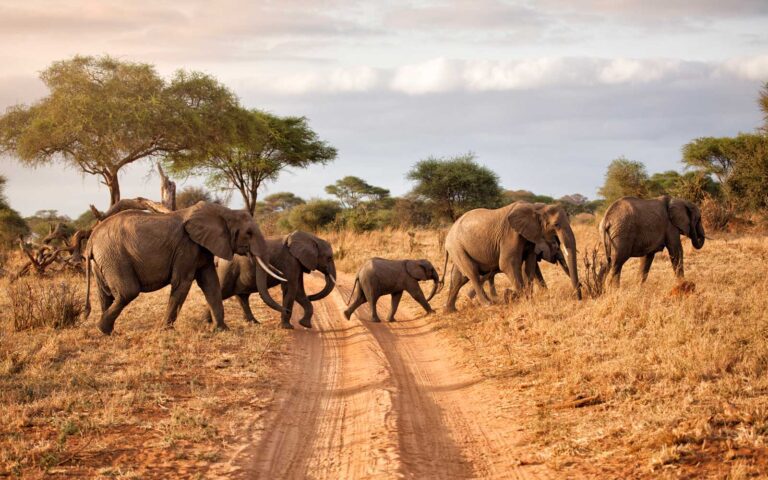
African and Asian elephants are the world’s largest living land mammals, but they differ in species, size, ears, tusks, habitat, behaviour and distribution. African elephants occur across parts of sub-Saharan Africa, while Asian elephants live in South and Southeast Asia. The African savanna elephant is generally larger, with bigger ears and more frequent tusks, whereas Asian elephants usually have smaller ears and distinctive head shape. Understanding these differences helps wildlife enthusiasts identify elephants on safari and appreciate their conservation needs.
- African and Asian Elephant Species
African elephants include the African savanna elephant and the African forest elephant, while the Asian elephant is a separate species with several recognised subspecies. African savanna elephants are the largest, forest elephants are generally smaller and more compact, and Asian elephants vary across their range. These species differ genetically, physically and ecologically. Their classification is important for conservation because each population faces different threats, habitats and management challenges. Understanding elephant species helps travellers and wildlife enthusiasts recognise why protecting diverse elephant populations requires region-specific conservation strategies.
- Which Elephant Is Bigger?
The African savanna elephant is generally the largest elephant species and the largest living land animal. Adult African elephants usually have a taller shoulder height and greater body mass than Asian elephants. African forest elephants are smaller than savanna elephants but remain distinct from Asian elephants. Individual size varies according to sex, age, genetics and habitat. On an African safari, the enormous size of elephants is particularly noticeable when large bulls stand beside vehicles or other wildlife. Asian elephants are smaller on average but remain powerful and impressive megafauna.
- Ear Size and Shape
One of the easiest ways to distinguish African and Asian elephants is by their ears. African elephants generally have much larger ears, which help release body heat in warm climates. Their ears are often described as resembling the outline of Africa. Asian elephants have smaller, more rounded ears because they typically inhabit different environments. Ear shape varies between individuals, so this is not an absolute identification rule, but it remains a useful visual clue. Large ears are also an important adaptation for thermoregulation and communication.
- Tusks: African vs Asian Elephants
Tusks provide another important difference. In African elephant populations, both males and females may grow visible tusks, although size varies greatly. Among Asian elephants, large tusks are primarily associated with males, while females usually have small tusks or none. However, individual variation exists, and some male Asian elephants are naturally tuskless. Tusks are modified incisor teeth used for feeding, digging, moving objects and social interactions. Unfortunately, ivory poaching has historically threatened elephant populations and continues to create conservation challenges in some regions.
- Head and Body Shape
Asian elephants usually have a distinctive double-domed head, while African elephants typically have a more rounded or single-domed profile. Their backs also differ: Asian elephants often appear more arched or level, whereas African savanna elephants commonly have a more sloping back. African elephants generally have longer legs and a larger overall body. These physical differences, together with ear size and tusks, make identification easier. Nevertheless, individual appearance can vary, so several characteristics should be considered when comparing African and Asian elephants.
- Trunk Differences
Elephant trunks are highly specialised and contain thousands of muscles. African elephants typically have two finger-like projections at the tip of the trunk, while Asian elephants usually have one. These projections help elephants grasp vegetation and small objects with remarkable precision. Both species use their trunks for breathing, smelling, drinking, feeding, touching, communication and social interaction. The trunk-tip difference is one of the most reliable anatomical features for distinguishing African and Asian elephants, although it may be difficult to observe clearly in the wild.
- Habitat and Distribution
African elephants inhabit a wide variety of ecosystems, including savannahs, grasslands, forests and wetlands across sub-Saharan Africa. Asian elephants are found in fragmented populations across South and Southeast Asia, occupying forests, grasslands and agricultural landscapes. Habitat loss and fragmentation are major conservation concerns for both. African savanna elephants are often seen on open wildlife safaris, while African forest elephants live primarily in dense Central African forests. Asian elephants are frequently associated with forested landscapes and protected areas.
- Social Behaviour
Both African and Asian elephants are intelligent and highly social animals. Female elephants and their offspring usually live in family groups led by experienced matriarchs. Adult males often live alone or form temporary bachelor groups. Elephants communicate through touch, vocalisations, body language and low-frequency sounds that can travel long distances. Social knowledge is vital for finding water, recognising threats and raising calves. Although both species share complex social systems, behaviour can vary according to habitat, population density and environmental conditions.
- Diet and Feeding Habits
African and Asian elephants are herbivores that consume grasses, leaves, bark, roots, fruits and other vegetation. Their diet changes according to season and habitat. African savanna elephants often graze extensively, while forest and Asian elephants may consume more browse and forest vegetation. Because elephants require large quantities of food and water, they strongly influence their ecosystems by dispersing seeds, opening vegetation and creating pathways used by other animals. Their feeding behaviour makes them important ecosystem engineers.
- Lifespan and Reproduction
Elephants can live for several decades, although lifespan varies between individuals and populations. Females have one of the longest gestation periods among land mammals, lasting about 22 months. Calves remain dependent on their mothers and family groups for years while learning feeding, migration and social behaviour. Reproduction is relatively slow, making elephant populations vulnerable to high mortality from poaching, habitat loss and human-wildlife conflict. Protecting breeding females and family groups is therefore particularly important for long-term elephant conservation.
Habitat and Species
- African Savanna Elephant
The African savanna elephant (Loxodonta africana) inhabits open savannahs, woodlands and grasslands across parts of sub-Saharan Africa. It is the largest living land animal and is commonly encountered in major safari destinations, including Tanzania, Kenya, Botswana and South Africa. These elephants play a major ecological role by modifying vegetation, dispersing seeds and creating habitats for other species. Their survival depends on protected landscapes, wildlife corridors and effective management of poaching and human-elephant conflict.
- African Forest Elephant
The African forest elephant (Loxodonta cyclotis) is smaller and more compact than the African savanna elephant and lives mainly in the dense tropical forests of Central and West Africa. It has straighter, downward-pointing tusks adapted to its forest environment. Forest elephants are important seed dispersers and contribute to the health and structure of rainforest ecosystems. Because they are difficult to observe in dense vegetation, population monitoring can be challenging. Poaching and habitat degradation have had serious impacts on many forest elephant populations.
- Asian Elephant
The Asian elephant (Elephas maximus) occurs in isolated populations across South and Southeast Asia. It inhabits forests, grasslands and human-modified landscapes. Compared with African elephants, Asian elephants generally have smaller ears, a double-domed head and only one finger-like projection at the end of the trunk. Habitat fragmentation and human-elephant conflict are major threats because expanding settlements and agriculture increasingly overlap with elephant movement routes. Protected areas and wildlife corridors are essential for maintaining viable Asian elephant populations.
- Where Can You See African Elephants?
African elephants can be seen in many of Africa’s leading wildlife destinations. Tanzania offers excellent elephant viewing in Tarangire National Park, Serengeti National Park, Nyerere National Park and Ruaha National Park. Kenya, Botswana, South Africa, Zimbabwe and Namibia also provide outstanding opportunities. Tarangire is particularly famous for large elephant herds and ancient baobab landscapes. The best viewing experience depends on the season, water availability and location of wildlife. Responsible safari tourism can also support conservation and local communities.
- Where Can You See Asian Elephants?
Asian elephants can be seen in selected national parks and wildlife reserves across India, Sri Lanka, Nepal, Thailand and several Southeast Asian countries. Popular elephant-viewing destinations include national parks in Sri Lanka and India, where wild herds can sometimes be observed from regulated safari vehicles. Wild elephant behaviour is unpredictable, so responsible wildlife viewing should maintain safe distances and avoid activities that exploit captive elephants. Choosing ethical, conservation-focused experiences supports animal welfare and protects natural habitats.
- Conservation Status and Threats
African and Asian elephants face serious threats from habitat loss, fragmentation, human-elephant conflict and poaching. Their conservation status varies by species and population, making species-specific protection essential. Elephant conservation includes anti-poaching measures, habitat protection, wildlife corridors, community-based conservation and international efforts to reduce illegal ivory trade. Because elephants reproduce slowly, population recovery can take many years. Responsible tourism, scientific research and support for local conservation initiatives can all contribute to the long-term survival of these remarkable animals.
- African vs Asian Elephants: Key Differences
The easiest way to compare African vs Asian elephants is to look at their size, ears, head shape, trunk and tusks. African savanna elephants are generally larger, have much bigger ears and two trunk-tip projections. Asian elephants are typically smaller, have smaller ears, a double-domed head and one trunk-tip projection. Both are intelligent, social herbivores and essential ecosystem engineers. Whether seen on an African safari or in an Asian national park, elephants deserve respectful viewing and strong conservation protection.
Final Thought
The differences between African and Asian elephants extend far beyond appearance. Their species, habitats, anatomy, behaviour and conservation challenges reflect millions of years of evolution in different environments. African elephants dominate savannahs and forests across sub-Saharan Africa, while Asian elephants navigate increasingly fragmented landscapes across South and Southeast Asia. Both are among the planet’s most intelligent and influential wildlife species. Learning to recognise their differences enriches every wildlife encounter while emphasising the importance of protecting elephants, their habitats and the ecosystems that depend on them.