Kilimanjaro Gilman’s Point Got Its Name (Honor of Clement Gillman)
Kilimanjaro Gilman’s Point Got Its Name (Honor of Clement Gillman)
Mount Kilimanjaro, Africa’s highest mountain and one of the world’s most famous trekking destinations, is filled with legendary landmarks that attract thousands of climbers every year. Among these iconic locations is Gilman’s Point, a historic point situated on the crater rim of Kibo at an altitude of 5,685 meters (18,652 feet). Many travelers on Kilimanjaro climbing tours reach this famous point before continuing toward Uhuru Peak, the roof of Africa. But few climbers truly know how Gilman’s Point got its name. The site was named in honor of Clement Gillman, a British geographer, surveyor, and historian who made significant contributions to the exploration and mapping of Tanzania during the colonial era. Today, Gilman’s Point remains one of the most recognized highlights on Mount Kilimanjaro expeditions, symbolizing endurance, exploration, and the rich history behind Tanzania safari and trekking adventures.
Who Was Clement Gillman?
Clement Gillman was a respected British geographer and colonial administrator known for his important work in East Africa, particularly in Tanzania during the early twentieth century. He dedicated much of his career to researching the geography, culture, and landscapes of Tanganyika, now modern Tanzania. Gillman became especially admired for his detailed mapping and scientific studies of Mount Kilimanjaro and the surrounding regions. His passion for African exploration helped improve geographical knowledge about the mountain and nearby ecosystems. During an era when African landscapes remained largely undocumented by European researchers, Gillman’s contributions were considered groundbreaking. Because of his efforts, one of Kilimanjaro’s most famous summit points was named Gilman’s Point in his honor. Today, trekkers climbing Mount Kilimanjaro continue to encounter his legacy while experiencing one of the world’s most iconic mountain adventures and unforgettable Tanzania travel experiences.
The Historical Importance of Gilman’s Point
Gilman’s Point holds deep historical significance on Mount Kilimanjaro because it represents one of the earliest recognized access points to the crater rim of Kibo. Before modern trekking infrastructure and detailed climbing routes existed, reaching the crater rim was an extraordinary achievement for explorers and scientists. The point after Clement Gillman celebrated his dedication to studying the region and documenting Tanzania’s geography. Over time, Gilman’s Point became internationally recognized among climbers attempting the summit of Mount Kilimanjaro. It is especially famous on the Marangu Route, often called the “Coca-Cola Route,” where trekkers first reach the crater rim before proceeding to Uhuru Peak. Today, the name Gilman’s Point appears on countless Kilimanjaro trekking maps, safari itineraries, travel blogs, and mountain guidebooks, making it an enduring symbol of African mountain exploration and Tanzania tourism history.
Where Is Gilman’s Point Located?
Gilman’s Point is located on the eastern rim of Kibo Crater on Mount Kilimanjaro at an elevation of approximately 5,685 meters above sea level. It sits between the famous crater rim and Uhuru Peak, the highest point in Africa. Climbers using the Marangu Route usually arrive at Gilman’s Point after a challenging overnight summit ascent from Kibo Hut. The point offers breathtaking panoramic views of glaciers, volcanic formations, and the surrounding African plains below. For many trekkers, reaching Gilman’s Point marks a life-changing achievement because the altitude and difficult terrain test physical endurance and mental strength. Although it is not the true summit, many climbers celebrate reaching this iconic landmark. Its dramatic location, historical significance, and connection to Clement Gillman make it one of the most photographed and memorable destinations on Mount Kilimanjaro climbing expeditions and Tanzania adventure tours.
Why Was Gilman Honored on Kilimanjaro?
Clement Gillman was honored on Mount Kilimanjaro because of his remarkable contributions to geographical exploration and scientific understanding of Tanzania’s landscapes. During the colonial period, he conducted extensive surveys and research that improved knowledge of East African geography. His work helped document mountain environments, settlements, and regional topography at a time when much of the area remained poorly mapped. Naming Gilman’s Point after him recognized his dedication and lasting influence in African geographical studies. The decision also reflected the tradition of commemorating explorers and researchers who contributed to understanding major natural landmarks. Today, while climbers focus on reaching Uhuru Peak, the name Gilman’s Point quietly preserves a piece of Tanzania’s historical exploration story. It reminds visitors that Mount Kilimanjaro is not only a natural wonder but also a mountain deeply connected to scientific discovery, cultural history, and global adventure tourism.
Gilman’s Point and the Marangu Route
Gilman’s Point is most closely associated with the Marangu Route, one of the oldest and most popular Kilimanjaro trekking routes. Climbers following this route make their summit push during the night from Kibo Hut, eventually arriving at Gilman’s Point around sunrise. The experience is unforgettable as trekkers witness golden sunlight illuminating Kilimanjaro’s glaciers and volcanic crater. For many hikers, reaching Gilman’s Point is emotionally powerful because it means they have successfully climbed to the crater rim despite extreme altitude and freezing temperatures. Although Uhuru Peak remains farther along the trail, many climbers already feel victorious at Gilman’s Point. The route’s historical connection to early explorers, combined with comfortable hut accommodations, has made the Marangu Route famous among Kilimanjaro climbing tours. Consequently, Gilman’s Point has become a legendary milestone for adventurers visiting Tanzania from around the world.
The Challenge of Reaching Gilman’s Point
Reaching Gilman’s Point is one of the toughest parts of climbing Mount Kilimanjaro. Trekkers face steep volcanic scree, freezing winds, thin air, and physical exhaustion during the summit ascent. Most climbers begin the journey around midnight, slowly hiking upward for several hours under starlit skies. Altitude sickness becomes a serious challenge because oxygen levels decrease dramatically near the crater rim. Despite these difficulties, the moment trekkers finally see the Gilman’s Point sign often brings overwhelming excitement and emotion. Many climbers describe tears of joy, relief, and pride upon reaching this historic location. The journey symbolizes determination, resilience, and personal achievement. Because of its demanding conditions, Gilman’s Point has earned worldwide respect among mountain climbers and adventure travelers. It stands as one of the most iconic accomplishments on any Kilimanjaro trekking expedition and an unforgettable highlight of Tanzania safari holidays.
The Meaning of Gilman’s Point Today
Today, Gilman’s Point represents far more than a historical name on a mountain trail. It symbolizes perseverance, adventure, and the spirit of exploration that draws travelers to Mount Kilimanjaro every year. Modern climbers view the point as a gateway to Africa’s highest summit and a major milestone in their trekking journey. Tour operators frequently include Gilman’s Point in Kilimanjaro travel packages because it carries legendary status among hikers worldwide. The location also reflects Tanzania’s rich mountaineering heritage and its importance in global adventure tourism. For photographers, the point offers extraordinary sunrise views above the clouds and glaciers. For climbers, it is proof that determination can overcome difficult conditions. Even as tourism evolves, the name Gilman’s Point continues to honor Clement Gillman’s contributions while inspiring new generations of explorers seeking unforgettable experiences on Africa’s tallest mountain.
Gilman’s Point Compared to Uhuru Peak
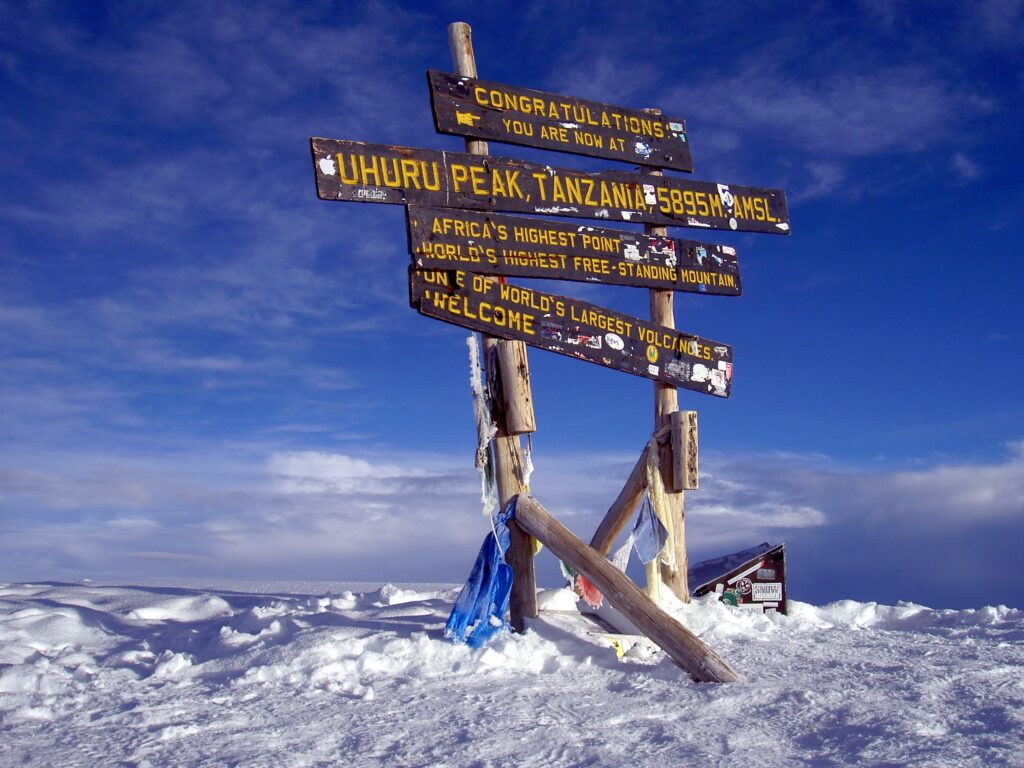
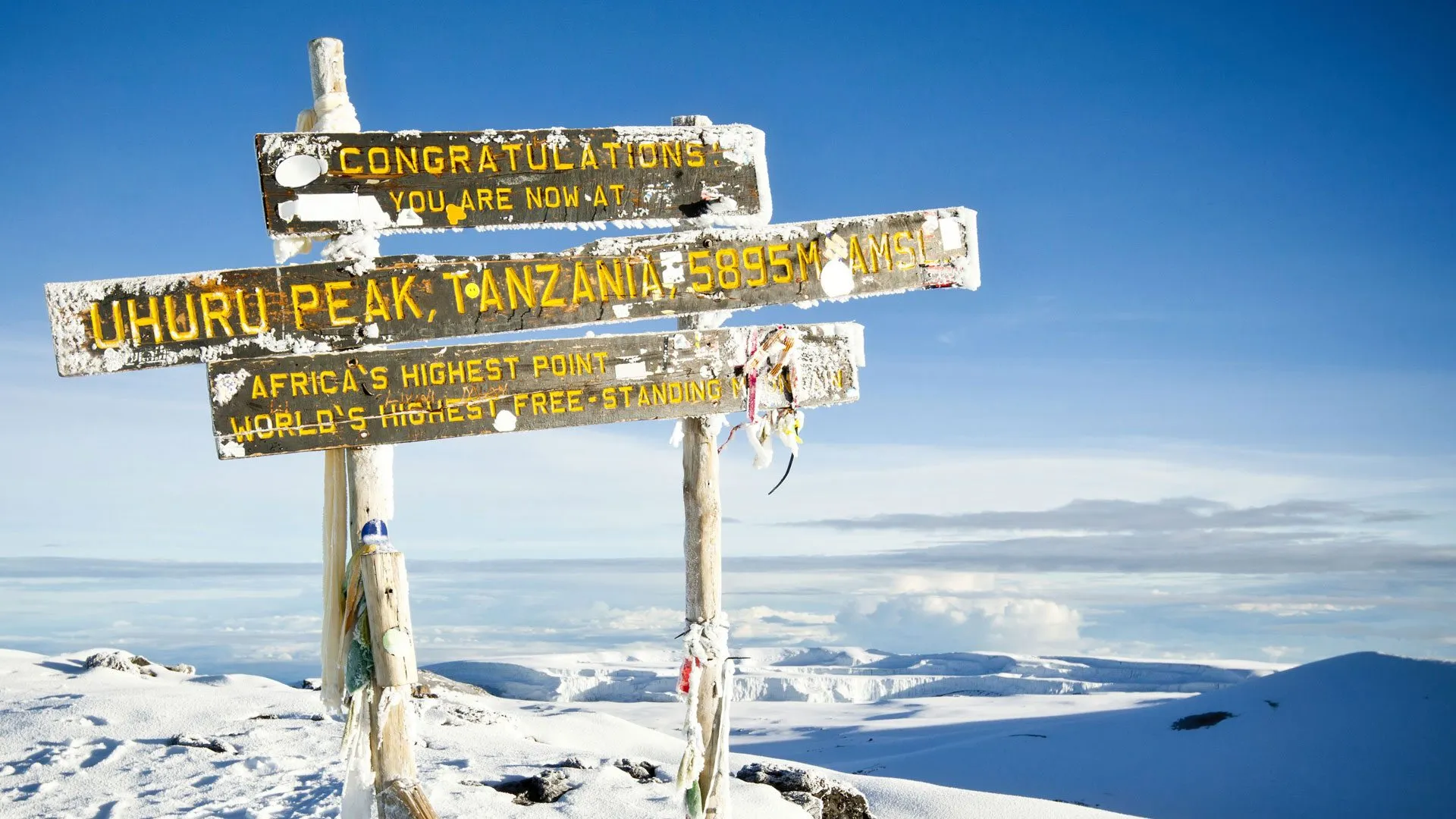
Many climbers wonder about the difference between Gilman’s Point and Uhuru Peak during Mount Kilimanjaro expeditions. Gilman’s Point lies on the crater rim, while Uhuru Peak is the true summit and highest point in Africa at 5,895 meters. Reaching Gilman’s Point is already a remarkable achievement because the most physically demanding section of the climb is usually completed by then. However, trekkers who continue onward to Uhuru Peak still face additional distance, freezing temperatures, and high altitude challenges. Some climbers stop at Gilman’s Point due to exhaustion or altitude sickness, while others push forward toward the final summit. Both locations hold immense significance in Kilimanjaro climbing adventures. Gilman’s Point is especially admired for its historical background and emotional impact, while Uhuru Peak symbolizes ultimate success. Together, they create one of the world’s most celebrated mountain climbing experiences in Tanzania.
The Scenic Beauty Around Gilman’s Point
The scenery surrounding Gilman’s Point is among the most spectacular on Mount Kilimanjaro. Climbers arriving at dawn are rewarded with breathtaking views of glaciers, volcanic landscapes, and endless African plains stretching far into the horizon. The contrast between snow-covered peaks and the dry savannah below creates one of the most unique mountain environments on Earth. Near Gilman’s Point, trekkers can also observe parts of Kibo Crater and remnants of ancient volcanic activity that shaped Kilimanjaro millions of years ago. Photographers and nature enthusiasts consider the area a dream destination because of its dramatic beauty and ever-changing light conditions. The peaceful atmosphere at sunrise often becomes one of the most unforgettable memories for travelers climbing Kilimanjaro. Combined with its historical importance, the incredible scenery makes Gilman’s Point a legendary attraction in Tanzania adventure tourism and African trekking safaris.
Gilman’s Point in Modern Tourism
Modern tourism has transformed Gilman’s Point into one of the most recognized landmarks in African adventure travel. Every year, thousands of international climbers attempt to reach this famous crater rim during Kilimanjaro trekking tours. Tour companies, travel agencies, and safari operators frequently highlight Gilman’s Point in promotional materials because of its historical significance and emotional appeal. Social media and travel photography have further increased their global popularity, inspiring more travelers to visit Tanzania for mountain climbing adventures. The point is now featured in countless travel documentaries, blogs, guidebooks, and trekking itineraries. Despite growing tourism, the area still maintains its sense of mystery and achievement. For many visitors, seeing the wooden Gilman’s Point sign becomes a dream fulfilled after years of planning. It continues to play an important role in Tanzania’s tourism industry and the worldwide popularity of Mount Kilimanjaro expeditions.
The Legacy of Clement Gillman
The legacy of Clement Gillman continues to live on through Gilman’s Point and the history of Mount Kilimanjaro exploration. His contributions to geography and regional research helped shape scientific understanding of Tanzania’s landscapes during an important period of African exploration. Although many climbers today focus mainly on reaching Uhuru Peak, the name Gilman’s Point quietly preserves the memory of a man who helped document East Africa’s natural wonders. His work reminds travelers that Kilimanjaro is more than a mountain; it is a place filled with stories of exploration, science, and cultural history. The continued use of his name on maps and summit signs ensures that future generations will remember his influence. As Tanzania remains one of Africa’s top travel destinations, Clement Gillman’s connection to Kilimanjaro remains an enduring part of the mountain’s fascinating heritage and legendary climbing tradition.
Final Thought
Gilman’s Point is far more than just a stop on the journey to Uhuru Peak. It is a historic landmark that honors Clement Gillman’s important contributions to geography, exploration, and the understanding of Tanzania’s natural landscapes. For climbers, reaching Gilman’s Point represents courage, determination, and the fulfillment of a lifelong dream. Its breathtaking scenery, emotional atmosphere, and deep historical roots make it one of the most unforgettable places on Mount Kilimanjaro. As thousands of adventurers continue to climb Africa’s tallest mountain each year, the story behind Gilman’s Point remains an inspiring reminder of the explorers and researchers who helped introduce Kilimanjaro to the world. Whether experienced through a Kilimanjaro trekking tour, Tanzania safari holiday, or African travel adventure, Gilman’s Point continues to stand as a powerful symbol of exploration, achievement, and Tanzania’s extraordinary mountain heritage
Kilimanjaro Gilman’s Point Got Its Name (Honor of Clement Gillman): FAQs
Who Was Clement Gillman?
Clement Gillman was a respected British geographer and colonial administrator known for his important work in East Africa, particularly in Tanzania during the early twentieth century. He dedicated much of his career to researching the geography, culture, and landscapes of Tanganyika, now modern Tanzania. Gillman became especially admired for his detailed mapping and scientific studies of Mount Kilimanjaro and the surrounding regions.
What should you know about the historical importance of Gilman’s point?
Gilman’s Point holds deep historical significance on Mount Kilimanjaro because it represents one of the earliest recognized access points to the crater rim of Kibo. Before modern trekking infrastructure and detailed climbing routes existed, reaching the crater rim was an extraordinary achievement for explorers and scientists.
Where Is Gilman’s Point Located?
Gilman’s Point is located on the eastern rim of Kibo Crater on Mount Kilimanjaro at an elevation of approximately 5,685 meters above sea level. It sits between the famous crater rim and Uhuru Peak, the highest point in Africa. Climbers using the Marangu Route usually arrive at Gilman’s Point after a challenging overnight summit ascent from Kibo Hut.
Why Was Gilman Honored on Kilimanjaro?
Clement Gillman was honored on Mount Kilimanjaro because of his remarkable contributions to geographical exploration and scientific understanding of Tanzania’s landscapes. During the colonial period, he conducted extensive surveys and research that improved knowledge of East African geography. His work helped document mountain environments, settlements, and regional topography at a time when much of the area remained poorly mapped.
What is Gilman’s Point and the Marangu Route like?
Gilman’s Point is most closely associated with the Marangu Route, one of the oldest and most popular Kilimanjaro trekking routes. Climbers following this route make their summit push during the night from Kibo Hut, eventually arriving at Gilman’s Point around sunrise. The experience is unforgettable as trekkers witness golden sunlight illuminating Kilimanjaro’s glaciers and volcanic crater.
What can you expect from the challenge of reaching Gilman’s point?
Reaching Gilman’s Point is one of the toughest parts of climbing Mount Kilimanjaro. Trekkers face steep volcanic scree, freezing winds, thin air, and physical exhaustion during the summit ascent. Most climbers begin the journey around midnight, slowly hiking upward for several hours under starlit skies.
What should you know about the Meaning of Gilman’s point today?
Today, Gilman’s Point represents far more than a historical name on a mountain trail. It symbolizes perseverance, adventure, and the spirit of exploration that draws travelers to Mount Kilimanjaro every year. Modern climbers view the point as a gateway to Africa’s highest summit and a major milestone in their trekking journey.
What is Gilman’s Point Compared to Uhuru Peak like?
Many climbers wonder about the difference between Gilman’s Point and Uhuru Peak during Mount Kilimanjaro expeditions. Gilman’s Point lies on the crater rim, while Uhuru Peak is the true summit and highest point in Africa at 5,895 meters. Reaching Gilman’s Point is already a remarkable achievement because the most physically demanding section of the climb is usually completed by then.
Climb Kilimanjaro With Confidence
Tell us your dates and fitness, and our experienced mountain team will plan a safe, well-acclimatized private climb.